Materials
The NSF Is Investing in ‘Revolutionary’ 3D Printing Materials
In terms of innovations in additive manufacturing, one area that is continuously being explored by not just companies but also government institutions is undoubtedly materials. Though the sector has come far in terms of what is available, there are still…
- 3 min read
- Materials
- Six more stories

In terms of innovations in additive manufacturing, one area that is continuously being explored by not just companies but also government institutions is undoubtedly materials. Though the sector has come far in terms of what is available, there are still limitations. For this reason, more and more we are seeing research projects and funding designed specifically to address existing gaps. In the latest news, the U.S. National Science Foundation (NSF) has announced a $72.5 million investment to “drive the design, discovery and development of advanced materials needed to address major societal challenges” in the hope of creating revolutionary solutions, including for 3D printing.
More specifically, this is being done through the Designing Materials to Revolutionize and Engineer our Future (DMREF) program. In this, a number of different projects are being funded including some being developed for 3D printing. NSF Director Sethuraman Panchanthan further explained the goals of the program, commenting, “By integrating numerous research disciplines across NSF as well as federal and industrial partnerships, this program truly revolutionizes the design, discovery and development of new materials for addressing urgent national needs. Some of these have been used to formulate highly sensitive therapeutic proteins to mitigate the primary effects of spinal cord trauma, carbon dioxide capture to address climate change, and advanced quantum materials and semiconductors for powerful computation and communication needs, to name just a few.”
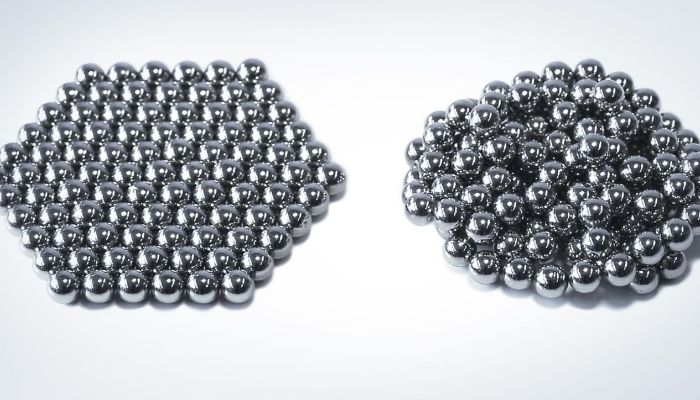
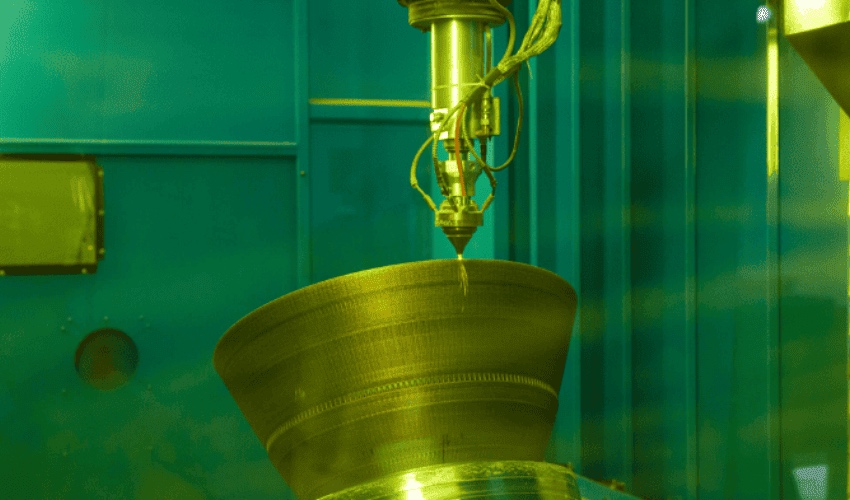
Amorphous metals (such as those used in these applications from Trumpf) are one of the key types of materials being explored for additive manufacturing through this NSF program (photo credits: Trumpf)
Creating ‘Revolutionary’ 3D Printing Materials
Out of the 37 new four-year projects, six are expressly designed for the creation of materials in 3D printing, encompassing over $6.5 million in total. The projects themselves differ greatly as well, with two dedicated to polymers and the remaining four covering different topics in metals. We can point especially to the need to develop superalloys, but there is also a growing focus on amorphous metal additive manufacturing. However, all do seem to be centered on the idea of creating parts with superior strength and toughness and though the AM technologies are not specifically named, will involve the use of a laser.
More from the desk
Six other notes from the rest of the bench.
 NewsRecovery of 3D printing market driven by China and Desktop 3D Printer ShipmentsThe company CONTEXT recently published its latest market study on the global 3D printing market. It states that the Chinese and Desktop 3D Printer markets are leading the way for a longer U-shaped recovery of the global sector. According to…
 MaterialsMetal composite with varying layer hardness is produced with 3D printingDamascus steel is a type of steel originally used for sword blades. In Germany, a team from Max-Planck-Institut für Eisenforschung (MPIE) and the Fraunhofer Institute for Laser Technology have developed a process that allows this type of steel to be…
 NewsWho Were the Winners at AMUG 2024?A few weeks ago, AMUG 2024 came to an end. The annual event is known for its focus on education and networking, driven ultimately by the motto ‘by users, for users.’ taking place once again in Chicago, attendees were able…
 News3D Printing Thermoset Materials Without Supports: A Faster New ApproachWhat if resin 3D printing could eliminate support structures entirely and make fabrication easier? That is the question explored by researchers at Xiamen University and the University of California, Berkeley. Together, they developed a new method for creating parts from…
 GuidesSimpath 3D Prints Highly Realistic Trachea ModelsAs we know, 3D printing has profoundly transformed the medical field, making it possible to produce customized models ranging from anatomical replicas to fully patient-specific implants. This is where the young startup Simpath comes in. Since its founding in 2023,…
 ApplicationsApplication of the Month: 3D-Printed Rocket Nozzles Made Using DEDAdditive manufacturing has profoundly changed the design, testing and production process for parts used in the aerospace sector. This industry benefits not only from reduced production times, but also from improved characteristics of the parts manufactured. In this context, SAB&h