Printers
Nexa3D’s New SLS Solution Optimizes Productivity With Even Faster Print Speeds
Already renown for their ultrafast polymer 3D printers, Nexa3D decided to up the ante with their latest launch — the QLS 350 thermoplastic 3D printer. During this year’s Formnext in Frankfurt, the California headquartered company announced the pre-launch of its…
- 3 min read
- Printers
- Six more stories
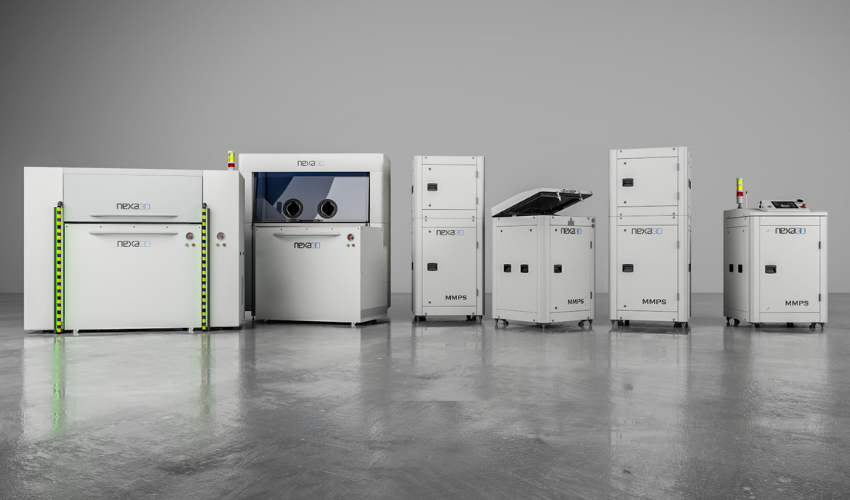
Already renown for their ultrafast polymer 3D printers, Nexa3D decided to up the ante with their latest launch — the QLS 350 thermoplastic 3D printer. During this year’s Formnext in Frankfurt, the California headquartered company announced the pre-launch of its QLS 350 selective laser sintering (SLS) system. Astoundingly, Nexa3D was able to achieve even faster print speeds with this new offering. The QLS 350 separates the printing process for the cooling period which optimizes productivity allowing for greater throughput per machine.
When comparing Nexa3D’s latest launch to traditional thermoplastic printing methods, the QLS 350 stands out for its significant cost savings and ability to bring production to scale. “We wanted to address the problems associated with traditional SLS systems, such as lack of modularity and flexibility. This includes the biggest bottleneck caused by these systems — the need to print and cool parts in the same machine,” said Kuba Graczyk, Head of QLS business at Nexa3D. “The made to measure, exchangeable unit in the QLS 350 removes this bottleneck, enabling manufacturers to continue operations while a part cools, a big step forward for SLS systems.”
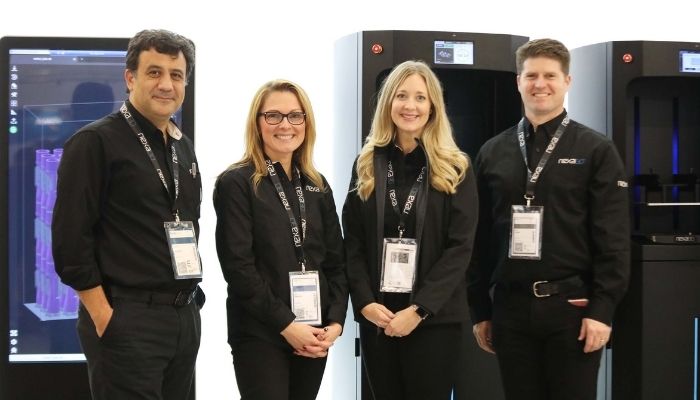
Nexa3D team at Formnext 2021 in Frankfurt, Germany.
Ultrafast Polymer 3D Printers
This new solution from Nexa3D can be most directly compared to traditional injection molding. The QLS 350 employs polymer-based production alternatives with standard materials such as PA11 and PA12. These are direct replacements for injection molding-grade materials. Also worth noting is that Nexa 3D’s QLS 350 is compatible with higher-temperature materials, including the popular PA6. The machine is able to process at temperatures up to 240 degrees Celsius (460+ degrees Fahrenheit).
More from the desk
Six other notes from the rest of the bench.
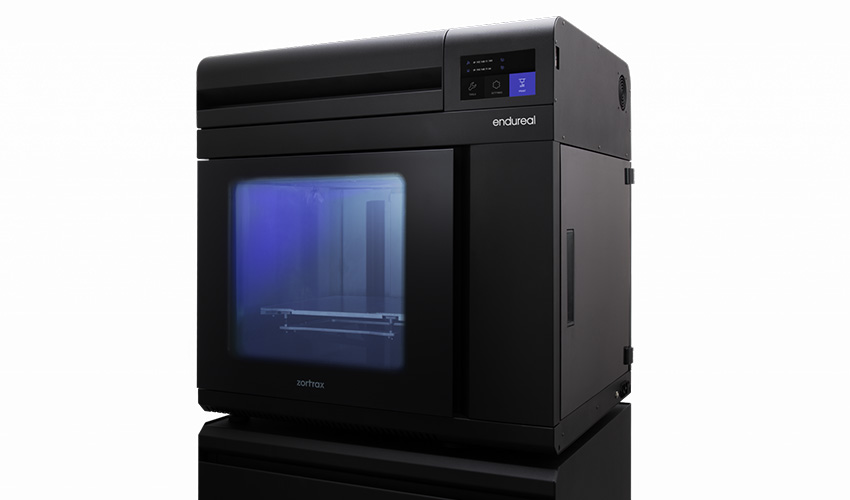 PrintersZortrax is launching a third generation industrial 3D printerZortrax is launching a third generation industrial 3D printer, designed for industry and production lines. It is named Endureal and will be unveiled at the TCT Show in Birmingham between the 24th and 26th of September. For Zortrax, this is…
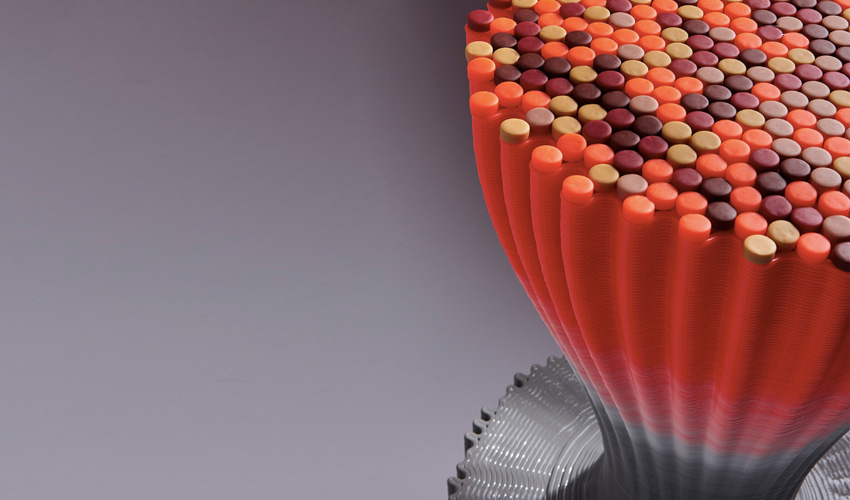 GuidesNagami, exploring the design of the future with new technologiesNagami is a design studio based in Ávila, Spain that has become known worldwide in recent months for the presentation of Zaha Hadid Architects chairs at the Milan Design Fair or the Voxel Chair v1.0 in the Georges Pompidou Museum in…
 NewsA 3D Printed Microscope Will Be Able to Detect Microplastics on the Sea FloorA group of researchers has made a low-cost 3D printed microscope to detect microplastics in the seafloor. The project was carried out by the Microplastics Detection Assistant (MIDAS) team with the participation of the Polytechnic University of Cartagena, Navantia, S.M.E…
 GuidesBehind Invent Medical & their intuitive Digital PlatformInvent Medical was founded back in 2010 to help through innovation and a new generation of 3D printed orthotic & prosthetic (O&P) products for professionals. The Company is building on 25 years of technical and clinical experience in the field.…
 NewsXJet appoints Nobel Prize winner to lead pioneering applications & materialsXJet announced today the appointment of Professor Dan Schechtman to lead its Scientific Advisory Board. Winner of the 2011 Nobel Prize in Chemistry for the discovery of quasicrystals, Shechtman’s role will be to help steer XJet’s material and application development…
 NewsRevo Foods and their 3D Printed SeafoodLast July, we presented a crazy concept from Legendary Vish, founded by a group of students who came up with a way to 3D print fish. A few months later, the project was structured and a startup was born: Revo…