News
XJet appoints Nobel Prize winner to lead pioneering applications & materials
XJet announced today the appointment of Professor Dan Schechtman to lead its Scientific Advisory Board. Winner of the 2011 Nobel Prize in Chemistry for the discovery of quasicrystals, Shechtman’s role will be to help steer XJet’s material and application development…
- 3 min read
- News
- Six more stories
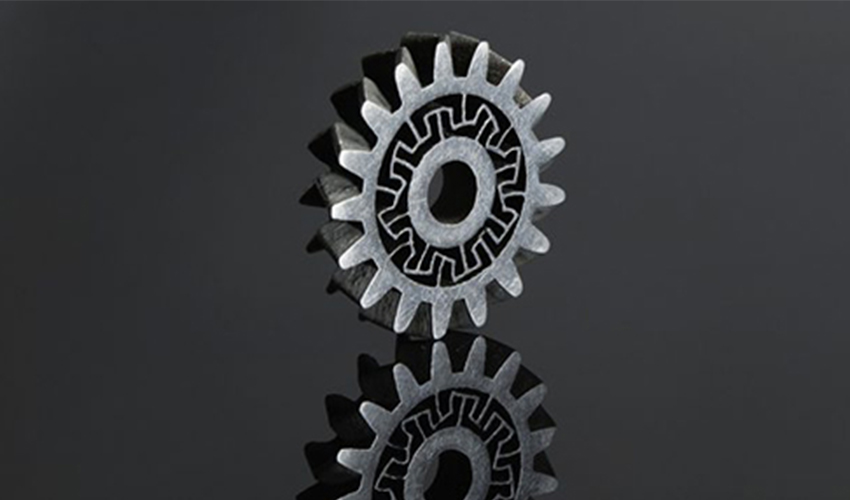
XJet announced today the appointment of Professor Dan Schechtman to lead its Scientific Advisory Board. Winner of the 2011 Nobel Prize in Chemistry for the discovery of quasicrystals, Shechtman’s role will be to help steer XJet’s material and application development roadmap. The company is well-known in the AM industry for its patented NanoParticle Jetting (NPJ) technology, which enables inkjet print heads to deposit layers of a liquid material infused with metal or ceramic nanoparticles. XJet provides its ceramic and metal solutions for a range of industries such as aerospace, automotive, medical and more.
It’s becoming clear that the next innovation in 3D printing lies in the materials. No matter the technology, one of the revolutions in AM will be to develop better-performing materials, a prediction supported by Wohlers Report published at the end of March. Given Professor Dan Schechtman’s broad knowledge of scientific challenges and innovation, he will help guide pioneering applications, materials and the way materials are used for XJet NanoParticle Jetting (NPJ) technology. He explains: “I feel there’s still a huge untapped potential for pushing this technology, through the materials. XJet’s NPJ technology grabbed my heart, mind and imagination and is particularly intriguing to me. Because it jets a liquid, in tiny droplets, it allows for innovation to surpass the level of a single material and involve new mixtures and complex structures.”
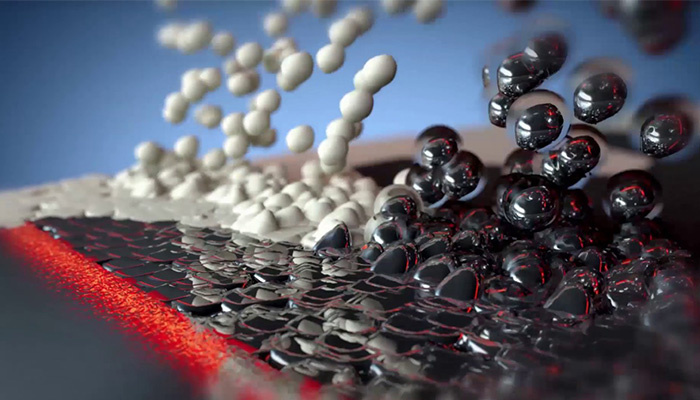
Close-up of XJet’s NanoParticle Jetting technology | Image via XJet
Shechtman’s expertise is in material science and the nature of matter. His discovery of quasicrystals in 1982 was initially extremely controversial and strongly denied by some peers, who wouldn’t reconsider their conceptions of crystallography and of the atomic structure of matter. It took a while and a lot of determination to lead a paradigm shift in chemistry. But eventually there were some who embraced the breakthrough and developed it into a thriving science. In 2011, the discovery was recognised with the Nobel Prize and today quasicrystals are found in applications from the formation of durable steel to non-stick frying pans.
More from the desk
Six other notes from the rest of the bench.
 News3D printing and chocolates from Universal FavoriteThe Australian agency Universal Favorite created colourful chocolates through 3D printed molds. As they experimented with interlocking shape designs they ended up on a clean cut version. These chocolates have the shape of a modular staircase and can easily fit…
 Applications3D printed tracheal splinter used in complex surgeryMedical treatments have gotten a long way over recent years. One of the technologies adding to this progress has been in the form of 3D printing. With 3D technology in the medical industry, area such as bio-printing is getting us…
 MaterialsAll You Need to Know About PEKK for 3D PrintingPolyetherketoneketone, better known by its acronym PEKK, is a semi-crystalline thermoplastic that is increasingly used in the additive manufacturing market. Often compared to PEEK, it belongs to the same family – the PAEK family – known for its mechanical and…
 ApplicationsResearchers use 3D printing to combat hair lossAt Columbia University, a team of researchers used 3D printing to grow hair! The technology allowed them to easily create plastic molds that were then used to grow hair follicles. A major innovation for the medical sector as it is…
 NewsAdditive manufacturing a source of savings for GM?While automotive additive manufacturing is growing with announced revenues in excess of $5 billion, GM Motors has announced that it has saved more than $300,000 in 3D technology for more than two years. Since the US acquired its first machine,…
 News#3DExpress: ICON Unveils 3D Printer to Make Multistory BuildingsThis week in our 3DExpress, we take a look at ICON, a company that has developed a new concrete 3D printer to quickly and easily enable the construction of multistory structures. Called Phoenix, it measures over 20 meters and can…