Software
New Software Reduces FDM 3D Printer Vibration Without Losing Speed
Imagine a kind of software that can allow your FDM 3D printer to maintain a high printing speed while keeping a decent level of accuracy. The University of Michigan invented a solution following that exact idea. Back in 2017, we…
- 3 min read
- Software
- Six more stories
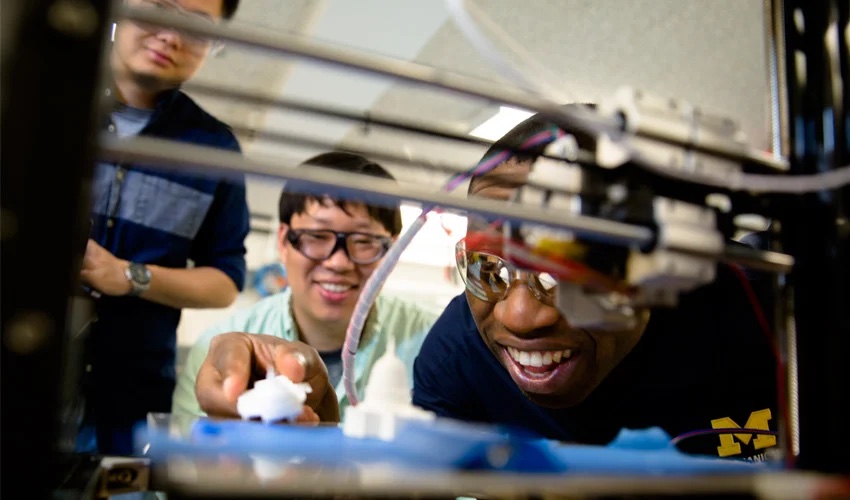
Imagine a kind of software that can allow your FDM 3D printer to maintain a high printing speed while keeping a decent level of accuracy. The University of Michigan invented a solution following that exact idea. Back in 2017, we presented the first results of the 3D printer algorithm developed by Chinedum Okwudire. A few years later, that very idea started to take shape through the company Ulendo and was officially presented at the RAPID + TCT show, which took place last week in Detroit, USA. The product reduces vibrations during the printing process and thus avoid any deformation of the part.
Desktop FDM 3D printers emit vibrations when in motion, which can cause some problems during production. This can be an issue when creating a part, as it directly affects the quality of the object to be printed, especially on smaller, lighter machines. One way to avoid that is to reduce the speed of the machine, but again, this can be an obstacle because the process is not exactly known for its speed. Chinedum Okwudire, associate professor of mechanical engineering at the University of Michigan and founder of Ulendo, explains, “If you want to reduce the vibration of a moving object, in most cases you can do so by slowing down the speed. But because 3-D printing is already very slow, this solution poses another problem. Our solution allows you to print quickly without sacrificing quality.”

Failed printing of a Capitol replica on a 3D printer with double speed (Photo Credit: Evan Dougherty/Michigan Engineering, Communications & Marketing)
It is from this observation that the Filtered B Splines (FBS) software was developed. It is based on a compensation algorithm that anticipates and reduces vibrations before they occur. The algorithm is based on a model of a printer’s behavior and adjusts its movements. The software then serves as a translator between the way the machine behaves in a perfect world and the way the printer must compensate for vibrations in the real world.
More from the desk
Six other notes from the rest of the bench.
 NewsEssentium’s latest survey: what is the future of industrial 3D printing?The study from Dimensional Research, sponsored by Essentium looks into the practical experiences of stakeholders who have invested into 3D printing for manufacturing, beyond simple prototyping. Although the 3D technology has a tremendous potential, the industry has been rather sl
 News3D printed micro robots could repair injuries inside the human bodyResearchers from the Georgia Institute of Technology have created a new type of 3D printed robot. It is about two-millimeters long, the size of the world’s smallest ant and has been 3D printed using two-photon polymerization lithography (TPP). These 3D…
 NewsTECLA, the new 3D printed houseThe 3D printer manufacturer WASP, has partnered with Mario Cucinella Architects to embark on an innovative model of a 3D printed house, called TECLA. TECLA is a new circular housing model, created using entirely reusable, recyclable materials taken from the…
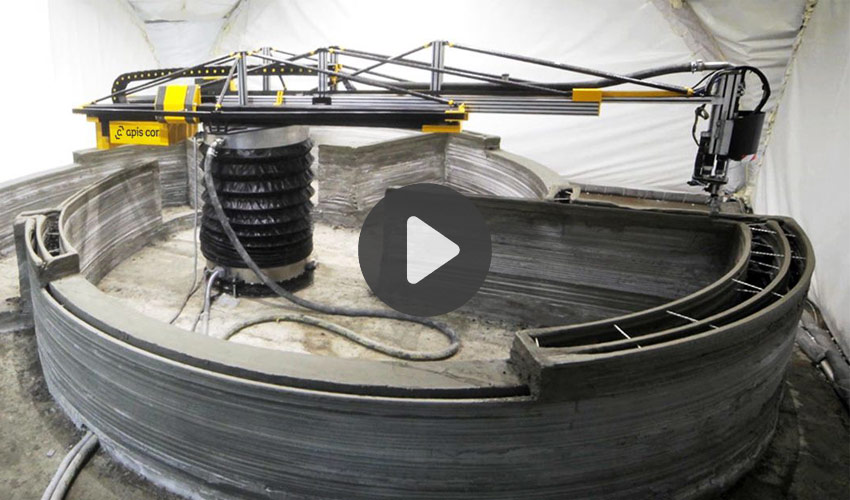 NewsTop 5 Videos: Apis Cor, 3D Systems & more!This week’s Top 5 Videos include a number of large business’ videos, in addition to some projects made by individuals. 3D printing giants such as Apis Cor and 3D Systems are in this list for announcing new projects and intentions.…
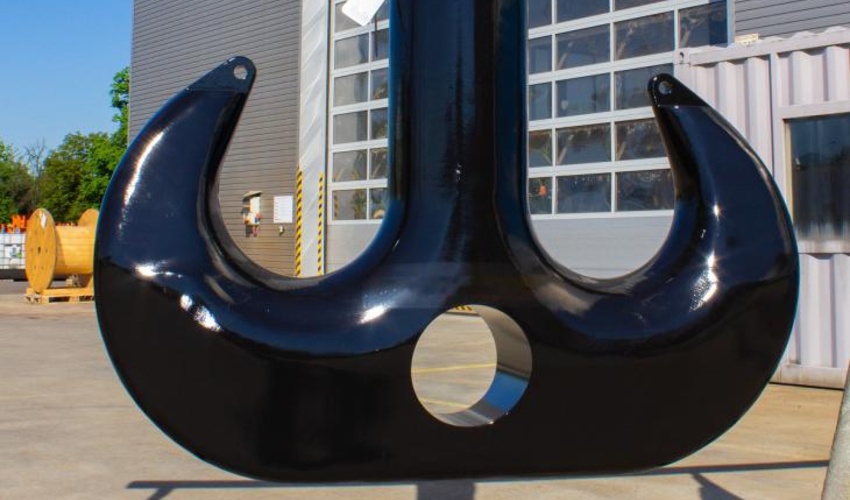 NewsHuisman Manufactures 3D Printed Crane Hooks With 350-Ton Lifting CapacityFor quite some time now, additive manufacturing has been advancing far beyond FDM 3D printing. This relatively new technology can be found in numerous industrial applications today. Such is the case in the construction industry, where demands on components are…
 News6 Standout 3D Printing Innovations from CES 2026Billed as a global stage for innovation, the Consumer Electronics Show (CES) returned to Las Vegas this year, taking place from January 6-9. The event brings together technology experts, decision-makers, media, and buyers from across the tech ecosystem, with the…