News
New Multi-Ingredient Process for Food 3D Printing Allows for More Personalized Choices
Food 3D printing is an emerging technology that uses 3D printers to create customized, nutritious and creative foods. It offers advantages such as reduced food waste, sustainability and the ability to create food for specific dietary needs. However, it also…
- 3 min read
- News
- Six more stories
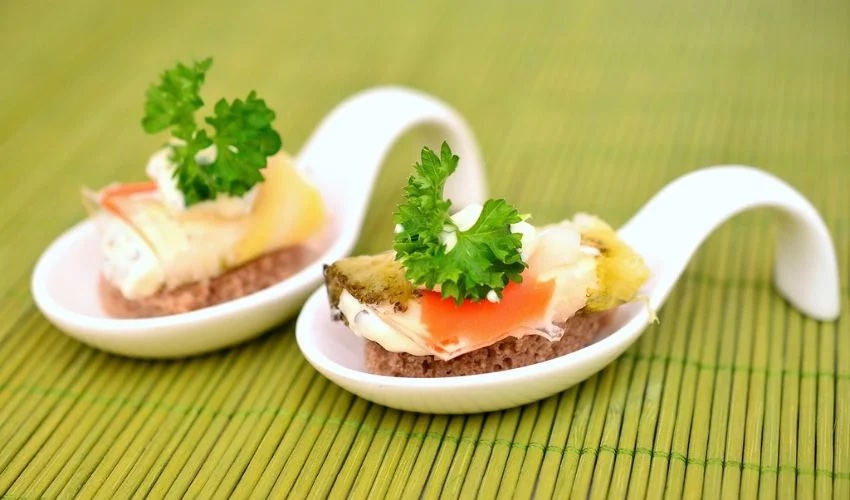
Food 3D printing is an emerging technology that uses 3D printers to create customized, nutritious and creative foods. It offers advantages such as reduced food waste, sustainability and the ability to create food for specific dietary needs. However, it also has obstacles to overcome, including food safety and consumer acceptance. Despite these challenges, food 3D has the potential to revolutionize the way we produce and consume food in the future.
In the latest advancement in the food industry, a team of researchers from the Singapore University of Technology and Design (SUTD) has developed a new technique to produce and customize food. Specifically, they designed a multi-material, or in this case, multi-ingredient, 3D printer to incorporate different types of nutrient-rich foods. The applications proposed by the researchers range from the production of aesthetically pleasing food to the customization of food for people with eating disorders and dysphagia, i.e. swallowing difficulties.
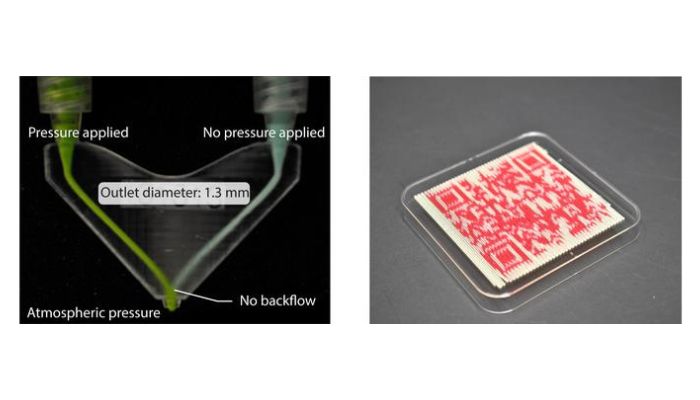
The designed two-inlet, single-outlet extruder (left) and a 3D printed edible QR code (photo credits: SUTD).
What Is Multi-Material Food 3D Printing?
Existing methods are based on independently controlled single-ink syringes. While this is a technique that gives good results, it has certain limitations. Following this process, it is difficult to align more than one type of ink without cracking, for example. This is where the SUTC scientists’ breakthrough comes in improving the technique.
More from the desk
Six other notes from the rest of the bench.
 PrintersMX3D Raises €2.25M to Launch Their M1 Metal AM SystemMX3D, a robotic metal 3d printing company based in Amsterdam has raised €2.25 million thanks to investments from DOEN Participaties, PDENH and the Netherlands Enterprise Agency (RVO). The company plans to use the funds to launch the M1, their complete…
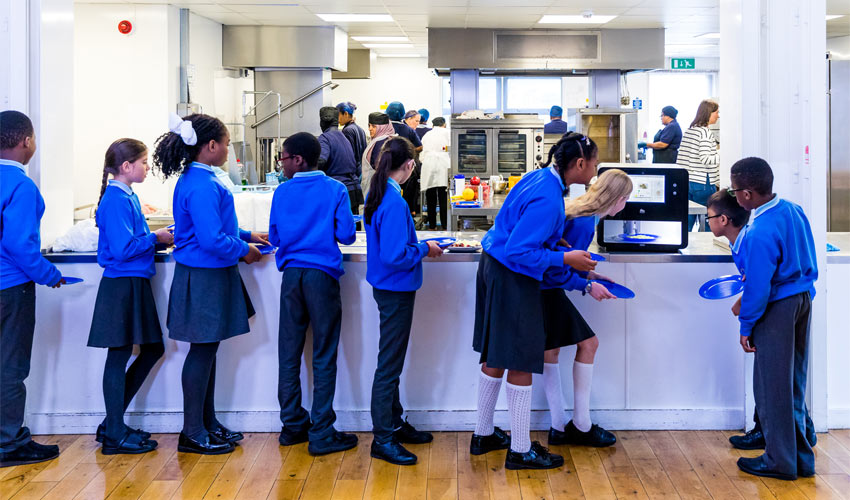 NewsA canteen 3D food printer in a primary schoolIn the UK, Big Bang Fair researchers have implemented a canteen 3D food printer. The 3D printer creates a variety of dishes for students. The goal is to encourage them to pursue a career in STEM (Science, Technology, Engineering and Mathematics). Teaching 3D…
 NewsAugmented Reality Contact Lenses Developed Through 3D PrintingIntelligent contact lenses, like conventional lenses, can be placed on the eye and are able to provide the wearer with information. Currently, such lenses are mainly being researched in the medical field for disease diagnosis. Several companies, including Google, have…
 NewsHow to Avoid the “Elephant Foot” Effect in FDM 3D PrintingAdditive manufacturing offers a significant advantage in design freedom. However, this advantage can be jeopardized when the 3D printer lacks proper configuration or the design and modeling phase is not optimized. Consequently, a range of 3D printing issues may arise,…
 ApplicationsA.D.A.M project develops 3D printed personalizable bone implants platformFounded in 2018 by 3D printing company Kwambio and WeFund Ventures in Ukraine, ADAM develops on-demand 3D printed bone implants. The initial vision of the company was to create a carshop-like infrastructure where any part of the human body could…
 NewsTop 5: IKEA Interviews Will Feature 3D Printed MeatballsIt’s Sunday! Which means that it is also time for our latest round of top 5 3D printing videos from the week. First, we will start with the latest recruitment video from IKEA which has a surprising guest: 3D printed,…