News
Augmented Reality Contact Lenses Developed Through 3D Printing
Intelligent contact lenses, like conventional lenses, can be placed on the eye and are able to provide the wearer with information. Currently, such lenses are mainly being researched in the medical field for disease diagnosis. Several companies, including Google, have…
- 3 min read
- News
- Six more stories
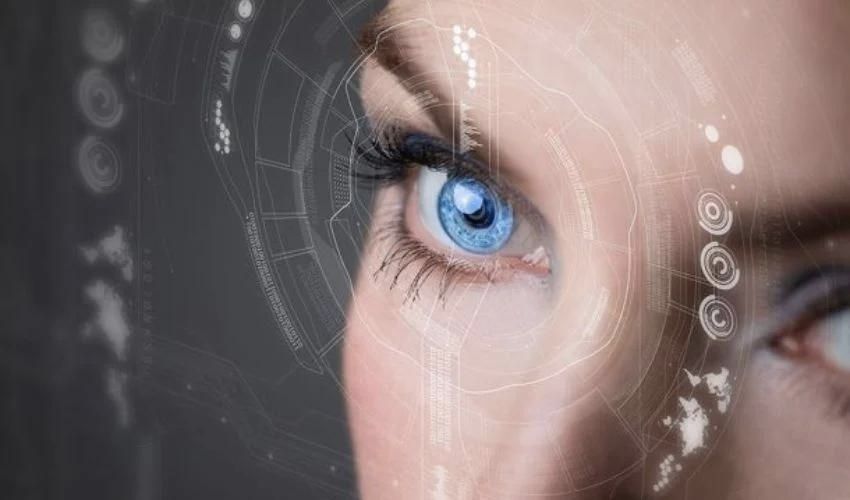
Intelligent contact lenses, like conventional lenses, can be placed on the eye and are able to provide the wearer with information. Currently, such lenses are mainly being researched in the medical field for disease diagnosis. Several companies, including Google, have already researched AR contact lenses, but there are still some technical hurdles to overcome. Now, researchers at the National Institute of Science and Technology (UNIST) in South Korea have teamed up with the Smart 3D Printing Research Team at the Korea Electrotechnology Research Institute (KERI) to develop contact lenses that enable augmented reality (AR) through 3D printing.
The technology involves printing micro-patterns onto a lens display. It uses the physical phenomenon of the meniscus, meaning the curvature of the surface of a liquid caused by surface tension: in this case the liquid is the printing ink. To manufacture the AR contact lenses, electrochromic monitors are supplied with low current. They make the lenses in the color “Pure Prussian Blue”, as the material ensures fast color contrast and color change, as well as being more cost efficient.
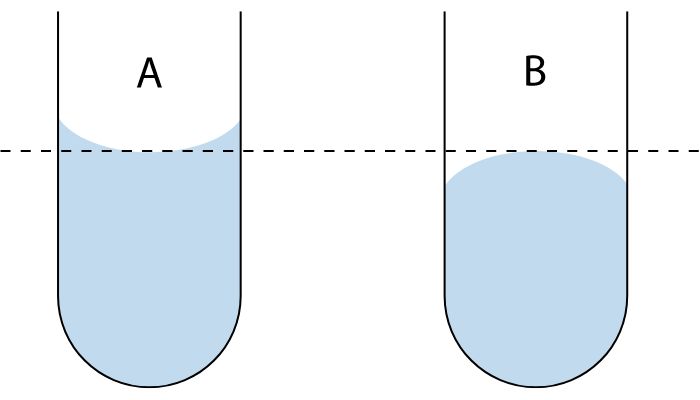
Menisci can be concave (left), as is the case for water-based fluids, or convex (left), as for mercury in glass. The researchers used the meniscus of the ink to print micropatterns (Photo credit: jleedev on Wikimedia Commons)
The most important application of AR contact lenses will probably be navigation. This means that the augmented reality technology is located directly on the eyes of the wearer of the lenses, navigating them through the streets. Moreover, in the future, users could play games like Pokémon Go not only on their smartphone or tablet, but directly with the AR contact lenses. Dr. Seol Seung-Kwon of KERI explained, “Our achievement is to develop a 3D printing technology that can print functional micro-patterns on a non-planar substrate to commercialize advanced smart contact lenses for AR.” He added, “It will greatly contribute to the miniaturization and versatility of AR devices.”
More from the desk
Six other notes from the rest of the bench.
 PrintersGF Machining Solutions and 3D Systems optimize the metal AM workflowGF Machining Solutions (GF), a division of the Swiss company Georg Fischer, specialised in the mechanical industry, is strengthening its presence in the metal additive manufacturing market through a partnership with the manufacturer 3D Systems. By combining their respective exper
 NewsGermany Cuts Funding for 3D Printing: Formnext and Experts RespondThe German government’s decision to cut funding for additive manufacturing has met with resistance. After the government initially announced support for the technology, recent budget proposals made no mention of it. Criticism from the additive manufacturing industry has come from
 SoftwareAdvanced Additive on the Potential of Software to Optimize Additive ManufacturingThe young company Advanced Additive is dedicated to optimizing extrusion-based 3D printing at the software level. Uncertainty during material deposition often leads to poor part quality and low repeatability. With its software Project Path, Advanced Additive aims to provide solut
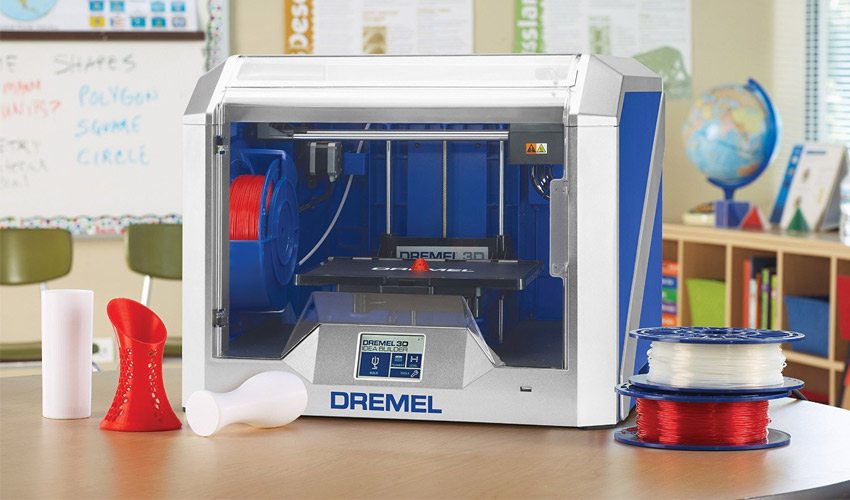 News3Dnatives Lab: Testing the Idea Builder 3D40 from DremelDremel, better known for its wide range of multifunctional tools designed for manufacturers can nevertheless, boast about having nearly 5 years of experience in the 3D printing industry. In 2014, the company released its first FDM machine, the Idea Builder…
 NewsAvimetal Expands Metal 3D Printer Output with New Xuzhou SiteAvimetal, a Beijing-based subsidiary of Jingcheng Electromechanical, recently announced the expansion of its additive manufacturing operations with a new facility in the Xuzhou Economic Development Zone. The 8,000 square meter plant will increase production of Avimetal’s metal 3D
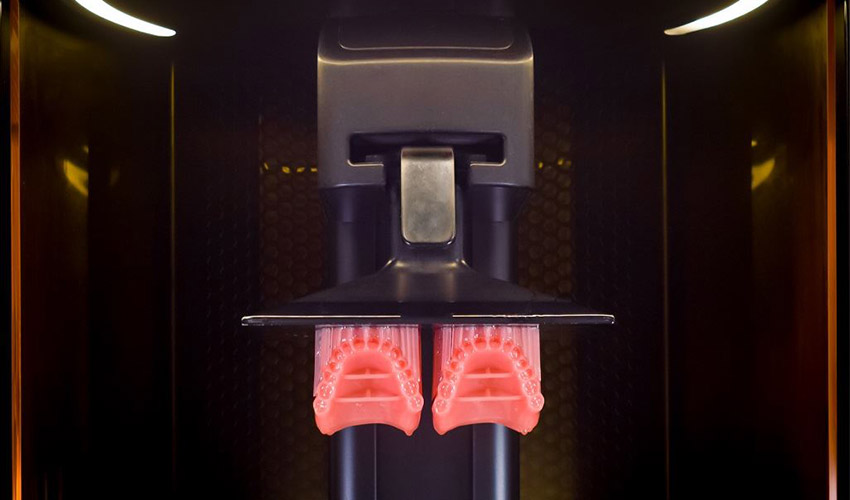 ApplicationsIntroducing the Lucitone Digital Print Denture workflow and material systemDentsply Sirona and Carbon have come together to launch the Lucitone Digital Print Denture workflow and material system. This workflow and material system should provide significant advancements in terms of material benefits, laboratory process, and function for the patient. This