News
New Ink for Emerging 3D Printing Technology to Make Cheaper Cultured Meat
Lab-grown meat is created by the reproduction of meat (animal muscle) cells in vitro. The process has great potential to offer eco-friendly and ethical meat to those who require the nutritional benefits of the food source but who take issue…
- 3 min read
- News
- Six more stories
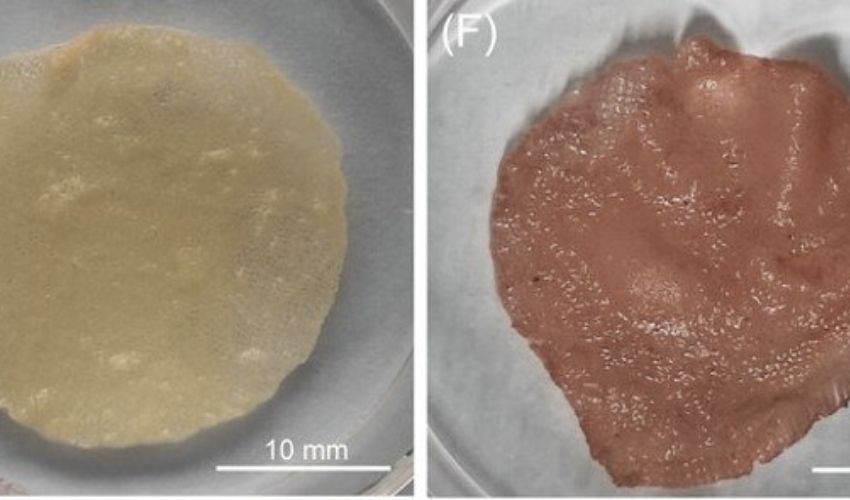
Lab-grown meat is created by the reproduction of meat (animal muscle) cells in vitro. The process has great potential to offer eco-friendly and ethical meat to those who require the nutritional benefits of the food source but who take issue with the ethical or environmental concerns of the meat industry. Scientists from the National University of Singapore, National University of Singapore Suzhou Research Institute, China, and the Xi’an Jiaotong-Liverpool University, China have developed a new method to produce cultured meat (CM) of an appealing texture using new low-cost 3D printing inks as scaffolding.
The research saw skeletal muscle cells (bovine and porcine) made on 3D scaffolds. These scaffold cells are important to maintain the structural integrity of the product and produce the ideal texture by separating the cell layers to make it grow evenly. Therefore, the scaffold does not need a high tensile strength; it needs to be edible and able to absorb into the meat. Fibrous scaffolds ‘resemble the in vivo muscle tissue structure’ and are therefore of great potential in the production of CM. Researchers chose cereal prolamins (a group of plant storage proteins) present in ryes and cereals, to produce fully edible fibrous scaffolds, which they coloured with beet to improve the resemblance to meat.
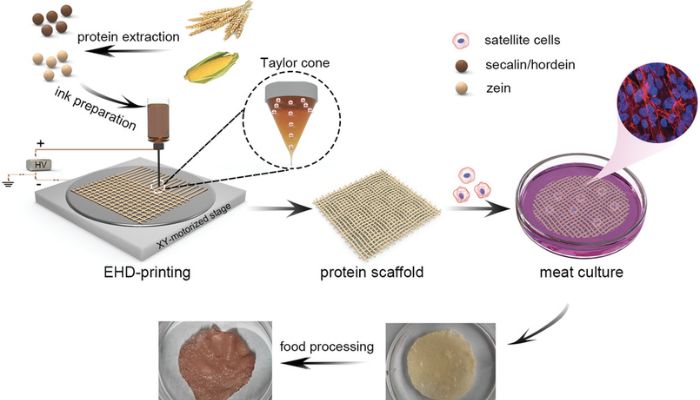
Photo credit: Jie Sun/Xi’an Jiaotong-Liverpool University
The researchers used Electrohydrodynamic (EHD) printing to produce the scaffolds. This method of printing is a high-resolution printing technology. The printed liquid is driven by an electric field: the field causes the mobile ions in a polarizable liquid to accumulate. The electric forces cause the meniscus (the curve at the end of a container) to deform into a Taylor cone and the stress from the surface charge repulsion causes liquid to be emitted. Deposited droplets can be as small as 240 nm with spatial accuracy in the hundreds of nm.
More from the desk
Six other notes from the rest of the bench.
 ApplicationsLazer Sport Unveils 3D Printed Bicycle Helmets With KinetiCore TechnologyIn recent years, the emergence of 3D printing within the cycling realm has become increasingly prevalent. We’ve explored innovations such as more ergonomic saddles, enhanced bike comfort, and even fully customizable bicycles like those created by INTENSE and Aston Martin. T
 GuidesThe Best 3D Printing Videos of 20252025 was an extraordinary year for 3D printing, with innovations reshaping fields as diverse as medicine, automotive, and aerospace. In this article, we’ve brought together a selection of our favorite videos from the year, where creativity and technology come together…
 MaterialsMoon Dust and Lasers: The Technology That Could Build the Next Lunar BaseOn the Moon, nothing is easy to replace. Every tool, spare part and structural component must be launched from Earth, with a very high price tag. (There’s no Amazon Prime on the Moon.) The solution, researchers from The Ohio State…
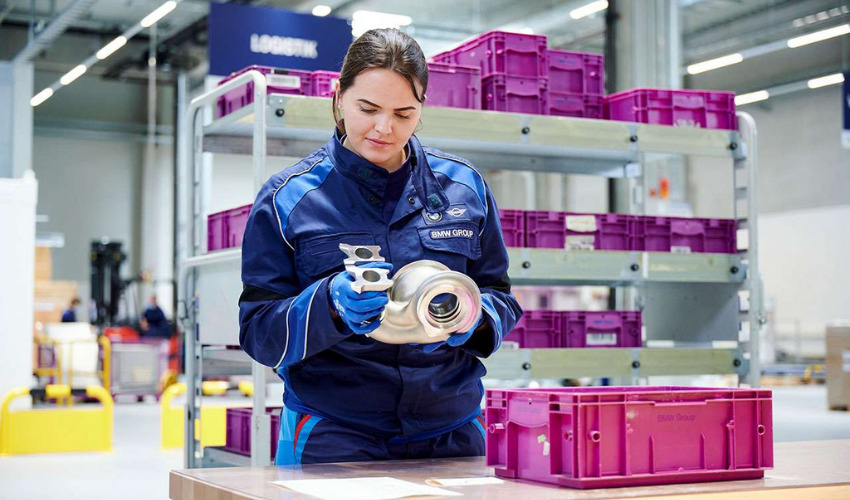 ApplicationsThe Role of AM in the Automotive IndustryIn the automotive industry, OEMs have historically mostly used additive manufacturing for rapid prototyping. In more recent years however, advances in AM have slowly been transforming the ways in which end-use parts are designed, manufactured and distributed. Deloitte’s 3D opport
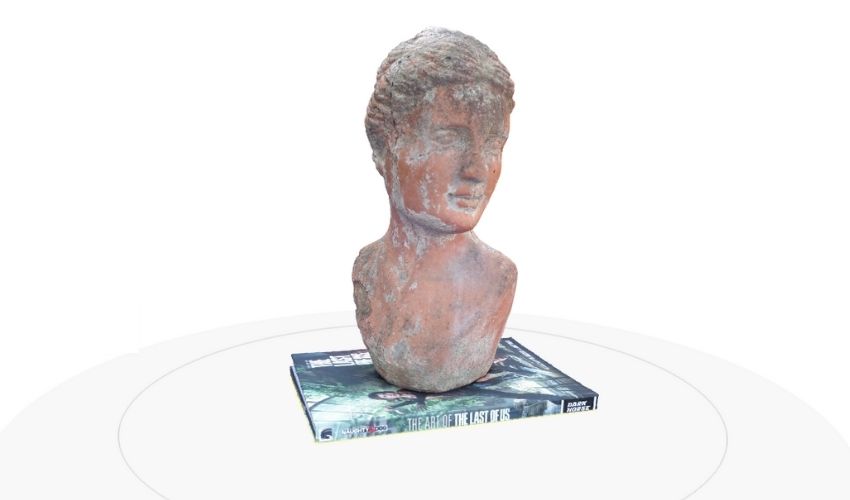 SoftwarePhotogrammetry: What is it and How is it Used in 3D Printing?Photogrammetry is a technique for obtaining reliable data from real-world objects in the their natural state by creating 3D models from photographs. 2D and 3D data is extracted from an image and, thanks to overlapping photos of the object, building…
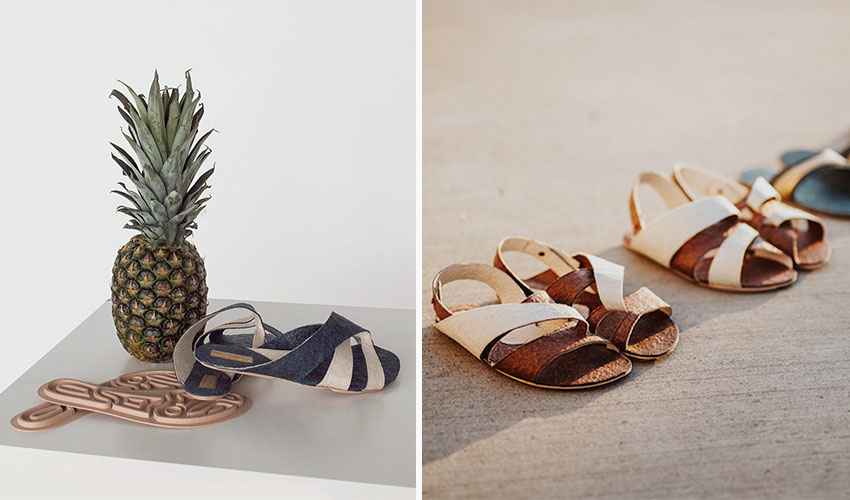 MaterialsAn Organic 3D Printed Shoe CollectionThe ORGANIC shoe collection is a collaboration between Lucie Trejtnarová, a postgraduate student at Tomas Bata University in Zlin, Czech Republic, materials manufacturer, Fillamentum and the design studio, Malai Design & Materials. As its name suggests, this shoe collection i