Applications
New 3D Printed Skin Integrates Hair Follicles and Could Heal Wounds
3D printing is used in a very wide variety of areas in medicine, where it has opens up new ways of treating patients. In recent news, a research team from Penn State has succeeded in making 3D printed living skin…
- 3 min read
- Applications
- Six more stories
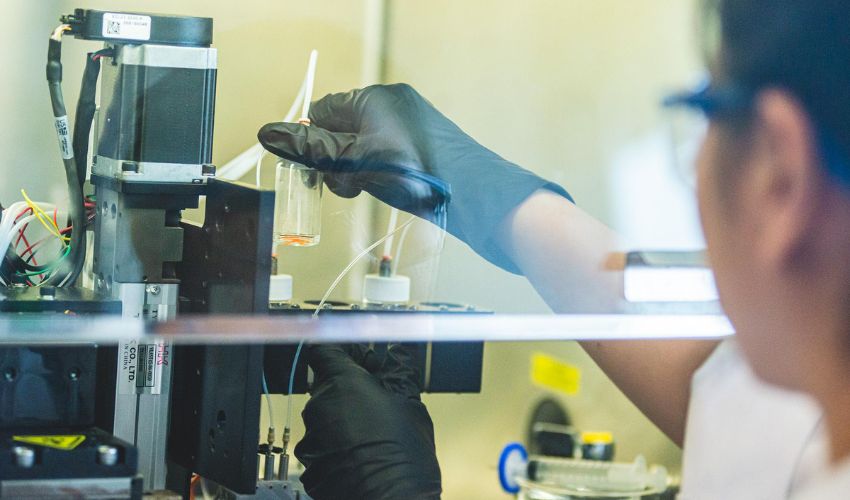
3D printing is used in a very wide variety of areas in medicine, where it has opens up new ways of treating patients. In recent news, a research team from Penn State has succeeded in making 3D printed living skin which has the potential to integrate hair follicles using human tissue and the fat cells and supporting structures taken from it. As part of the project, the researchers aimed to restore injured rat skin to its original state.
Producing thin layers of skin from a 3D printer has already been achieved in the past. However, the current study is the first to successfully print a complete and living system consisting of several layers of skin, such as the lowest layer of skin, the hypodermis, which is made up of fat and connective tissue and is responsible for support above the skull. The special feature here is that the skin can be printed during the ongoing operation using the bioprinting technology developed by the team, whereby the visible outermost skin layer (the epidermis) is not printed, as this is automatically developed by the underlying middle layer.
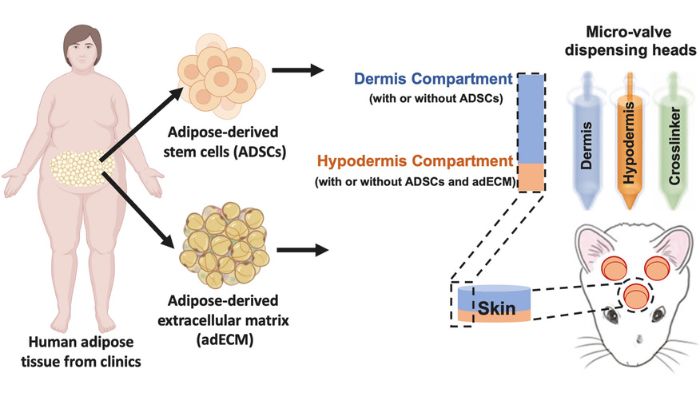
Photo Credits: Bioactive Materials
The results of the research project were recently published in the journal Bioactive Materials. Professor of engineering science and mechanics, of biomedical, who led the international research collaboration, Ibrahim T. Ozbolat, further explained, “Reconstructive surgery to correct trauma to the face or head from injury or disease is usually imperfect, resulting in scarring or permanent hair loss. With this work, we demonstrate bioprinted, full thickness skin with the potential to grow hair in rats. That’s a step closer to being able to achieve more natural-looking and aesthetically pleasing head and face reconstruction in humans.”
More from the desk
Six other notes from the rest of the bench.
 NewsUsing metal additive manufacturing to produce nuclear reactorsBWX Technologies (BWXT) is currently working on the development of metal additive manufacturing technology for nuclear component design in collaboration with the U.S. laboratory in Oak Ridge. The goal is to produce parts from high-temperature alloys and refractory metals for&hell
 NewsTop 5 Videos: RAPID + TCT Interviews and AnnouncementsWelcome to our compilation of this week’s most compelling 3D printing highlights. This week, we’re excited to bring you an edition focused more on RAPID + TCT 2024, sprinkling in several select moments and highlights from the event. We begin…
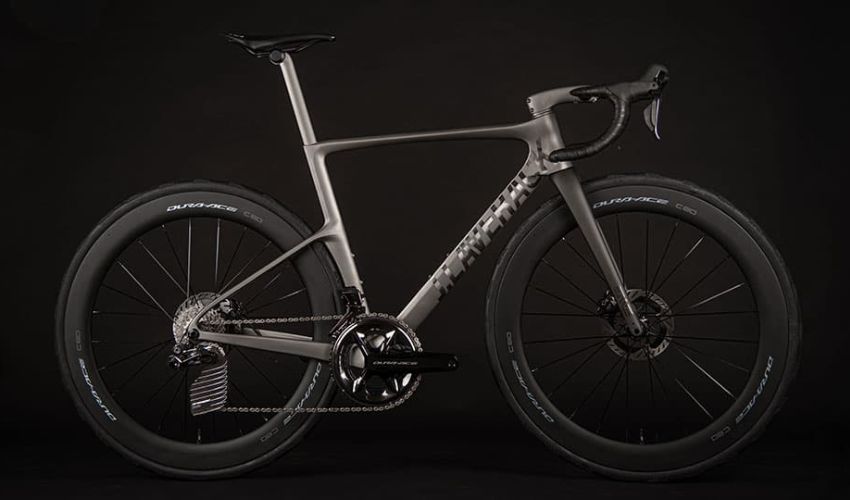 ApplicationsLoughborough Research Helps Launch Fully 3D Printed Titanium BikeA new chapter in performance cycling has opened with the debut of Speedform, a fully 3D printed titanium road bike developed by British manufacturer J.Laverack and supported by aerodynamic expertise from Loughborough University. Unveiled at the Rouleur Live show in…
 NewsTop 5 Videos of the Week: Siemens Gas & Power reduce lead times thanks to AMThis week we found the top 5 videos about 3D printing and the way additive manufacturing is shaping our society. The technology has infiltrated many sectors, from medical to automotive! Check out our selection of the week to keep up with the innovations! This week we…
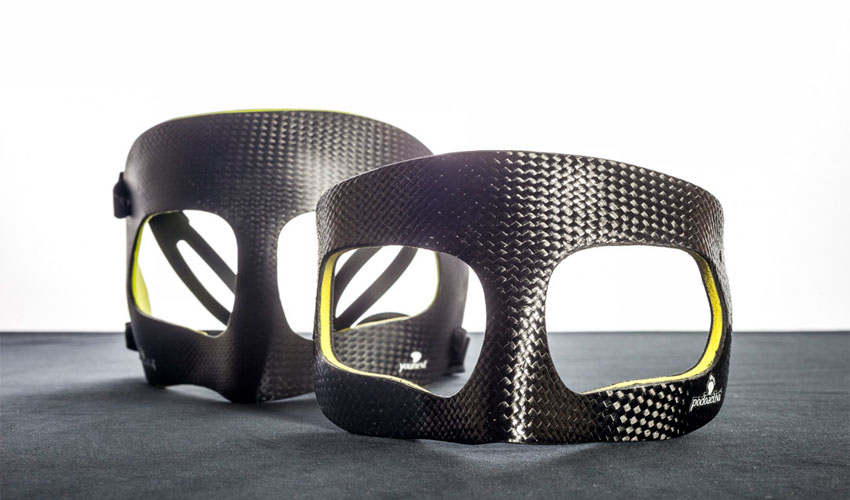 GuidesYounext and 3D technologies in the service of sportThis summer’s 2018 World Cup ended up with France coming out victories. In relation we met the company Younext, which designs tailored protection devices for sports and more particularly for football. The Spanish company prints 3D customised solutions, whether masks,&hellip
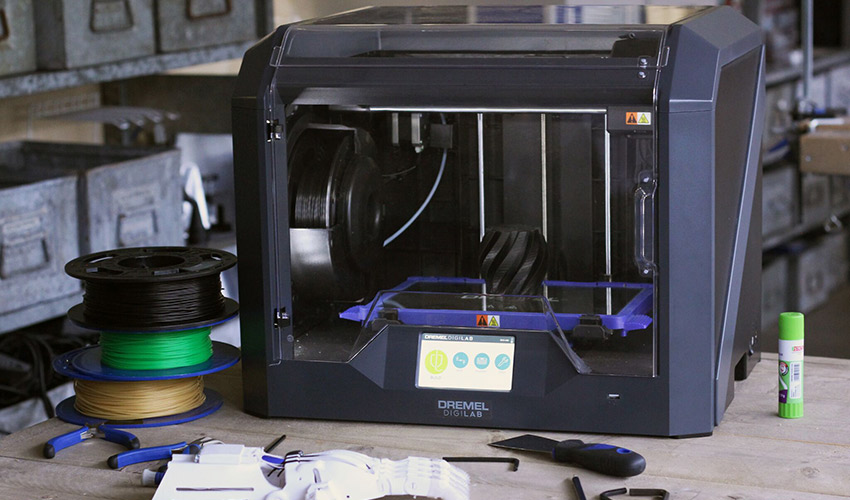 Printers3Dnatives Lab: Testing the DigiLab 3D45 3D printer from DremelBest known for its many micromachining tools for makers, the American manufacturer Dremel launched into the world of 3D printing in 2014 with a first model called Idea Builder. Since then, the brand has expanded its range, adding three 3D…