Applications
Sintavia Awarded DoD Contract to Develop 3D Printed Hypersonic Propulsion Systems
It has long been clear that with additive manufacturing, not even the sky is the limit. And once again that has been proven. Sintavia, a company which claims to be the world’s first all-digital aerospace component manufacturer, has announced that…
- 3 min read
- Applications
- Six more stories
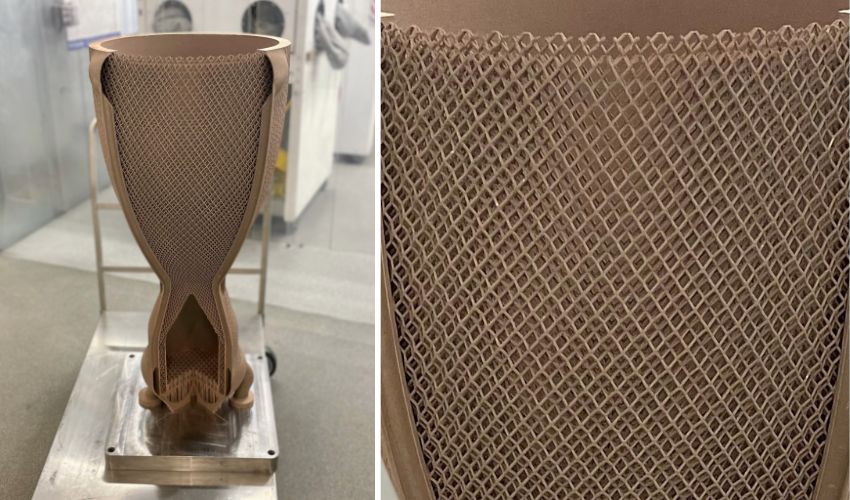
It has long been clear that with additive manufacturing, not even the sky is the limit. And once again that has been proven. Sintavia, a company which claims to be the world’s first all-digital aerospace component manufacturer, has announced that it has been awarded a contract by the U.S. Department of Defense (DoD). Through this, Sintavia will be developing additively manufactured hypersonic propulsion components.
In aerodynamics, the word hypersonic refers to a speed that exceeds five times the speed of sound, starting at speeds of Mach 5 and above, or greater than 3000 mph. Hypersonic propulsion is considered useful in a range of applications, including long-range ballistic flight and air-defense interceptor missiles. Given the current environment, developing this technology has become a major goal of the American defense industry. This is where Sintavia comes in.
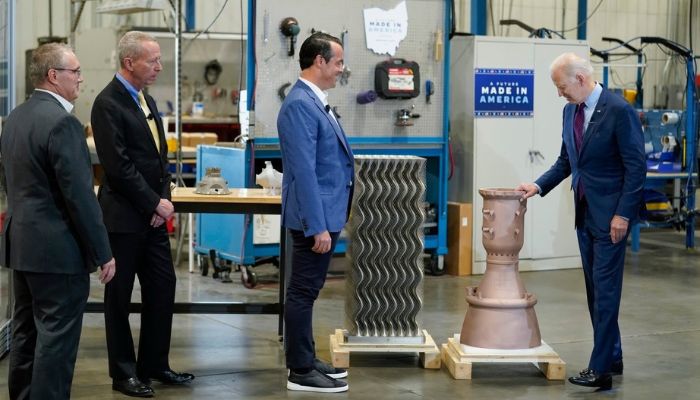
Sintavia has been involved in numerous projects dedicated to growing additive manufacturing, including Biden’s Forward AM Initiative
The contract was awarded as part of the DoD’s Growing Additive Manufacturing Maturity for Airbreathing Hypersonics (GAMMA-H) challenge, which seeks to help efforts to expand manufacturing processes to create hypersonic weapons parts. It was first announced in October 2023 with a budget of $106.7M and is a joint effort between the Office of Secretary of Defense ManTech and the Naval Surface Warfare Center, Crane Division. The reason for the focus on additive manufacturing is because traditional manufacturing processes are unable to meet the intricate geometric specifications required for advanced hypersonics. This, of course, an area where additive manufacturing thrives.
More from the desk
Six other notes from the rest of the bench.
 NewsTOP 5 videos of the week: Renault, Zortrax and more!A new selection of the best 3D printing videos of the week, just for you! Find our TOP 5 videos of the week below and tell us what your favorite video is in a comment or on our Facebook and Twitter page. Don’t hesitate to…
 NewsJapanese Researchers Develop New 3D Printed Elecrodes For BatteriesResearchers from the Tohoku University in Sendai, Japan, recently announced the discovery of a new procedure, in which high-performance carbon micro lattice electrodes could be 3D printed for batteries. The newly introduced method that was published as a research article…
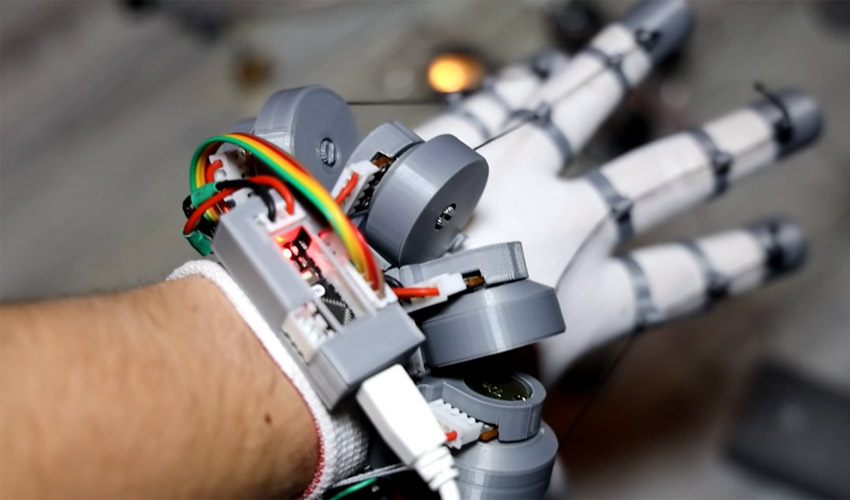 NewsOpen-source 3D printed VR gloves for only $22Lucas VRTech is a young YouTuber who made a pair of 3D printed VR gloves VR for just $22. Called LucidVR, the gloves are completely open-source and were dreamed up during lockdown – Lucas just wanted to keep himself busy…
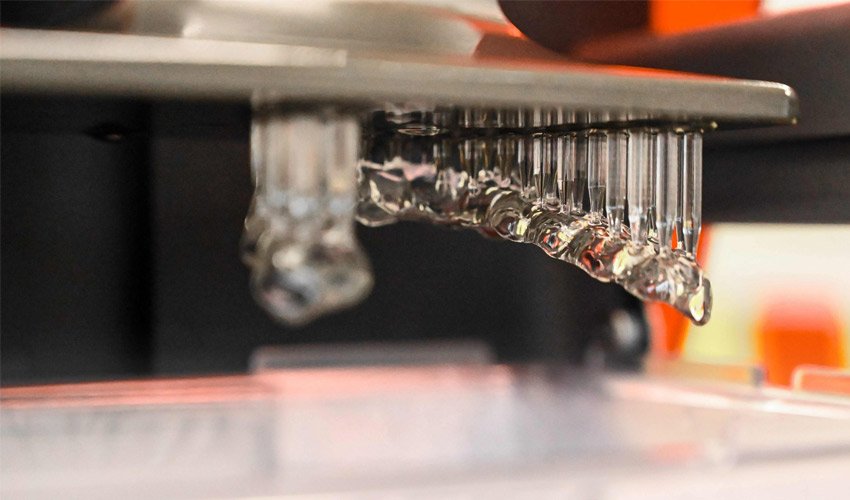 PrintersA New Resin 3D Printer Combines a CT Scanner and Light to Increase its SpeedAt the Technical University of Denmark (DTU), a team of researchers have developed a new kind of 3D printer whose technology combines a CT scanner and light. By reversing the principle of CT scanning, they could create all types of…
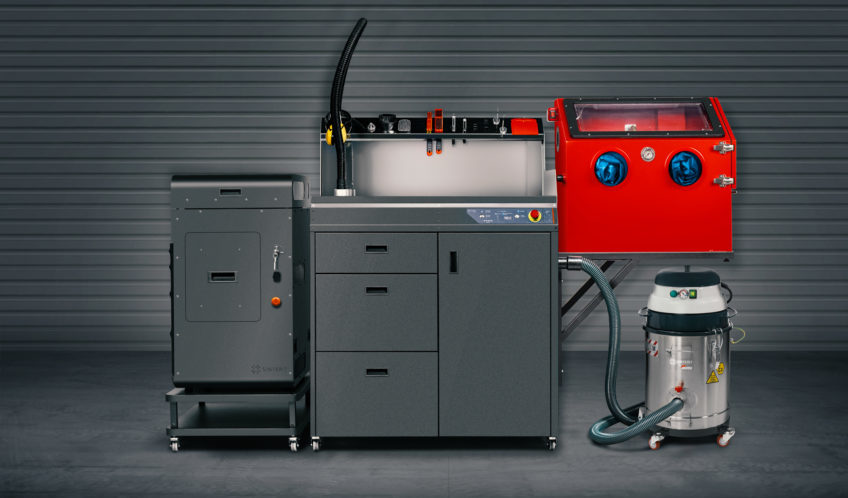 NewsSinterit Launches Powder Handling StationSinterit has just launched its Powder Handling Station (PHS), an accompaniment to SLS printers, designed to make post-processing and powder recovery as clean as possible. As the first company to introduce benchtop SLS technology, Sinterit have a reputation for breaking…
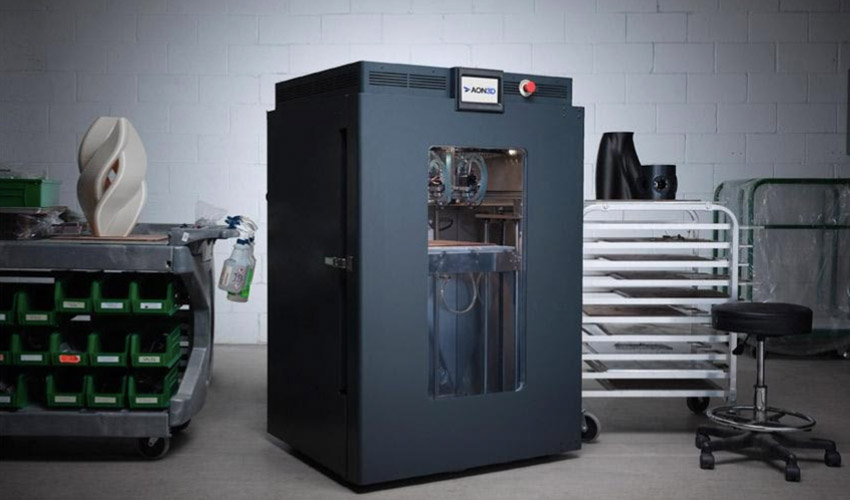 NewsAON-M2 2020, a high-temperature machine compatible with hundreds of materialsCanadian manufacturer AON3D has just launched a new industrial machine, AON-M2 2020, compatible with a wide range of thermoplastics including high performance materials such as PEEK, PEKK and ULTEM. Equipped with a fairly generous build volume of 454 x 454…