Applications
NASA and Rocket Lab Enter a New Era With the Neutron Rocket
With the goal of further expanding its reach in space missions, NASA has signed an agreement with Rocket Lab USA, Inc. to integrate the Neutron rocket into the VADR program. This is a program to procure launch services at competitive…
- 3 min read
- Applications
- Six more stories
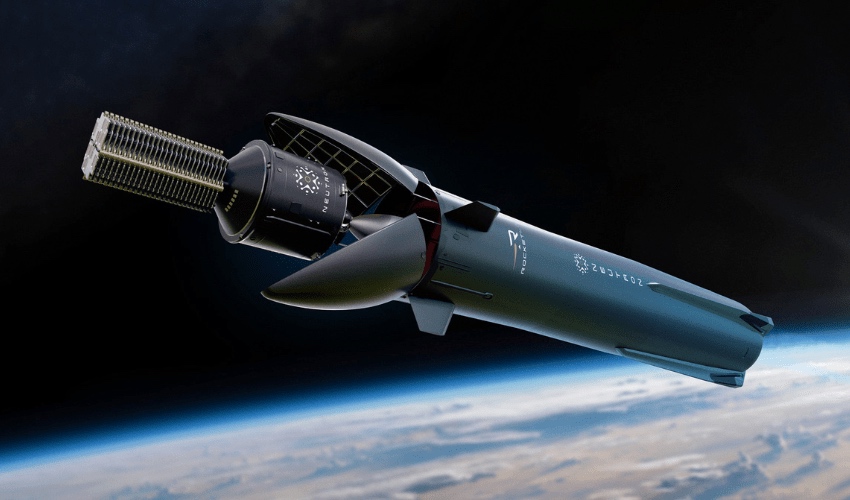
With the goal of further expanding its reach in space missions, NASA has signed an agreement with Rocket Lab USA, Inc. to integrate the Neutron rocket into the VADR program. This is a program to procure launch services at competitive prices and reduce mission requirements for spacecraft that have not yet been launched into orbit. Neutron is a medium-range launch vehicle manufactured by Rocket Lab USA that is partially reusable and powered by nine 3D-printed Archimedes engines designed to increase the efficiency and flexibility of space launches.
This is not the first time the company has experimented with short-range launches. Before Neutron, Rocket Lab USA launched another spacecraft, Electron, into orbit as part of NASA missions and the VADR program. With Electron, the VADR PREFIRE missions were completed in just two weeks, and a double quick launch was initiated in May 2023 for the VADR TROPICS missions. Thanks to Neutron’s versatility and efficiency, Rocket Lab can now expand its field of research to space missions and enter previously unexplored orbits.
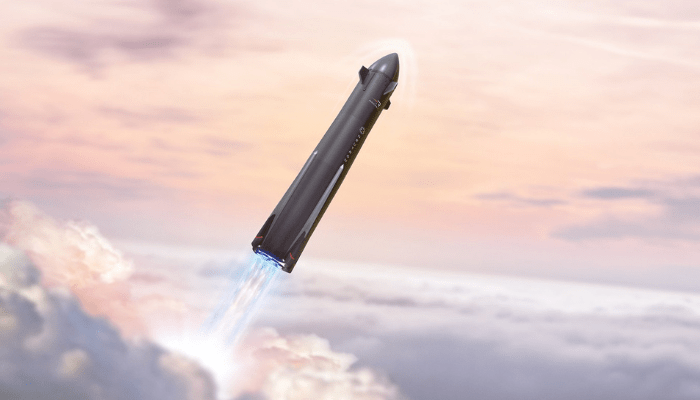
A stylized depiction of Neutron
The Archimedes Engine and the Neutron Rocket
As already mentioned, Neutron consists of no fewer than nine Archimedes engines. This is the reusable rocket engine developed by Rocket Lab USA, whose components were manufactured using a 3D printing process. In May 2024, the company began an intensive stress test campaign at NASA’s Stennis Space Center in Mississippi on the Archimedes engine’s components, subsystems and overall system to verify its performance in the ignition, stable operation and shutdown phases. Numerous activations of the engine system were then carried out until the first hot ignition, i.e. ignition at full power.
More from the desk
Six other notes from the rest of the bench.
 NewsTOP 5 VIDEOS: 3D printing medical models to prepare for surgery…This week we found the top 5 videos about 3D printing and the way additive manufacturing is shaping our society. The technology has infiltrated many sectors, from medical to space! Check out our selection of the week to keep up with the innovations! This week we…
 NewsWEBINAR: How to Start and Scale a 3D Printing ServiceOn the 29th of October, 3Dnatives hosted a webinar on how to start and scale a 3D printing service. Mike Moceri, CEO of MakerOS, led this masterclass in not just how to build a 3D printing service from the ground up,…
 Applications#3DExpress: U.S. Navy and Velo3D Partner to Boost AM in DefenseYesterday, we covered the U.S. Defense Advanced Research Projects Agency’s investment of over $10 million to predict the lifespan of 3D printed parts, and today, we have another defense headline: Velo3D is partnering with the U.S. Navy. Velo3D is a…
 NewsWorld’s First 3D Printed Skatepark to Be Unveiled at Paris OlympicsAs the Paris Olympic Games draw near, the city is witnessing an exciting development. Starting on July 18, a 400m² skatepark created using 3D concrete printing will be open to the public near the Bassin de Takis in La Défense.…
 News3D Printing: A Summary of 20172017 was an eventful year in 3D printing and additive manufacturing. 3D printing startups received hundreds of millions of dollars in investments, announced intentions to build 3D printed supercars and flying cars, and well-established names like GE and HP made…
 MaterialsPLA vs PETG: Which Material Should You Choose?When most people think about 3D printing, the material that comes to mind is usually plastics. Though there are, of course, other materials, including metal and ceramic, polymers still make up the majority of the market for 3D printing materials.…