News
Mitsubishi Electric develops a metal additive manufacturing process
Mitsubishi Electric Corporation is a Japanese electrical equipment manufacturer and one of the world’s largest producers of photovoltaic panels. It is also a player in the additive manufacturing market that has already developed a hybrid machine combining metal sintering an
- 3 min read
- News
- Six more stories
Mitsubishi Electric Corporation is a Japanese electrical equipment manufacturer and one of the world’s largest producers of photovoltaic panels. It is also a player in the additive manufacturing market that has already developed a hybrid machine combining metal sintering and milling. The company announces this time a new 3D metal printing technology that it calls ” Dot Forming ” that is to say a method that would form points, inspired by the technology of metal deposition under concentrated energy ( DED in English). The machine developed would combine both laser, CNC and CAM to produce quality parts.
This initiative qualifies Japanese Mitsubishi to our list of metal 3D printer manufacturers, which keeps growing, and for good reason. According to the Wohlers Report 2018 , the 3D metal printing sector has increased by 21% last year and this trend seems to be continuing. Manufacturers benefit from this growth; for this we can look to HP’s recent announcement at IMTS in Chicago, which chose the MIM-inspired powder binding technique for its new HP Metal Jet. The Japanese manufacturer has turned to a method that uses DED technology. Whereby a source of energy is used to melt and fuse materials at the time of deposit.
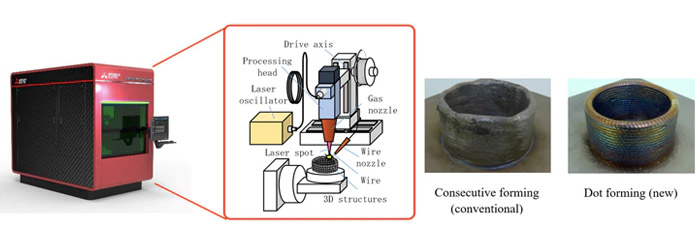
The operation of the Mitsubishi process and printing samples
Mitsubishi Electric’s Dot Forming Technology
The DED process is commonly used to repair and maintain structural parts, but also to create hollow or overhanging shapes. Mitsubishi Electric explains that unlike the DED, its unique technology uses a laser-welding wire. This wire is quit a lot cheaper than when using the conventional powder method. The technology repeats the formation of points by synchronously controlling the pulsed laser irradiation, the wire feed and the shielding gas, as well as the shaping position. With this repetition effect, Mitsubishi Electric claims that the shape accuracy is 60% higher than other metal additive manufacturing processes. As for the oxidation, it’ll be reduced by 20%. Do to the high temperatures are concentrated on a small number of points.
More from the desk
Six other notes from the rest of the bench.
 NewsTop 5 Videos: OWA SpeakerThis week’s Top 5 Videos contain a variety of videos, from well-known brands like Makerbot and Prusa, to innovative new projects such as the OWA Speaker. Remember, a new Top 5 Videos is posted every week, so tune in next…
 NewsGraphene Improves Properties of Copper Powder used in Additive ManufacturingIn Sweden, Uppsala University and the company Graphmatech have worked together to develop a rather unusual copper powder in order to create denser 3D printed parts. Using a laser fusion process, the researchers modified the metal’s surface with graphene. Thanks…
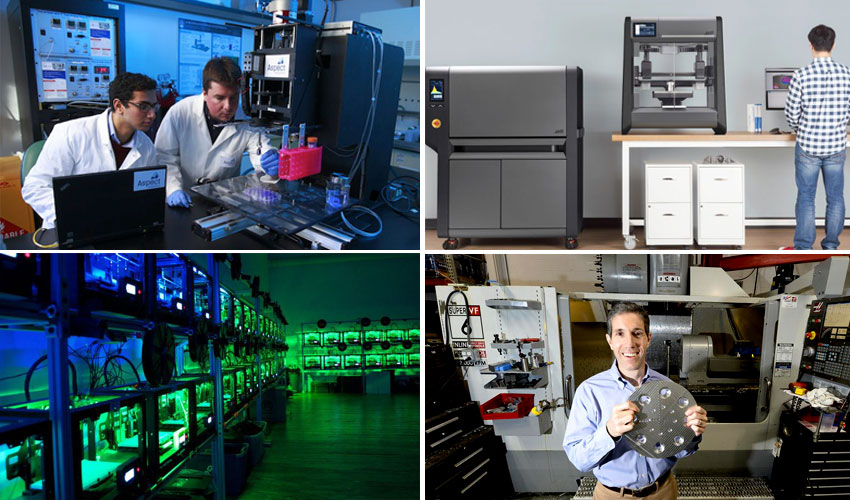 News3D Printing Startups of the Year 2017Every month, 3Dnatives interviews 3D printing startups that are working on something innovative in the 3D printing sector. These startups range from manufacturer Markforged, to metal 3D printer manufacturer Desktop Metal, to bio-printing firm Aspect Biosystems. We summarised the
  MaterialsThe BARBARA project develops new bio-based materials for functional prototypingIn the EU, the BARBARA project, part of Horizon 2020, aims to develop new bio-based materials with innovative functionalities. These materials are designed to be used during material extrusion, otherwise known as Fused Filament Fabrication, to create parts. This project,…
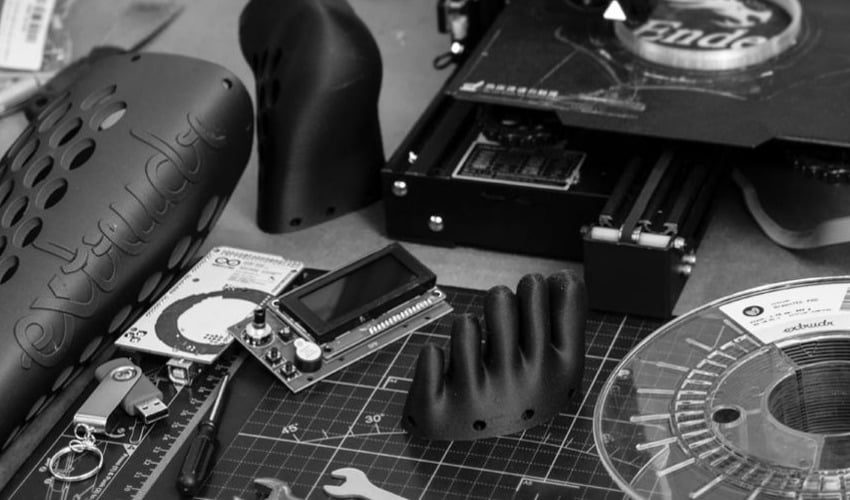 MaterialsExtrudr, the New Manufacturer of 100% Biodegradable FilamentsCreated in 2014 by Johannes Früh, Extrudr is a new player in the field of filament manufacturers for 3D printers. Despite its young age, the Austrian company already offers an extensive range of materials including PLA, TPU, PETG as well as…
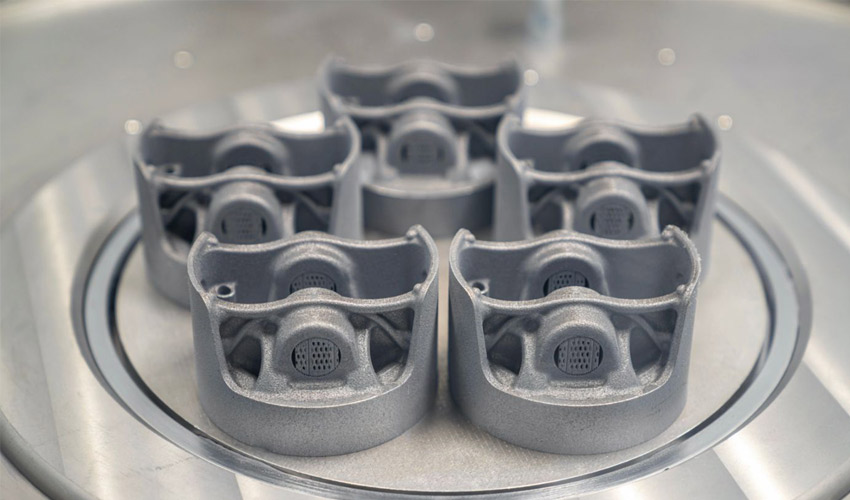 GuidesPorsche on the use of additive manufacturingA few weeks ago, the car manufacturer Porsche presented 3D printed pistons for the engine of its famous model 911 GT2 RS. Additive manufacturing allowed Porsche to reduce the overall weight of the part as well as the production lead…