Guides
The Top Examples of 3D Printing for Mass Production
3D printing is no longer exclusively used in the development of prototypes, rather it is increasingly used for end-use parts. Although its viability in large-scale manufacturing has sometimes been questioned due to costs and production times, this perception is changing.…
- 3 min read
- Guides
- Six more stories
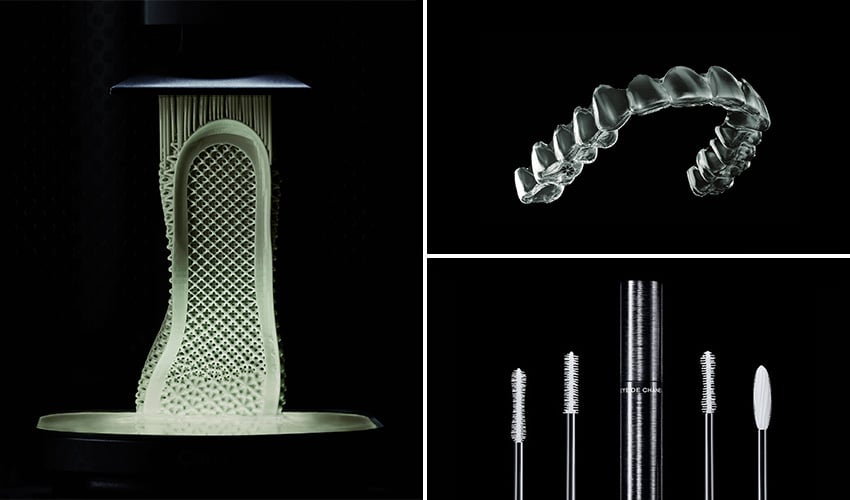
3D printing is no longer exclusively used in the development of prototypes, rather it is increasingly used for end-use parts. Although its viability in large-scale manufacturing has sometimes been questioned due to costs and production times, this perception is changing. More and more companies are demonstrating that it is possible to combine quality, customization and efficiency in high-volume production. From industrial components to customized items, 3D printing is gaining ground as a real solution for mass production. So we decided to explore some specific cases where 3D printing has been key to mass production, creating thousands of parts and therefore demonstrating its potential and challenging traditional production methods.
Adidas and Carbon Join Forces for the Mass Production of 3D Printed Sneakers
In 2016 Adidas partnered with Carbon to revolutionize the way running shoes can be made. In 2017, the two companies released Futurecraft 4D: the revolutionary multi-zone midsole produced in a single printing session and featuring an innovative mesh structure. Together, they launched the production of 100,000 pairs of Futurecraft 4D shoes with 3D printed midsoles. Futurecraft 4D was followed by AlphaEDGE in 2018, to which thickness was added compared to the previous model to the uprights directly under the heel, the point where the runner puts the most pressure during running. In 2021, the Adidas 4DFWD, the third generation of the 4D midsoles, was launched, exploiting the physical property of anisotropy to make the shoe comfortable and functional for running. Also, a collaboration between Adidas and Carbon, the new midsole is made using the Carbon DLS™ process and takes advantage of EPU 44 elastomer, an upgraded version of the previous EPU 41 used for the Futurecraft 4D. This next-generation material is highly resilient, tear-resistant and more sustainable, thanks to a 40 percent bio-based formulation. Adidas 4DFWD is the brand’s latest evolution combining technological innovation, advanced design and sustainability on an industrial scale.
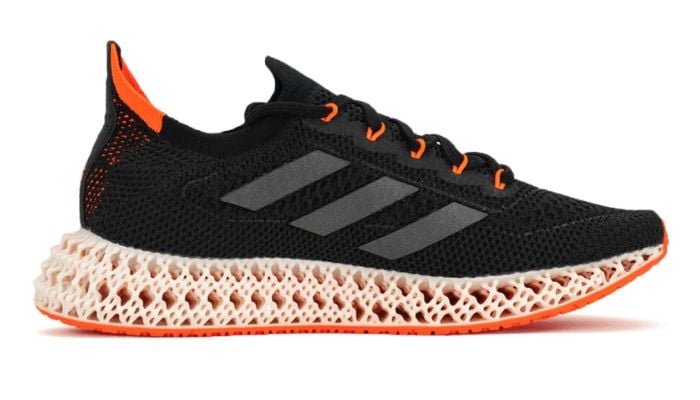
Photo Credits: Carbon
Align Technology Uses 3D Printing for Mass Production of Dental Devices
When it comes to mass production in 3D printing, Align Technology is a shining example. The American company is a specialist in orthodontic solutions made with 3D printing, notably as the inventor of Invisalign. Indeed, it has always been a strong supporter of both 3D printing and 3D scanning, seen through the acquisition of intraoral 3D scanner manufacturer iTero in 2011 and then of polymer 3D printer manufacturer Cubicure in 2024, it has also been a long time partner of 3D Systems. 3D printing is used by Align Technology for everything from molds for its flagship aligners to a palatal expander, the first direct 3D printed orthodontic device from the manufacturer. Considering that the company makes up to one million unique aligner parts per day, with 3D printing relied on to make hundreds of thousands of aligner molds, that is no small consideration. A perfect example of how to combine customization, mass production and 3D printing!
More from the desk
Six other notes from the rest of the bench.
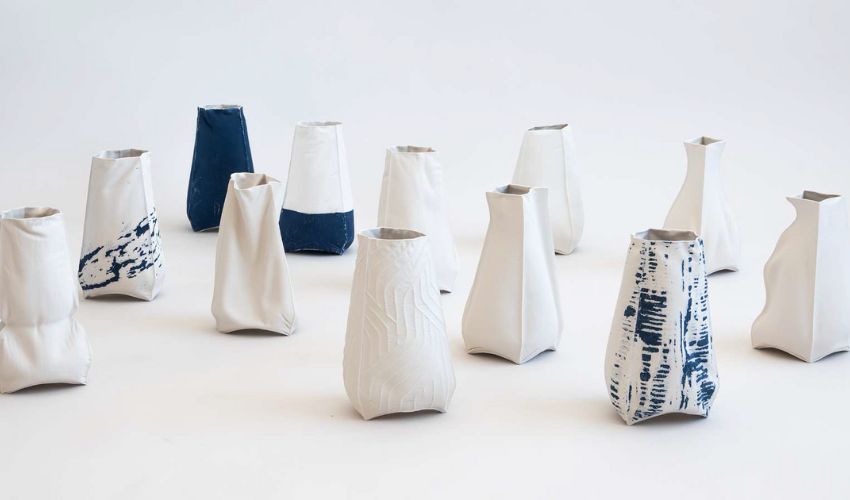 News3D Printing and Fabrics: The Unique Design Process Behind the Forma Fabrica Vase CollectionWith the ever-broadening use of additive manufacturing, the role of the 3D printer has spread from the factory floor to the art studio and beyond, with the 3D printer serving as a medium through which new artistic, conceptual and cultural…
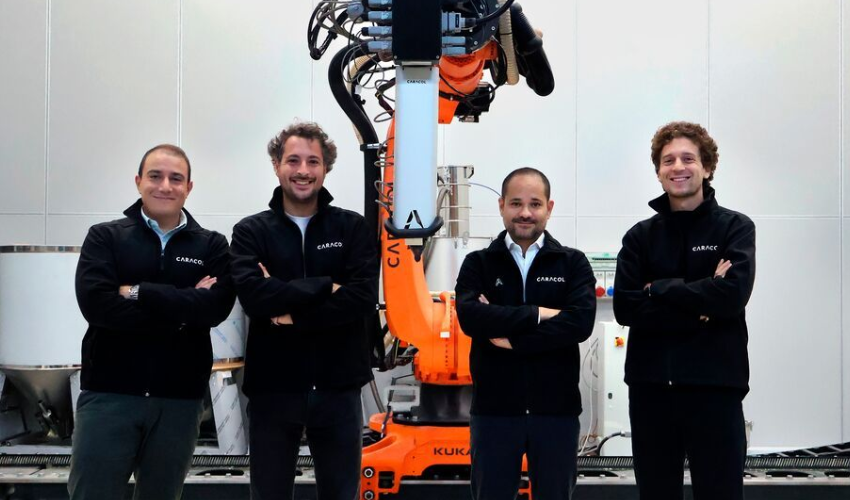 News$40M Boost Fuels Caracol’s Global Additive Manufacturing PushCaracol, an Italian deep-tech company that has pioneered large-scale robotic additive manufacturing, recently raised $40 million USD in a Series B funding round to help accelerate its global expansion. This investment will support the company’s continued push into new globa
 SoftwareBlockchain Startup CADChain Launches Free Security Plug-in For Autodesk InventorAccording to a study by PwC, in the manufacturing industry, 94% of all cyber-attacks are from industrial espionage and cyber-theft of trade secrets. In the 3D printing industry, CAD files and other Intellectual property are regularly shared via email and…
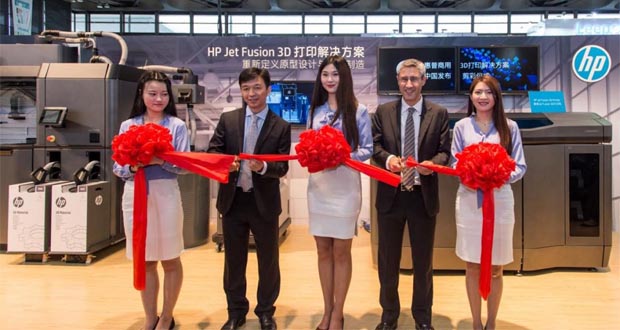 NewsHP makes big announcements at Die & Mould China 2017Coming on the cusp of recent announcements by HP at the RAPID + TCT fair in the US earlier this month, HP is now back with new surprises at the Die & Mould China 2017 Expo in Shanghai that just…
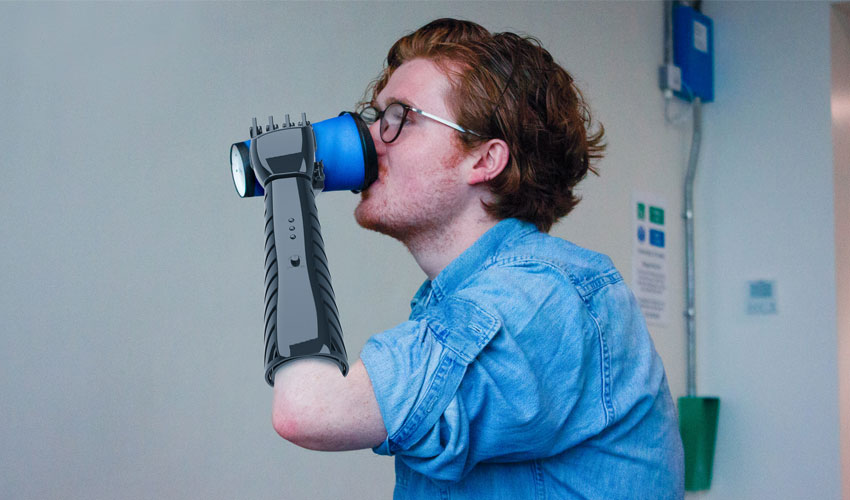 ApplicationsA student’s low-cost 3D printed prosthetic arm provides tactile feedbackLorenzo Spreafico, a student at the University of Leeds, has designed a 3D printed prosthetic arm with vibro-tactile feedback, allowing amputees to feel when they are touching something. This kind of device is usually very expensive, but additive manufacturing could…
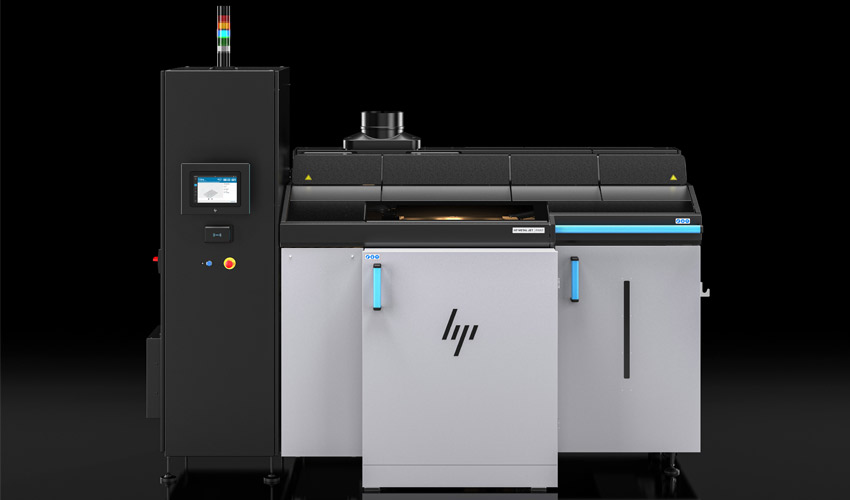 PrintersMetal Jet S100, HP’s Metal 3D Printing Solution, is Finally AvailableAt the end of 2018, HP announced its intention to enter the metal additive manufacturing market. Four years later, its machines are finally available commercially, after being tested by several companies carefully selected by the American manufacturer. This is highly…