Applications
A student’s low-cost 3D printed prosthetic arm provides tactile feedback
Lorenzo Spreafico, a student at the University of Leeds, has designed a 3D printed prosthetic arm with vibro-tactile feedback, allowing amputees to feel when they are touching something. This kind of device is usually very expensive, but additive manufacturing could…
- 3 min read
- Applications
- Six more stories
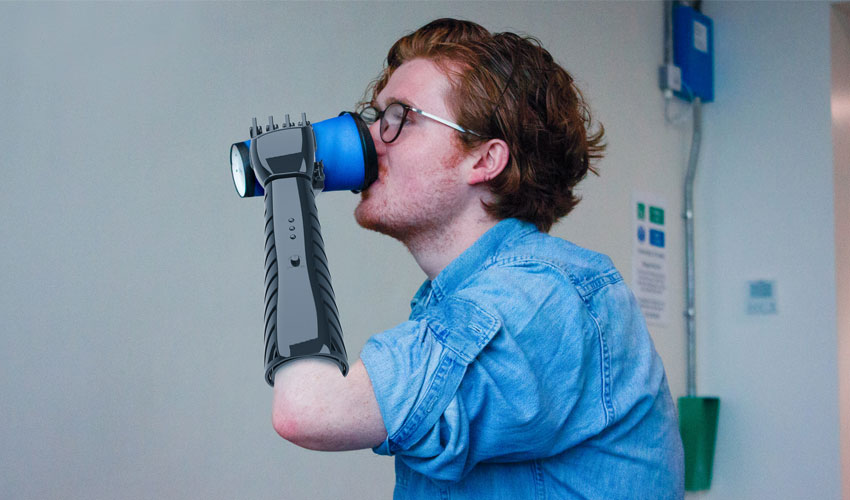
Lorenzo Spreafico, a student at the University of Leeds, has designed a 3D printed prosthetic arm with vibro-tactile feedback, allowing amputees to feel when they are touching something. This kind of device is usually very expensive, but additive manufacturing could lower the price without reducing the effectiveness of the prosthetic device. At the moment, Lorenzo Spreafico has designed a prototype and is evaluating his device, called T1, at just under €3,500.
3D printed prostheses are often made of plastic and remain quite simple: the primary objective is to help patients in their daily life by offering them a personalised device that they feel comfortable with. Some prosthetic devices integrate electronics to offer other more advanced functionalities. The student from Leeds wanted to add functionality to his 3D printed prosthetic arm, he explains: “There is a huge gap in the development of prostheses: although we are developing extremely advanced technology to simulate human movement and dexterity, there is much less work done when it comes to simulating human touch“.
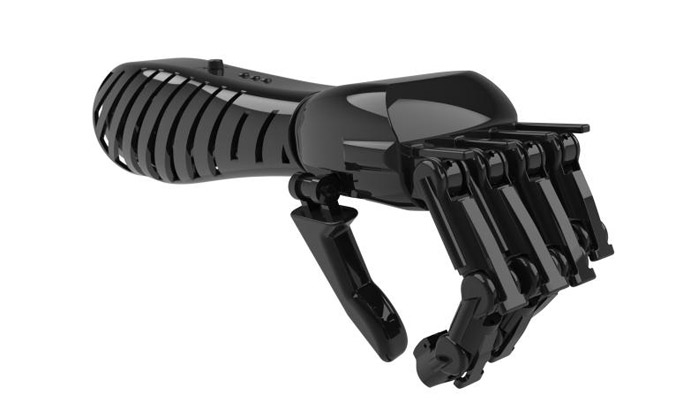
The final version of the prosthesis
The final version of the low-cost 3D printed prosthetic arm
It is not known which 3D printer Lorenzo used to design the T1 prosthesis, but the process is likely to be Fused Deposition Modeling. He explains that he integrated pressure sensors at the tip of each finger, each connected to vibrating disc motors located at the stump to warn the wearer of the force they are applying to an object. This pressure simulation process would keep the cost of the device much lower than other myoelectric prosthetic devices.
More from the desk
Six other notes from the rest of the bench.
 ApplicationsUniversity of Minnesota Medical School Receives 3D Printers to Better Study the HeartBoth education and medicine are sectors that have continuously seen the value of additive manufacturing. Now, Stratasys has combined the two, donating Stratasys J750™ Digital Anatomy™ 3D printers, as well as MakerBot METHOD X® and MakerBot SKETCH® 3D printers to the Visible Heart
 NewsThe Great British Cycling Team Turns to AM to Help Succeed in the Commonwealth Games3D printing has once again showed its continued importance in the sports sector. Renishaw, a leader in metal 3D printing, used additive manufacturing (AM) to help create a track bike for the Great British Cycling Team (GBCT) in the Birmingham…
 NewsHP Puts Innovation and Sustainability at the Heart of Formnext 2023Formnext is in full swing and the entire AM world has its eyes turned towards Frankfurt to get a picture of the most important event of the year. One company that should definitely not be missed is HP Inc. It…
 ApplicationsDePuy Synthes invests €36M to develop medical 3D printingJohnson & Johnson-owned franchise, DePuy Synthes Ireland is investing €36 million to establish a 3D Printing Development and Launch Center in order to accelerate its additive manufacturing projects. The company is a global leader in orthopaedic and neurological solutions incl
 NewsThe World’s First 3D Printed Fiberglass PoolAmerican pool company San Juan Pools recently unveiled what it claims to be the first-ever 3D printed fiberglass pool. In a late segment of the TV morning show Fox and Friends, the pool was presented for the first time on…
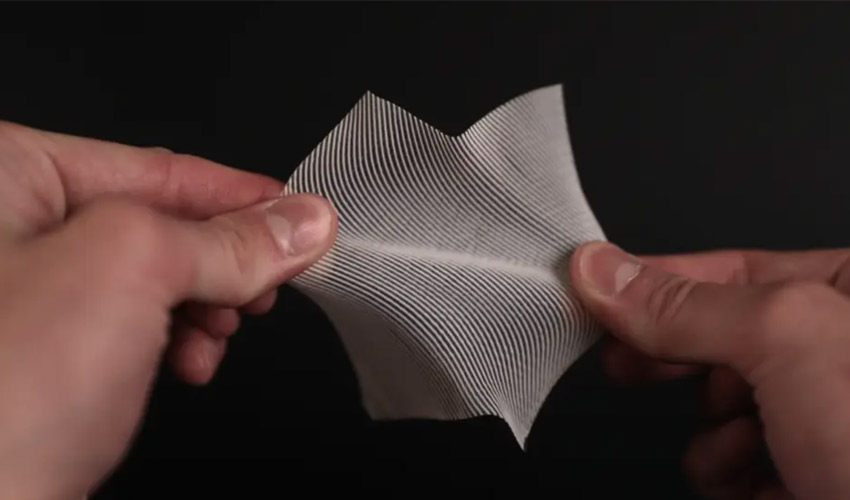 MaterialsDefeXtiles: using under-extrusion to create a new type of textileAt MIT, researchers and engineers often imagine creative projects and develop innovative products related to the world of 3D technologies. Recently, Jack Forman, one of the graduate students, developed a new type of textile by exploiting one of the common…