Applications
Bioprinting inside the body for a more effective treatment of stomach ulcers
Bioprinting technologies have been advancing quite rapidly in recent years. In the medical sector, this method allows cells and biomaterials to be combined and deposited layer by layer, aiming to create biomedical models with the same properties as living tissues.…
- 3 min read
- Applications
- Six more stories
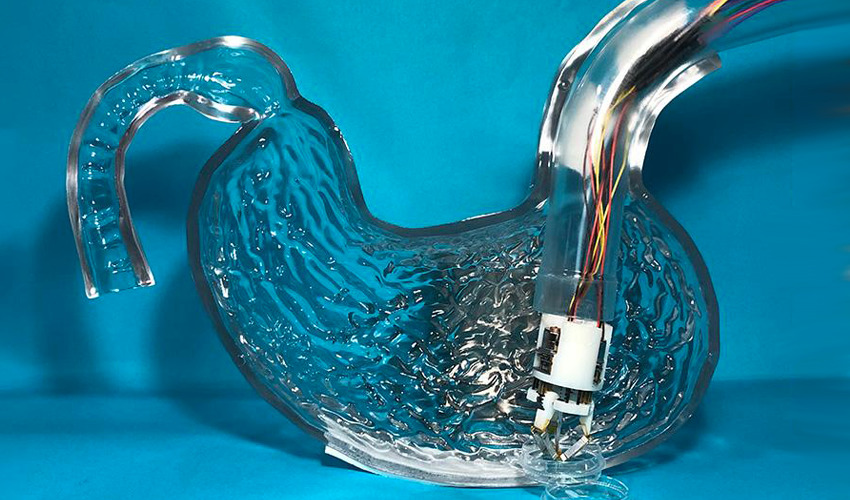
Bioprinting technologies have been advancing quite rapidly in recent years. In the medical sector, this method allows cells and biomaterials to be combined and deposited layer by layer, aiming to create biomedical models with the same properties as living tissues. In addition, there are many bioprinting projects that focus on the creation of human organs in three dimensions. Today we present you a new application of 3D printing in medicine, which could potentially facilitate the treatment of ulcers of the digestive system. The recently developed technique involves printing directly onto stomach. How does it work?
Researchers at Tsinghua University in China have developed a prototype that uses additive manufacturing of biomaterials to treat gastric wounds from inside the body. The research paper titled “Preliminary engineering for in situ in vivo bioprinting: a novel micro bioprinting platform for in situ in vivo bioprinting at a gastric wound site” was published in a scientific journal called IOPscience.
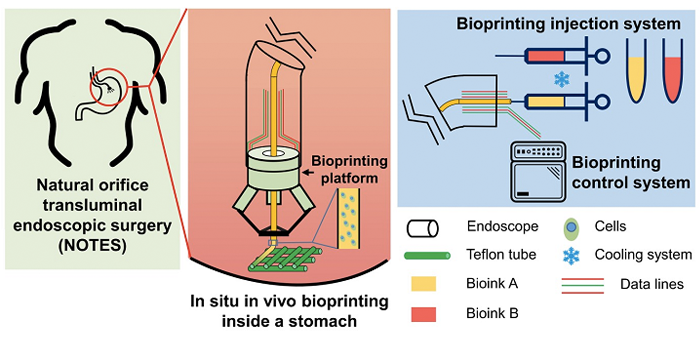
Bioprinting directly onto stomach
The team of researchers developed a micro-robot that is 30mm wide and 43mm long ( when folded), and can reach 59mm once it is deployed. David Hoelzle, a mechanical engineer at Ohio State University, said, “The team has designed ingenious mechanisms that enable a compact system to penetrate the body and, once the narrow entry restrictions are overcome, it deploys to cover a large work area”. For the sake of the experiment, the Chinese researchers attached the device in question to an endoscope to introduce it into a transparent stomach model. When it arrived at its destination, the prototype was able to begin bioprinting gels loaded with epithelial and muscle cells on the stomach wall!
More from the desk
Six other notes from the rest of the bench.
 NewsWEBINAR: How Customized and High Volume Production of Footwear Is Realized With DLP 3D PrintingToday, high-volumes coupled with delocalized production can lead to a number of business challenges, as demonstrated by the many logistic disruptions in recent years. Indeed, since COVID-19, we have seen multiple supply chain crises which have brought entire industries almost&hel
 NewsMicro-Printing Technology Allows For Naturally Cooled Concrete to Combat Heatwaves3D printer manufacturer Microlight3D is the winner of the European FET-Open program, Future Emerging Technology with its microstructured concrete that would allow buildings to cool naturally. Thanks to its micro-printing technology, and more specifically its two-photon polymeriza
 ApplicationsMoorhuhn bike: competing with carbon fibre frames?The purmundus challenge was presented for the eighth time on November 2020 as part of the digital Formnext Connect exhibition. This annual competition invites designers and engineers from around the world to participate in a theme-based 3D printing design contest.…
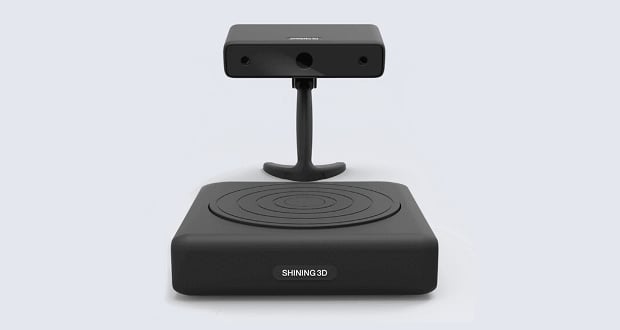 Printers3Dnatives Lab: EinScan-S 3D Scanner by Shining3D TestToday the 3Dnatives lab will be embarking on a test of the Einscan-S model from Shining 3D. This 3D scanner was born thanks to a Kickstarter campaign in early 2015, where they were able to scrape together a whopping $123,000 USD to…
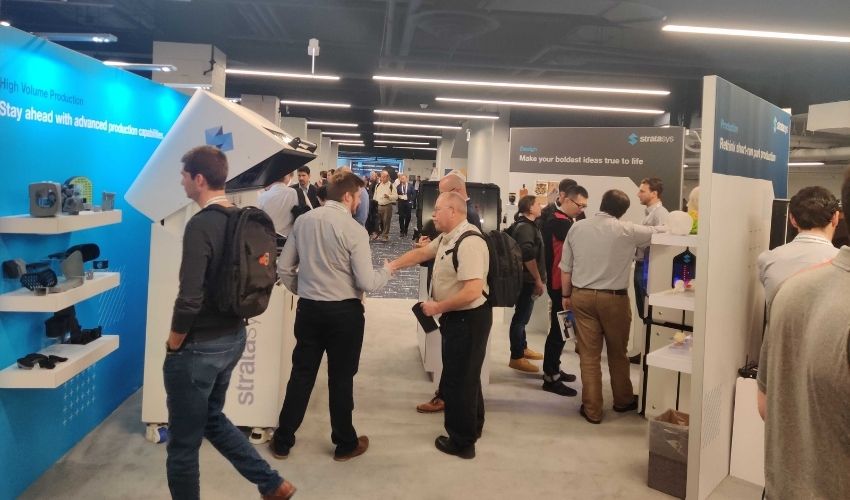 NewsAMUG 2022: A Round Up of all the News From the EventAMUG 2022 is officially over! The annual AM conference “for users – by users” took place this year from April 3rd to 7th in the Hilton in Chicago, Illinois. Once again, attendees were treated to packed days full of conferences,…
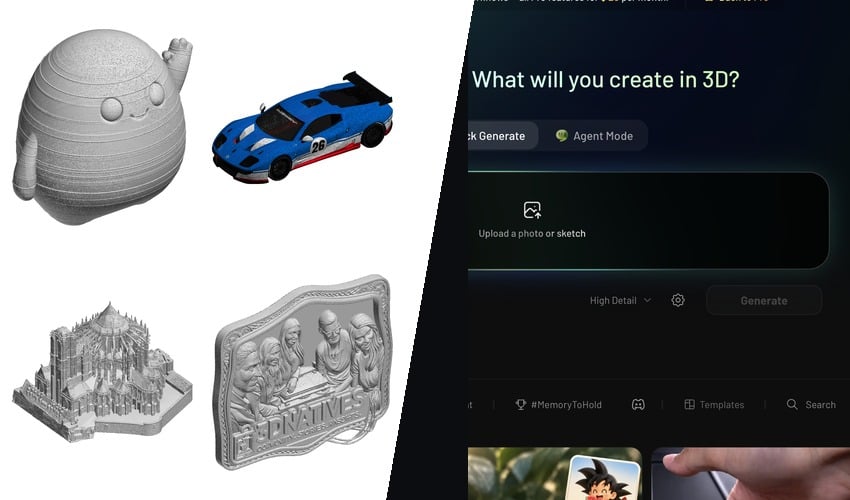 Software3Dnatives Lab: Testing Meshy, the AI 3D Model Generator, for 3D PrintingMeshy, the AI 3D model generator, did not start as a 3D printing tool. When Yuanming (Ethan) Hu launched Meshy-1 in 2023, the pitch was aimed at game developers and animators: characters, props and environments, generated in a minute and…