News
Lufthansa Has Announced the First Load-Bearing Part Made With Metal Additive Manufacturing
Thanks to additive manufacturing, quite a few major successes and improvements have already been celebrated in the aerospace sector. Now, German airline Lufthansa has announced that, in a joint collaboration with Premium AEROTEC, additive manufacturing will be used for more&helli
- 3 min read
- News
- Six more stories
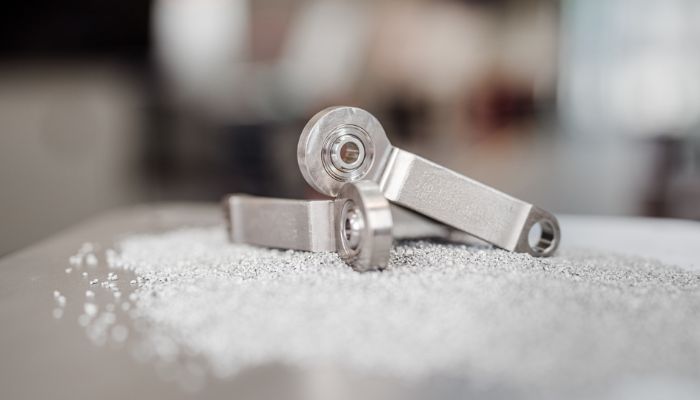
Thanks to additive manufacturing, quite a few major successes and improvements have already been celebrated in the aerospace sector. Now, German airline Lufthansa has announced that, in a joint collaboration with Premium AEROTEC, additive manufacturing will be used for more cost-effective production of spare parts for their aircraft . Specifically, the metal component produced at Lufthansa Technik’s Additive Manufacturing Center will be used for the IAE-V2500 engine’s anti-icing system. For this, the two companies have already received official aviation approval from the European Aviation Safety Agency (EASA) for the additively manufactured A-Links. This is the first instance where approval has been given within the aerospace industry for a load-bearing, metallic, 3D printed spare part.
With the support of Premium AEROTEC, Lufthansa is positioning itself very well, because as a global player within the aviation industry, Premium AEROTEC specializes in the development and production of aircraft parts made of metal and carbon fiber composites. Lufthansa Technik needs a total of nine of these so-called A-links to fix a ring-shaped hot air duct in the engine’s inlet cowl. This prevents the formation of ice on the aircraft engine, which is also urgently required due to the enormous altitude of an aircraft. Though they are extremely important, they often wear down at their mounting holes, meaning they need to be replaced every few years.
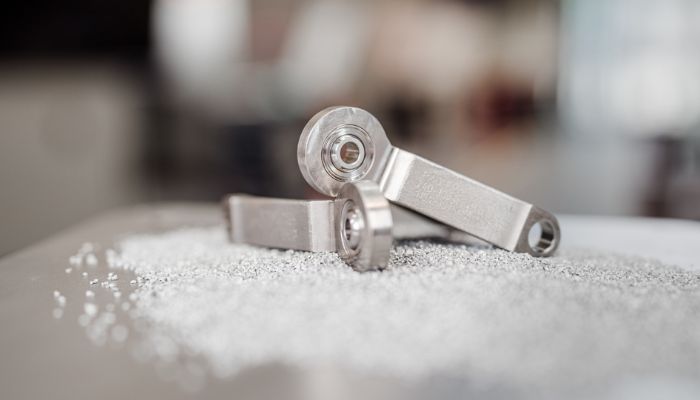
The 3D-printed A-Link (photo credits: Premium AEROTEC)
Low Wear and Cost Reduction: Lufthansa Enjoys the Advantages of Metal Additive Manufacturing
The main reason why 3D printing was chosen for the production of the A-Links is primarily related to wear and tear. The traditionally manufactured A-Links can no longer be used under all given safety aspects after only a few years due to the vibrations during a flight and have to be replaced. Though usually such aircraft parts are made with a forging process, the German airline will now be able to produce them by Laser Powder Bed Fusion (LPBF) thanks to collaboration with Premium AEROTEC. Compared to the forging process, this has the advantage that no jigs or molds are required for subsequent production, resulting in valuable material savings and thus cost reductions.
More from the desk
Six other notes from the rest of the bench.
 Printers3D Systems Shows the New PSLA 270 Resin 3D Printer at RAPID + TCTWe have previously told you about the PSLA 270 resin 3D printer from 3D Systems. The solution, which was designed to meet the demands of industrial manufacturing, was unveiled this year at RAPID + TCT 2024. Combining the best of…
 ApplicationsBiomodex adds new 3D printed surgical training solution3D printing is increasingly becoming an important tool in the medical field notably for customization of medical devices. However it is clear that it also will be important in medical training. In the latest advancement, Biomodex, a Boston and Paris…
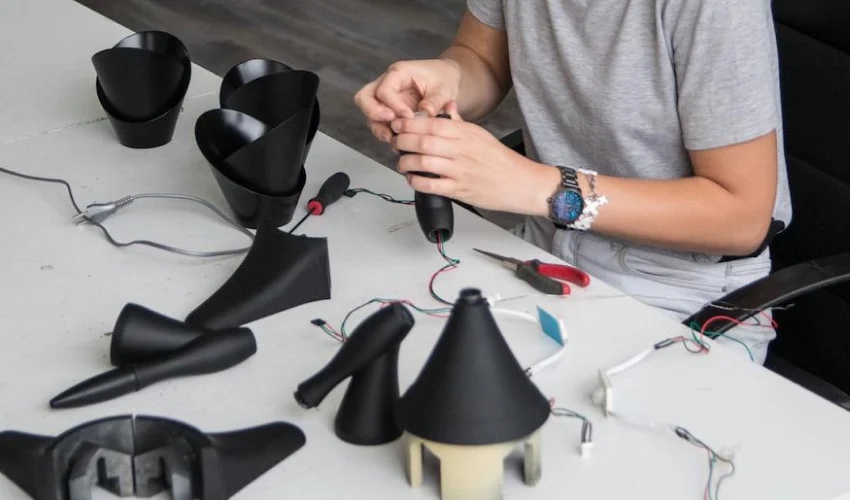 News10 Reasons Why Post-Processing Is Important in 3D PrintingWhen we talk about 3D printing, it stands without saying that most would think first about the actual printing process. However, additive manufacturing comprises several stages, from modeling to final part, including design and optimization, slicing, 3D printing and post-processi
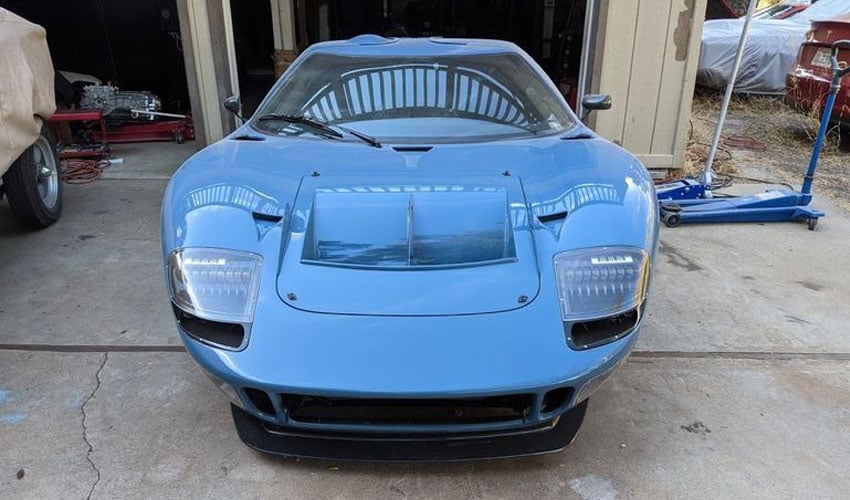 PrintersUsing 3D Scanning to Repair and Customize the Famous Ford GT40The Ford GT40 is a sports car designed in only 126 examples in the 1960s, with a history well known to car enthusiasts but also amateurs, the rivalry between Henry Ford II and Enzo Ferrari has inspired more than one…
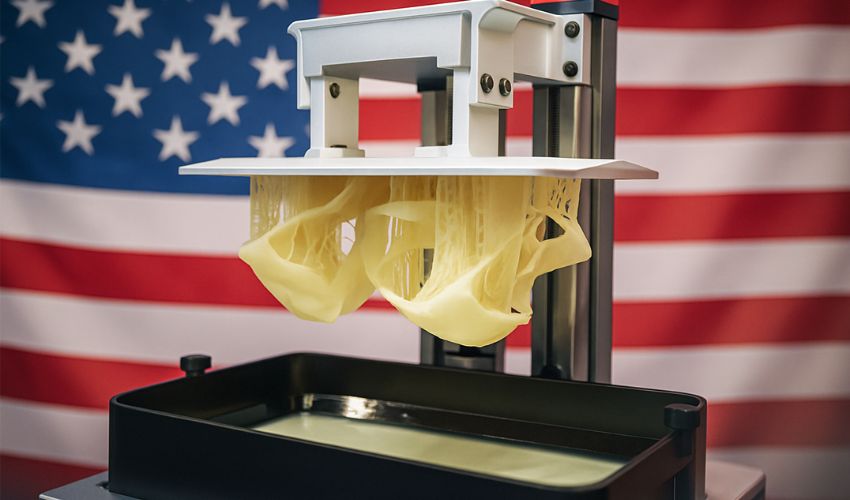 MaterialsWhich Companies Manufacture 3D Printing Resin in the United States?Resins play a central role in many 3D printing technologies. In fact, the very first 3D printing method—stereolithography(SLA)—relies on a UV-sensitive liquid resin that solidifies when exposed to ultraviolet light. This process, known as photopolymerization, is a hallmark of res
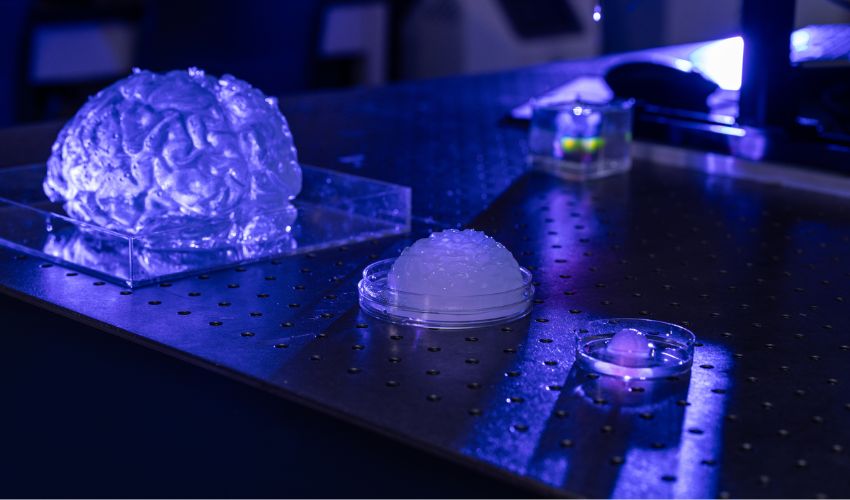 ApplicationsUniversity of Missouri Researchers 3D Print Artificial Human Brain PhantomResearchers at the University of Missouri College of Engineering have successfully 3D printed an artificial human brain phantom. This has the potential to reshape how scientists study neurological conditions, train medical professionals, and develop personalized treatment tools.