News
What Is Laminated Object Manufacturing?
There are a number of different technologies that can fit under the additive manufacturing umbrella. Though common ones like FDM and SLA are well-known in the industry, others may be more niche. Take for example, Laminated Object Manufacturing (LOM), a unique…
- 3 min read
- News
- Six more stories

There are a number of different technologies that can fit under the additive manufacturing umbrella. Though common ones like FDM and SLA are well-known in the industry, others may be more niche. Take for example, Laminated Object Manufacturing (LOM), a unique rapid prototyping process that combines both additive and subtractive elements, making it a distinctive player in the 3D printing landscape.
The history of LOM traces back to its development in 1991, when a company called Helisys introduced laminated object manufacturing, a process in which sheets of material were fused together, and a digitally guided laser was used to cut out the desired objects. Later, in 2003, brothers Conor and Fintan MacCormack developed their version of the process. They used standard office paper and an inkjet printer to print the designs, gradually building up the object layer by layer. Then, they employed a tungsten blade to cut away the excess paper, revealing the final design.
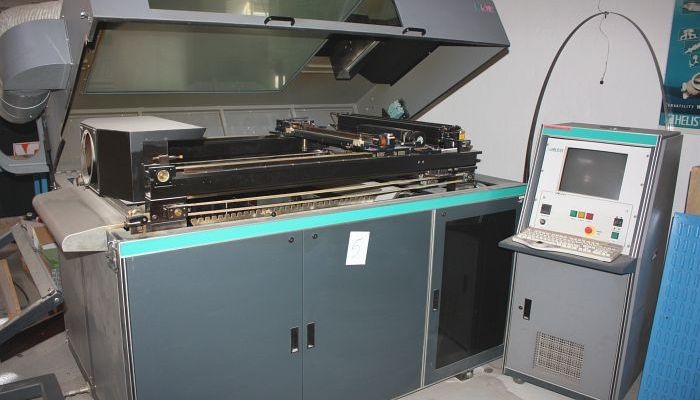
The discontinued Helisys LOM-2030 Rapid Prototype Modeling Machine, built in 1997 (Photo credits: KJ Auktion)
The MacCormack brothers took their innovation to the commercial realm through their company, Mcor Technologies. They continued to enhance the process by introducing CMYK color printing to create more vibrant objects suitable for promotional or visual prototyping purposes. This new approach, known as selective deposition lamination (SDL), involved color printing the sheets of paper before selectively gluing and cutting them. The adhesive was applied only to the areas corresponding to the design, making it easier to cut the final object from the waste material. But how has it continued to develop since then? When is it used? To better understand this interesting process, we took a closer look at Laminated Object Manufacturing in the guide below.
More from the desk
Six other notes from the rest of the bench.
 NewsThe Most Exciting Things We Saw at Formnext 2024Formnext might have closed its doors, but there is still plenty to see in the coming days. We at 3Dnatives will have more videos and additional content coming from the show to give both attendees and those who stayed at…
 Guides3D Printed Architecture: Our Top PicksThe Oxford English Dictionary defines architecture as “the art and study of designing buildings”: whether it is houses, offices, bridges or schools, this art is greatly impacted by new technologies. Architects are looking for innovative structures, both in terms of&he
 PrintersEverything You Need to Know about Multi-Axis 3D PrintingIn the world of technology, 3D printing can sometimes feel like science fiction. But while we’ve grown used to watching printers lay down layer after flat layer, a new technique has been catching our attention: multi-axis 3D printing. By breaking…
 PrintersMust-See Product Launches of 2025Still undecided on a Christmas gift? Don’t panic, we have a solution for you. If you’re considering investing in a 3D printer or a 3D scanner, this list should be right up your alley. We took a closer look at…
 MaterialsWhich Companies Manufacture 3D Printing Resin in the United States?Resins play a central role in many 3D printing technologies. In fact, the very first 3D printing method—stereolithography(SLA)—relies on a UV-sensitive liquid resin that solidifies when exposed to ultraviolet light. This process, known as photopolymerization, is a hallmark of res
 NewsTop 5 Videos: 3D Printed Interactive Fashion from Anouk WipprechtFor this week’s edition of Top 5, we have five videos to give you the tools and inspiration to enhance your own 3D printing journey. First, we highlight a 3D Interviews episode with fashion tech designer Anouk Wipprecht to learn…