Guides
Krill Design on 3D Printing Furniture Using Oranges, Lemons and Coffee Grounds
As the topic of sustainability continues to grow in importance, 3D printing is increasingly at the center of the debate about greener production. One example of this comes from a possibly surprising source. Krill Design’s projects may in fact be…
- 3 min read
- Guides
- Six more stories
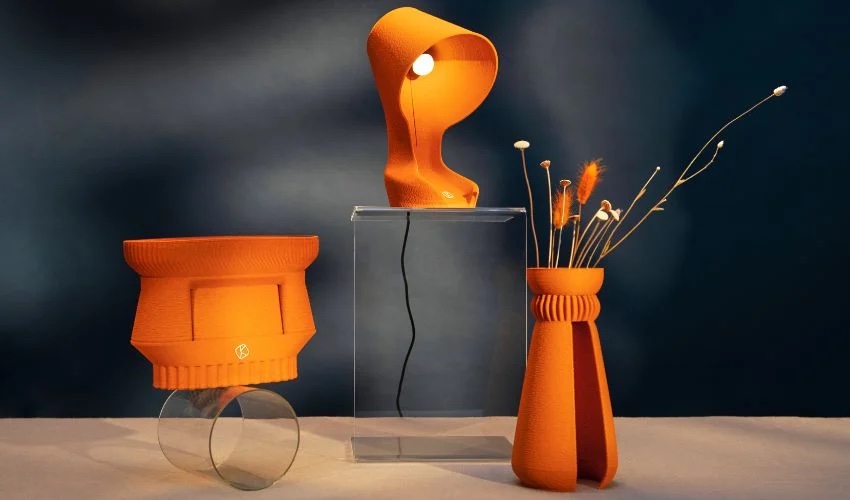
As the topic of sustainability continues to grow in importance, 3D printing is increasingly at the center of the debate about greener production. One example of this comes from a possibly surprising source. Krill Design’s projects may in fact be proof that 3D printing and planet go hand in hand. The startup was founded by three students from Milan Polytechnic and now prints lamps, magazine racks and decorative objects for your home with materials made from recycled food such as oranges, lemons and coffee. We interviewed them to learn more!
3DN: Could you introduce yourself and tell us more about Krill Design?
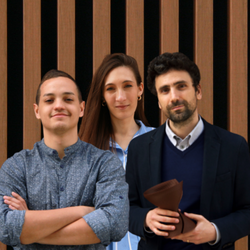
The Krill Design team (photo credits: acube).
We are Krill Design, an innovative startup born in Milan in 2018. We make 3D printed design products with biomaterials developed from recovered food waste instead of plastic. Krill Design was born from a meeting of three people united by different values, innovation, sustainability and design: Ivan Calimani, Martina Lamperti and Yack di Maio. The thinking of the three founders is quite simple: there are already several channels that intercept and valorize waste from the production of paper, glass and plastic, while for the organic by-products of the food chain, there are no suitable solutions. The three founders turned this problem into an opportunity by experimenting with the creation of innovative materials that, combined with 3D printing, resulted in a successful and environmentally friendly production process.
3DN: Why did you decide to use 3D printing?
3D printing was already well-known by of the founders, Yack and Martina, who had previously established a 3D printing center. Moreover, additive manufacturing allows us to be even more digital and sustainable. We manufacture our products on demand without creating large inventories in case of unsold products. In addition, 3D printing allows us to make products customizable and to constantly experiment internally.
More from the desk
Six other notes from the rest of the bench.
 ApplicationsCreating vascular networks to sustain 3D printed organs is becoming possibleThe generative design studio Nervous System has collaborated on new 3D printed organ research and has just made the cover of Science Magazine. The studio has always worked at the intersection of science, art and technology. Three fields that have…
 Guides6K Additive on Why RAPID + TCT Is the Place to Find the Right People to Grow AMAs RAPID + TCT 2024 approaches, one of the most exciting event features is undoubtedly the exhibitors. But with over 400 expected to attend, it is hard to know where to start. To give a better idea of what can…
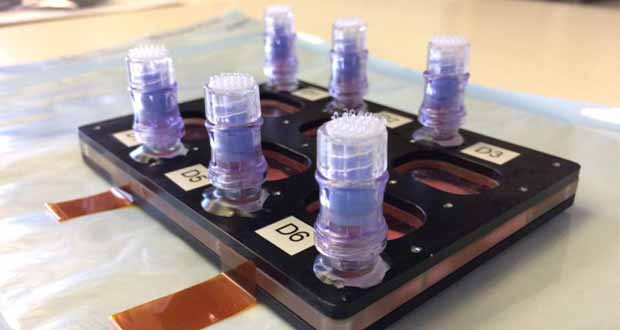 Applications3D Bioprinting in space could accelerate cancer researchAt the University of Colorado in Boulder, a research center affiliated with NASA is using 3D bioprinting to develop more realistic cancer cell structures aboard the International Space Station. Under a research project called Magnetic 3D Cell Culturing, Their hopes…
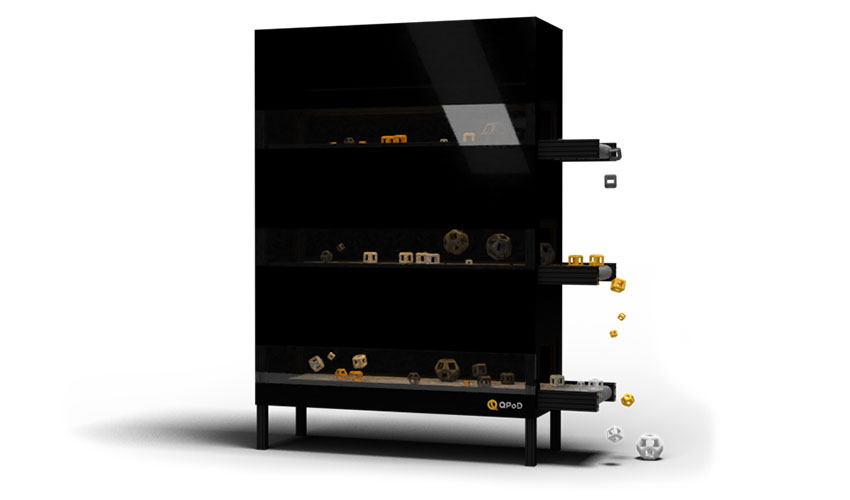 Printers#3Dstartup: 3DQue Systems and its operator free system for continuous production3DQue Systems, based in Canada, has developed a system that offers 24/7 production. The startup identified the growing need for automation in the additive manufacturing market, which is why it developed the QPoD and QSuite solutions to automate thermoplastics 3D printing…
 GuidesAnthroTek Mimics Human Tissue Behavior Using 3D PrintingIt’s almost unrealistic to think that additive manufacturing can achieve this level of detail, don’t you think? And yet, you’re not dreaming: technology makes it possible to recreate body parts, skin models, and organs that are extremely faithful to reality.&hel
 NewsFormlabs Make Major Move With Micronics AcquisitionThe additive manufacturing industry certainly does not seem to be taking a summer vacation! Not long after the surprising news about Desktop Metal and Nano Dimension, now we have yet another unexpected announcement: Formlabs will be acquiring Micronics. At this…