Applications
Joseph DeSimone on PinPrint, Carbon and Advice for AM Innovators
Just over a decade ago, renowned chemist Dr. Joseph DeSimone introduced a groundbreaking technology that would form the foundation of the company Carbon, where he served as Co-Founder and CEO. This technology, known as Continuous Liquid Interface Production (CLIP), transformed re
- 3 min read
- Applications
- Six more stories
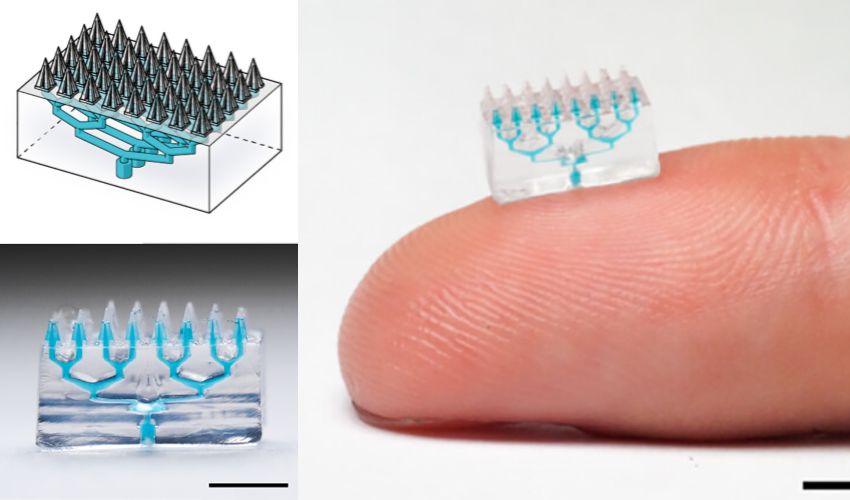
Just over a decade ago, renowned chemist Dr. Joseph DeSimone introduced a groundbreaking technology that would form the foundation of the company Carbon, where he served as Co-Founder and CEO. This technology, known as Continuous Liquid Interface Production (CLIP), transformed resin 3D printing by drastically increasing both its speed and efficiency. Now, DeSimone and his team of researchers at Stanford University have advanced the technology even further with the development of Injection CLIP (iCLIP). This innovation serves as the basis for PinPrint, a new company DeSimone is co-founding. PinPrint’s mission is to reimagine the patient experience in the realms of vaccinations and drug treatments. Here, we’ll explore the technology and vision behind PinPrint, insights from DeSimone on what drove Carbon’s success and his advice for aspiring leaders in science and additive manufacturing.
PinPrint’s first target is microneedle patches, which offer a pain-free alternative to conventional needles. They can be used for vaccine and drug administration for both therapeutic and cosmetic use cases, as well as for collecting interstitial fluid samples. Compared to needles, microneedle patches are easy to apply, less hazardous and minimally invasive. This means they can easily be administered in homes or non-clinical settings, in addition to clinical ones. Furthermore, these patches carry less potential for microbial infection, and they are easier to dispose of than regular needles. These devices have been around for decades and are easy to manufacture using traditional methods. However, PinPrint is leveraging additive manufacturing to achieve highly complex geometries, enabling the creation of microneedles with microfluidic channels and negative spaces that would be impossible to incorporate through conventional manufacturing.
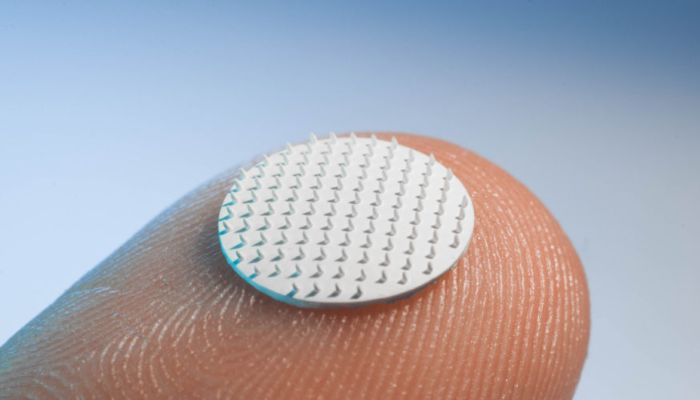
A standard microneedle patch, without microfluidic channels (Photo Credits: MyLife Technologies)
Solving the Problem of Overcuring: CLIP vs. iCLIP
More from the desk
Six other notes from the rest of the bench.
 NewsBarilla Has Introduced Spaghetto 3D, a New 3D Printed SpaghettiFor Italians at home and abroad, no pasta is more iconic than spaghetti. Even in the United States, spaghetti is a staple in homes across the country with the long form of the noodles an endless source of inspiration for…
 NewsSteakholder Foods Is Developing 3D Printed Seafood ProductsThe popularity of meat products has declined significantly in recent years. The reasons for this include the increasing awareness of animal suffering and negative effects on our environment due to high greenhouse gases, for example. To minimize the aforementioned consequences,&he
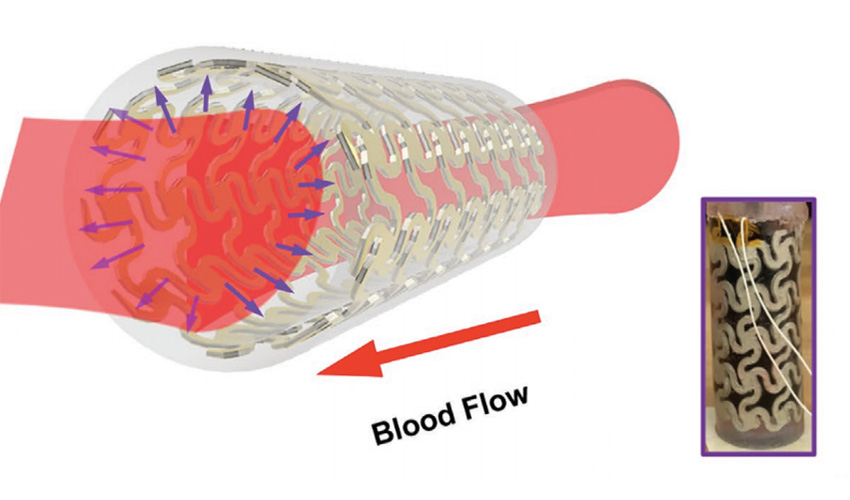 ApplicationsResearchers create 3D printed artery to monitor blood pressure remotelyAt the University of Wisconsin-Madison, scientists have developed 3D printed blood vessels that enable patients to monitor their blood pressure remotely. This is promising research given that today, when surgeons replace part of a blood vessel, the grafted vessel is…
 Guides3D startup of the month: MarkForged, making waves in additive metal manufacturingEach month we present the 3D startup of the month, choosing startups that are revolutionizing the 3D printing industry in their own way. For this month’s startup of the month, we met with MarkForged’s CEO Greg Mark to learn more…
 NewsUpNano develops high-resolution desktop 3D printing for micro partsUpNano is a young company based in Vienna that has recently developed a high-resolution microscale 3D printing technology. Based on the 2-photon polymerization process (2PP), the new technique is capable of producing plastic parts with a volume ranging from 100…
 PrintersLab 3Dnatives: the Volumic STREAM 30 Pro MK2 3D PrinterThe French manufacturer Volumic recently sent us a new STREAM 30 Pro MK2 3D printer for us to review this professional model. The MK2 denomination corresponds to the manufacturer’s new generation of machines, which also officialised the arrival of its…