Applications
Israeli Doctors Have Made a Potential Medical Breakthrough for Brain Cancer Thanks to a 3D-Printed Tumor
Researchers at Tel Aviv University have successfully made an active and viable glioblastoma tumor, an aggressive form of brain cancer, using 3D printing. Though it may seem counter-productive, the team believes that this will be a new way to treat…
- 3 min read
- Applications
- Six more stories
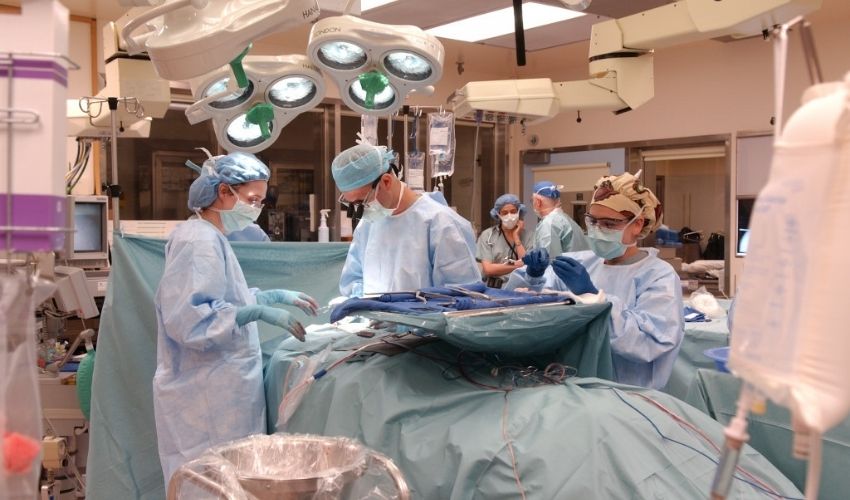
Researchers at Tel Aviv University have successfully made an active and viable glioblastoma tumor, an aggressive form of brain cancer, using 3D printing. Though it may seem counter-productive, the team believes that this will be a new way to treat cancer as it will allow them to recreate a patient’s tumor thus enabling them to find the best treatment for the patient. This 3D-printed tumor could provide a way forward for treating cancer especially those of the brain, which are often both aggressive and difficult to remove or treat due to their location.
Though 3D printing is not new to the medical sector, this is a new way to use it to treat diseases, especially cancers. Previously, 3D printing has been used mostly for prostheses and orthoses and even bioprinting has been more devoted to rebuilding organs or bones than tumors. But the reasoning behind the use of 3D printing has stayed the same. While others have focused on making fully-customized treatments for patients, this 3D printing will allow doctors to learn how to better treat their patients by perfectly recreating the tumor using bioprinting, in turn allowing them to determine what treatment will be the most effective.
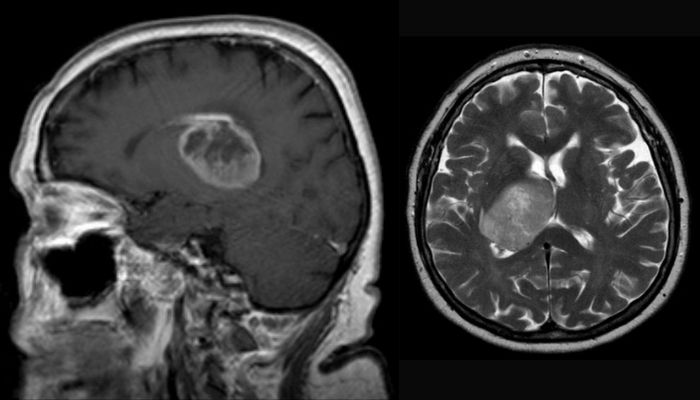
Glioblastoma tumors are known to be particularly aggressive as well as often difficult to treat(Image Credits: Hellerhoff – Own work, CC BY-SA 3.0, https://commons.wikimedia.org/w/index.php?curid=18485437
How to make a 3D-printed tumor?
The study into the tumor was done by a team of researchers lead by Professor Ronit Satchi-Fainaro who holds leadership positions at the Sackler Faculty of Medicine, Sagol School of Neuroscience, the Cancer Biology Research Center the Nanomeidcine Laboratory and the Morris Kahn 3D-BioPrinting for Cancer Research Initiative, at Tel Aviv University. She was helped by PhD students and researchers at her own laboratory. They chose to make a 3D-printed tumor because in previous studies a protein called P-Selectin was found to be responsible for the spread of the cancer, however it could not be reproduced on 2D plastic petri dishes. This lack of reproducibility is apparently the reason why approximately 90% of all drugs fail at clinical stages, the team hoped that this could be rectified by using bioprinting instead.
More from the desk
Six other notes from the rest of the bench.
 NewsLEGO Continues to Delve Into 3D Printed ToysOne of the most iconic and successful toy manufacturers in the world is engaging in 3D printing technology, in what could be a big step for the industry towards the manufacturing method. The LEGO Group recently unveiled their 3D printed…
 NewsTop 5: A Talk With SolidCAM About Their Decision To Move Into the AM MarketIt’s Friday again and you know what that means. It’s time for our weekly top 5 videos from the exciting world of 3D printing! We start off this week’s top 5 videos with an interview with Dr. Emil Somekh, Ceo…
 NewsHow Important is Sustainability in Additive Manufacturing?During Formnext 2021, the four-day international trade fair for additive manufacturing, we saw new and optimized machines, innovative materials, software packages and post-processing solutions and applications. In recent years, it has become clear to many manufacturers, but espec
 NewsAM Polymers and its Broad Range of Innovative MaterialsSince the company was founded, AM Polymers has made a name for itself far beyond the country’s borders in the field of plastic powders for SLS and HSS processes. Thanks to its extensive knowledge, the team is constantly working on…
 NewsThe TOP 10 3D Printing Files (STL) Of The Year!Every year, 3Dnatives reveals the best 3D models you can find and easily download! This January, we compiled a list of the ten best 3D printing files you can easily get your hands on. This ranking has been put together…
 Applications3D Printing is Being Used to Treat Children With Severe Burns3D printing is making more and more progress in the medical field with applications in bioprinting, 3D printed prostheses, digitization of dentistry and much more. Adding to the advances of additive manufacturing in medicine is a recent collaboration between Italy…