News
3DExpress: The World’s Smallest, Fully 3D-Printed, Infrared Photodetectors from HKU
This week’s 3DExpress starts with a breakthrough in Hong Kong, where a team of engineers created the smallest 3D printed sub-micron optoelectronics to date. This could mean that integrating multi-functional micro-nano devices will become a lot easier. Then, we get…
- 3 min read
- News
- Six more stories
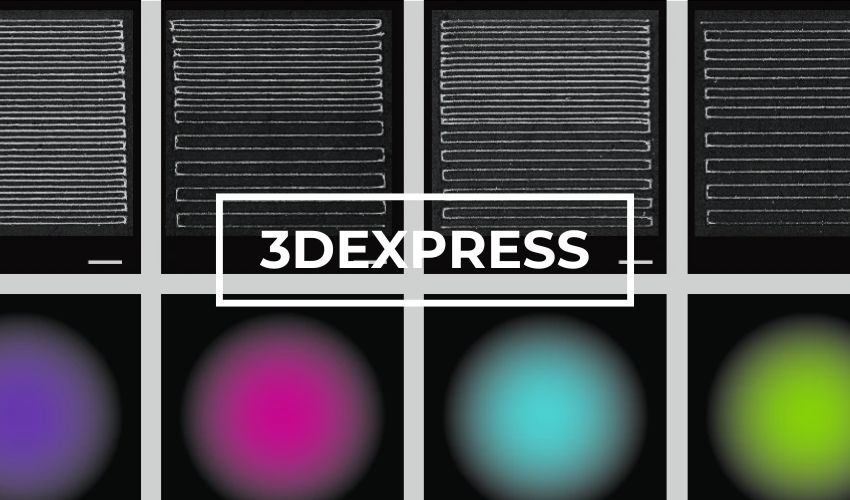
This week’s 3DExpress starts with a breakthrough in Hong Kong, where a team of engineers created the smallest 3D printed sub-micron optoelectronics to date. This could mean that integrating multi-functional micro-nano devices will become a lot easier. Then, we get into a Kickstarter launch for an LPBF printer that is €8,500, continuing a trend of turning towards more affordable metal 3D printers. (See Mastrex, which announced its release of an LPBF printer for $39,000 at CES 2026.) Next, we cover Bambu Lab’s new copyright protocol, and finally, ADDMAN’s acquisition of Forecast 3D.
Printing the World’s Smallest Infrared Photodetectors
Researchers at the University of Hong Kong, led by Professor Leo Tianshuo Zhao from the Department of Electrical and Electronic Engineering, developed a room-temperature nano-printing platform capable of fabricating the smallest, fully-printed infrared photodetectors to date. Infrared photodetectors are sensors that detect heat and convert it into a measurable electrical signal, which can be used for seeing beyond visible light. Near-infrared technology is critical for applications like autonomous systems, biomedical sensing, and high-speed optical communications. However, conventional silicon-based CMOS technology cannot directly detect NIR wavelengths. The nano-printing platform created by the HKU team assembles solution-phase colloidal nanocrystals (NCs) and modifies their properties in situ, enabling the construction of advanced optoelectronic devices.
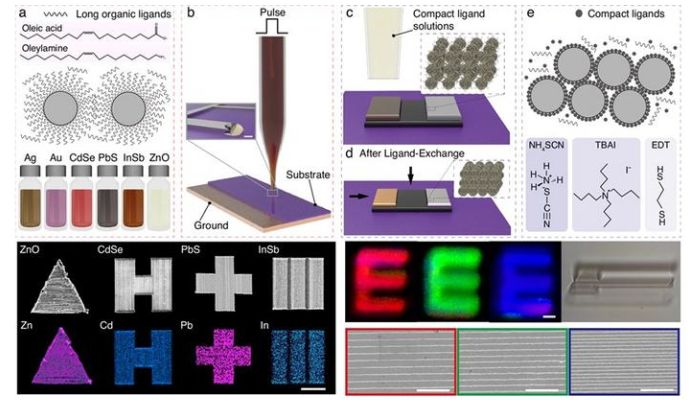
The versatile nano-printing platform that assembles solution-phase colloidal nanocrystals (NCs) and modifies their properties in situ (Image Credit: Tianshuo Zhao et al.)
Using electrohydrodynamic printing (EHDP) combined with surface chemical treatment, the team achieved unprecedented precision, printing silver nanocrystal lines as narrow as 70 nanometers and creating dense films with conductivity comparable to bulk silver, all without high-temperature processing. Most notably, the researchers demonstrated sub-10-micrometre all-printed IR photodiodes for the first time. The research represents a major step forward in high-resolution, multi-layer printing for electronic device integration.
More from the desk
Six other notes from the rest of the bench.
 MaterialsADDITIV Metals Returns June 10! A Virtual Summit Tackling the Biggest Bottlenecks in Metal AMMetal additive manufacturing is no longer a technology in waiting. The global metal AM market is projected to grow from $6.02 billion to $7.02 billion in 2026 alone (Research And Markets). According to the 2026 Wohlers Report, metals revenue (including…
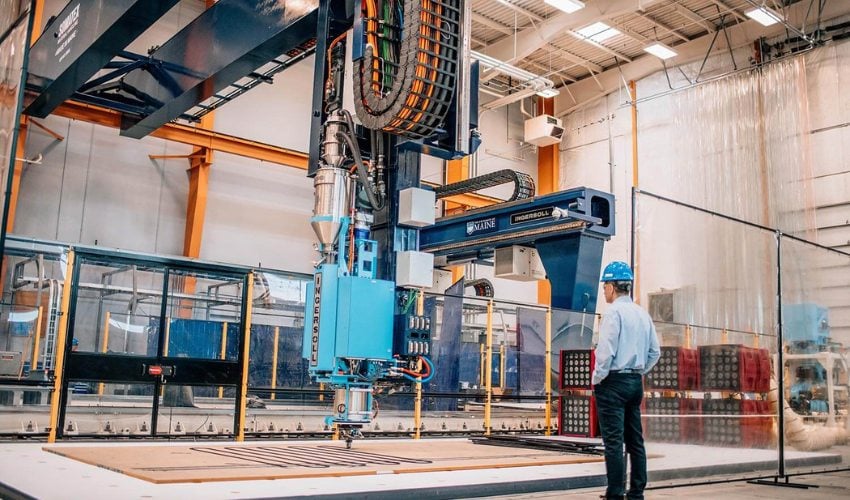 NewsUMaine Unveils World’s Largest 3D Printer With ‘Factory Of The Future 1.0’The University of Maine (UMaine) has introduced a significant advancement in manufacturing with the unveiling of its latest innovation: the Factory of the Future 1.0 (FoF 1.0), which constitutes the world’s largest 3D printer. Exceeding the capabilities of its predecessor,&hellip
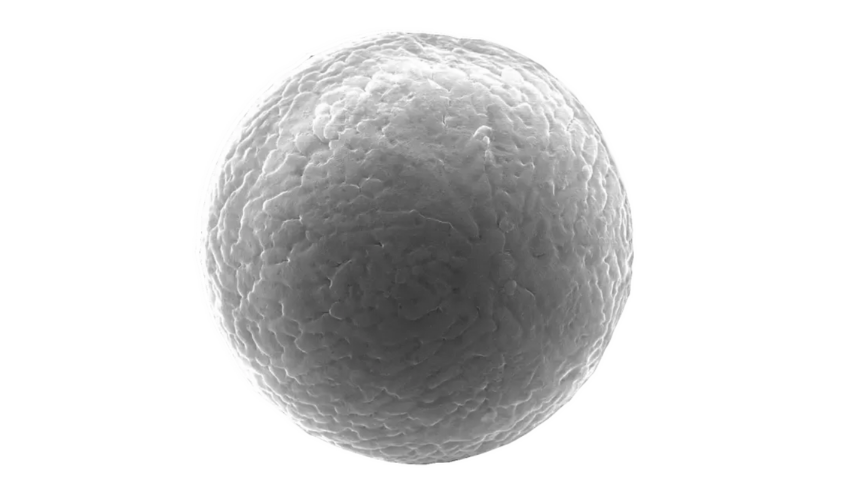 MaterialsRUSAL America announces the expansion of aluminium AM powdersYesterday, RUSAL America announced the expansion of its aluminium product offerings to include additive manufacturing powders. The new powders will comprise four traditional Al-Si based casting alloys and five specialty alloys designed for use in the aerospace and automotive indu
 NewsThe Warp, a 3D-Printed Japanese Teahouse Made of Recycled WoodAt the latest edition of Dubai Design Week, Japanese architecture studio Mitsubishi Jisho Design unveiled The Warp, a new sort of tearoom. Made from recycled wood using an extrusion 3D printing technique, this installation showcases an innovative approach called “Regenerative&hel
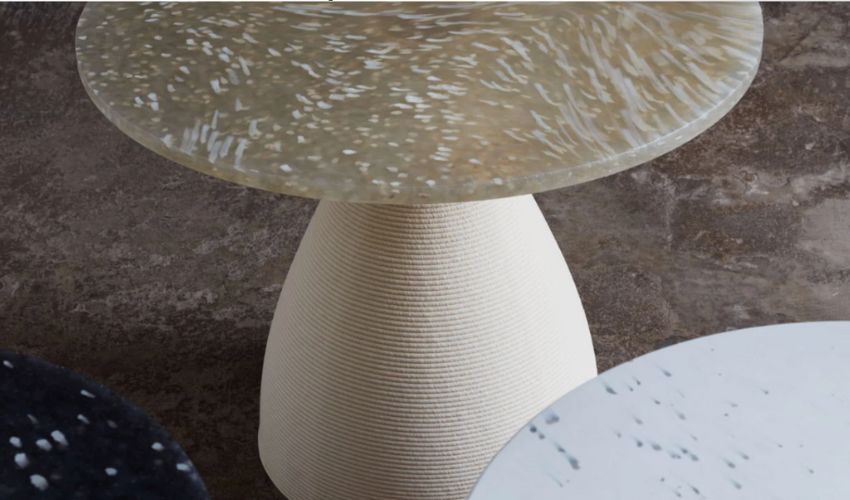 NewsSustainable Expression with LOOPS 3D Printed TablesFrom the world of sustainable and creative 3D printed designs, Czech designer Martin Žampach reveals his latest creative 3D printed collection – LOOPS. Alongside several designers who have been experimenting with 3D printed expression in art, fashion and furniture, LOOPS&he
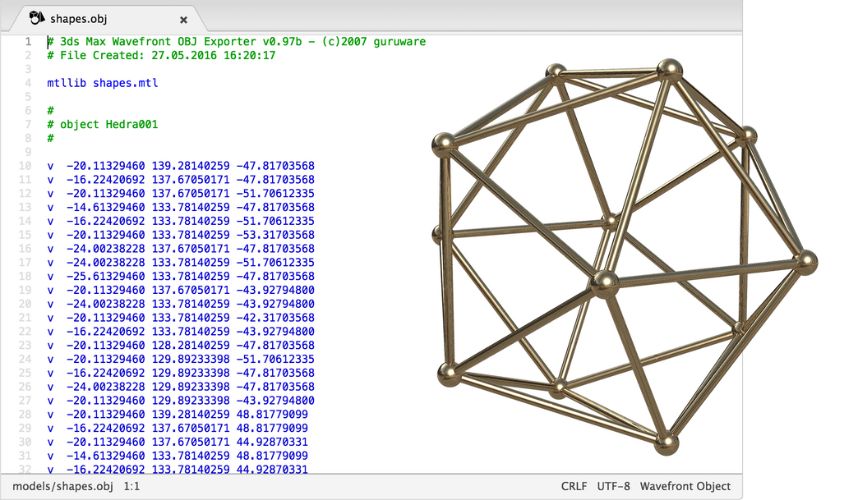 SoftwareOBJ Files for 3D Printing: All You Need to KnowWhen speaking about 3D printing file formats, it can be easy to think that STL is the only one, especially if you do not work in the industry. But that is far from the case. From 3MF to AMF, among…