News
How AM is Helping an Ancient Craft: Harris Tweed & 3D Printing
For centuries, the inhabitants of the Outer Hebrides in Scotland have been weaving beautiful fabrics that are now known worldwide as Harris Tweed. The intricate craft has been passed down from generation to generation and has even been enshrined in…
- 3 min read
- News
- Six more stories
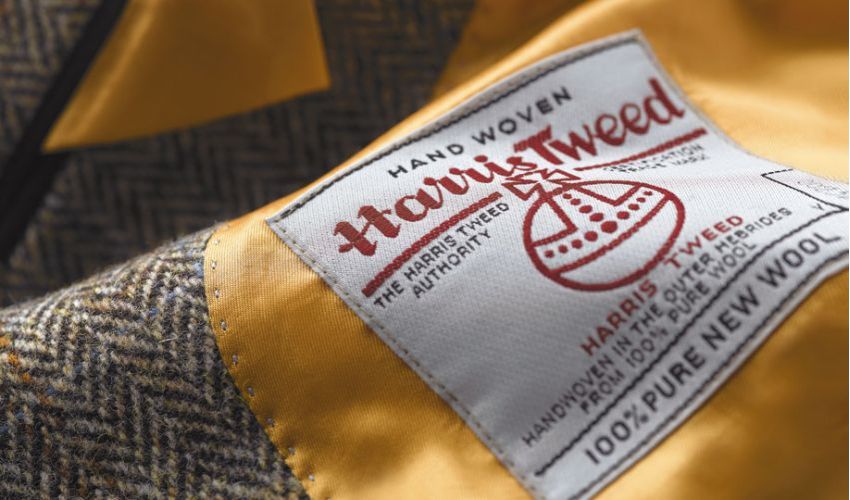
For centuries, the inhabitants of the Outer Hebrides in Scotland have been weaving beautiful fabrics that are now known worldwide as Harris Tweed. The intricate craft has been passed down from generation to generation and has even been enshrined in Scottish law – only fabric that has been hand-woven by Outer Hebridean weavers can be called Harris Tweed. Now, however, there is a small innovation in the midst of tradition: the looms have been redesigned, and the craft has been secured for the future with 3D printing.
The company exports its tweed to more than 60 countries. Numerous famous fashion houses use the woolen fabric worldwide, such as Vivienne Westwood and Dior. What is less well known, however, is the production process behind Harris Tweed. This requires a special loom, which is made up of countless complex components. But what happens if one of these components breaks?
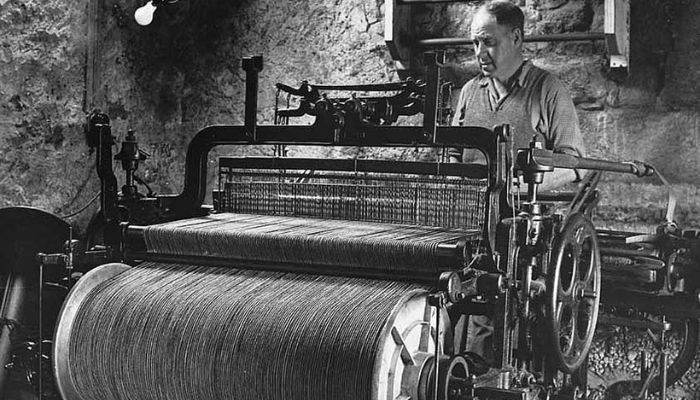
A traditional loom from the early 20th century
In this case, weavers often have to wait up to six months for replacement parts, or get creative during this period in order to still use the loom. Weavers have always had to keep their looms up to date in innovative ways. John Bennie, a weaver at Harris Tweed, says: “When a vital part of the loom breaks, it can halt production for weeks, which is incredibly frustrating. Finding a way to keep the loom running smoothly is essential.” The Scottish weaver actually had to repair his loom with a flywheel from his Ford Ka when a key component broke.
More from the desk
Six other notes from the rest of the bench.
 NewsTOP 5 Videos of the week: Flamethrowers, Skateboards, and “Invincible” body armourA new selection of the best 3D printing videos of the week, just for you! Find our TOP 5 videos of the week below and tell us what your favorite video is in a comment or on our Facebook and Twitter page. Don’t hesitate to…
 GuidesThe Best Free STL Files for Back-To-School 3D PrintingAs another September rolls around, getting ready to go back to school is on everyone’s minds. This is the time when students of all ages begin the new school year and continue their education and personal growth. One of the…
 NewsTop 5 Videos: EnvisionTEC success story, and moreThis week we found the top 5 videos about 3D printing and the way additive manufacturing is changing production. The technology has infiltrated many sectors, from medical to automotive – check our selection of the week to keep up with the innovations! If you enjoy these, you&hell
 NewsWEBINAR: “Progress & Current Challenges in Online Process Control for L-PBF”Process control in Laser Powder bed Fusion (L-PBF) is often referred to as the holy grail for for industrial metal 3D printing. Though only offered by certain companies and machines, process control significantly reduces errors in printing which in turn…
 SoftwareMeshMixer, the Free Surface 3D Modeling SoftwareMeshMixer is one of the free 3D software programs provided by Autodesk, which offers several interesting features to help users in not just modeling but also in 3D printing processes. Available on Windows and Mac OS, version 3.5 of MeshMixer…
 Applications#3DExpress: FAA Certifies GE Aerospace Engine Made Using 3D PrintingThis week’s #3DExpress is full of exciting aerospace news! First, the FAA has certified an innovative engine from GE Aerospace that was made using additive manufacturing. Next, the United States Air Force is calling for 3D printing vendors who can…