Printers
HARP 3D printer delivers record throughput in 3D printing
Researchers at Northwestern University in Illinois have developed a new 3D printer that can supposedly print at record speed, around half a yard (46 cm) per hour, a ground-breaking throughput in the world of 3D printing. The system is known…
- 3 min read
- Printers
- Six more stories
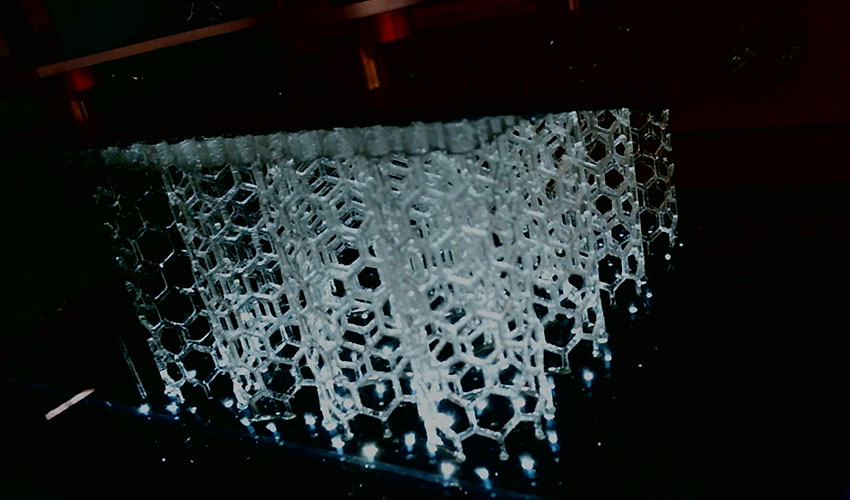
Researchers at Northwestern University in Illinois have developed a new 3D printer that can supposedly print at record speed, around half a yard (46 cm) per hour, a ground-breaking throughput in the world of 3D printing. The system is known as HARP (High-Area Rapid Printing) and is based on a patent-pending version of SLA technology.
Today, Carbon’s CLIP technology can be considered one of the fastest on the market. The CLIP approach shines ultraviolet light through a window into a space filled with liquid resin. The window allows oxygen to enter the liquid resin, as a result this creates a zone that resists curing, whilst above this zone the resin hardens when it comes into contact with the ultraviolet light. At the same time, a robotic attachment pulls out the solidified resin from the resin tank. The speed and strength of this technology has meant that many companies such as Adidas, Riddell or Ford have worked with Carbon to manufacture parts. However, one limitation remains: objects can be no larger than 41.4 cm by 25.9 cm at the cross section.
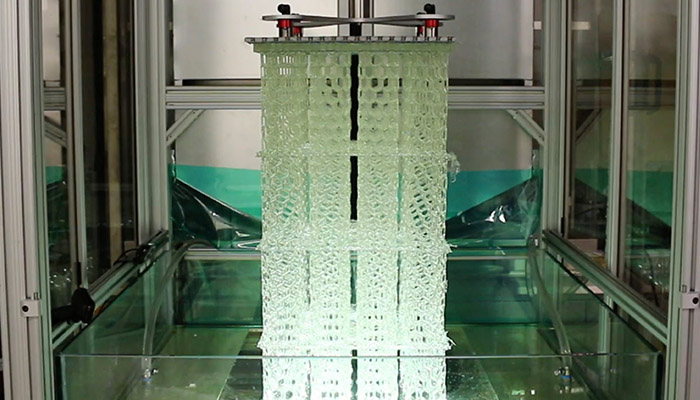
HARP 3D printing process | Credits: Northwest University
HARP’s technology can increase the throughput in 3D printing
This is what HARP’s 3D printing process could overcome. Often, the pursuit of larger parts can come at the cost of speed, throughput or resolution, but it shouldn’t be the case with this new technology. In fact, the prototype HARP technology is 13-feet tall with a 2.5 square-foot print bed and can print about half a yard (46 cm) in an hour. Chad A.Mirkin, who led the product’s development explains: “3D printing is conceptually powerful but has been limited practically. If we could print fast without limitations on materials and size, we could revolutionize manufacturing. HARP is poised to do that.”
More from the desk
Six other notes from the rest of the bench.
 PrintersAnisoprint launches industrial continuous fiber 3D printer: ProM IS 500Anisoprint provides additive manufacturing systems compatible with composite materials reinforced with continuous fibers, as well as providing these materials themselves. Continuous fiber composites are up to 30 times stronger than pure thermoplastics and comparable to metals. Th
 SoftwareCarbon Has Made its First Acquisition, Expanding its Software CapabilitiesThe additive manufacturing market, despite some setbacks, has generally been showing its growth through a number of mergers and acquisitions in the past few years. Now Carbon, one of the leaders when it comes to resin 3D printing solutions, has…
 NewsColumbia University Has 3D Printed a 7-Layer CheesecakeThough food 3D printing may not have yet convinced all food lovers, it certainly has raised its fair share of questions. For example, is a food 3D printer healthy? Or can it improve the way we eat and respond to…
 ApplicationsInfographic: 3D Printing and its Role in Space ExplorationIt is safe to say, that additive manufacturing and aerospace are increasingly being seen to go hand in hand. This is especially the case when it comes to space. Though it may seem like science fiction, 3D printing has quickly…
 NewsNissan uses 3D printing to create a Star Wars vehicleWhile the Star Wars saga continues with a new film on the famous Han Solo, which has recently had their world premiere in Hollywood, it is not only the stars who graced the red carpet but also additive manufacturing, thanks…
 Applications3D Printed Blood Vessels Expected to Improve Heart Bypass OutcomesThe leading cause of death is heart disease, responsible for almost a third worldwide. This is notably the case in the USA where one person dies every 33 seconds from cardiovascular disease according to the CDC and in the UK…