Applications
German Railway Operator Deutsche Bahn Marks 10 Years of 3D Printing
Deutsche Bahn (DB) is celebrating ten years of 3D printing, highlighting how the technology has moved from experimental use to a core pillar of its maintenance and supply chain strategy. Since 2015, the German rail operator has expanded its additive…
- 3 min read
- Applications
- Six more stories

Deutsche Bahn (DB) is celebrating ten years of 3D printing, highlighting how the technology has moved from experimental use to a core pillar of its maintenance and supply chain strategy. Since 2015, the German rail operator has expanded its additive manufacturing ecosystem to more than 200,000 printed parts used across more than 1,000 applications, making it one of the most advanced rail-related AM programs in the world.
What began with simple plastic components has evolved into a wide portfolio of functional tools, interior fittings, electronic test rigs, and heavy-duty metal parts. Early success with basic items such as coat hooks encouraged DB to digitize more of its spare parts library, ultimately creating the Digital Warehouse, a central database that now contains over 1,000 component designs ready for on-demand production.
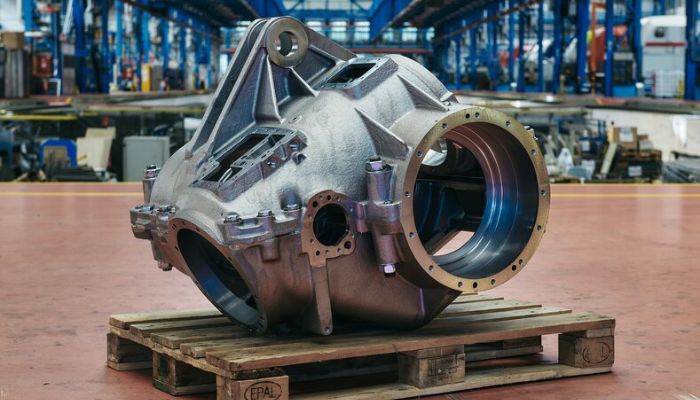
A 3D printed 540-kilogram gearbox housing that is used for DB’s shunting locomotives.
The range of printed parts illustrates how deeply the technology is integrated into DB’s operations. Maintenance teams regularly produce custom test fixtures, such as the printed circuit board testing assembly for ticket validators created by DB Kommunikationstechnik. They also manufacture handrail signs with braille, enabling rapid replacement of accessibility-related components without waiting for external suppliers. On the heavy-duty side, DB has successfully produced a 540-kilogram gearbox housing for shunting locomotives, demonstrating that large structural components can also be manufactured additively when conventional supply chains fall short.
More from the desk
Six other notes from the rest of the bench.
 ApplicationsL’Oréal 3D Prints Human Skin in Partnership With University of OregonResearchers at the University of Oregon have partnered with scientists from the renowned French skincare company L’Oréal to pioneer the first successful development of an artificial skin model closely resembling natural human skin. This collaborative effort aims to address
  GuidesWhy are there so few Women in 3D printing, and can we change that?3D printing is an innovative, fast-growing market which is predicted to grow exponentially in the next 10 years. However, it is also a male dominated industry, with only approximately 13% of workers being women. Why is 3D printing such a…
 News3D Printing for Adhesive-Free Wood and Polymer BondingWhat if you could glue plastic to wood without adhesives or chemicals? That’s the goal of a team of researchers from Graz University of Technology in Austria. They used additive manufacturing to deposit different materials on wood, layer by layer,…
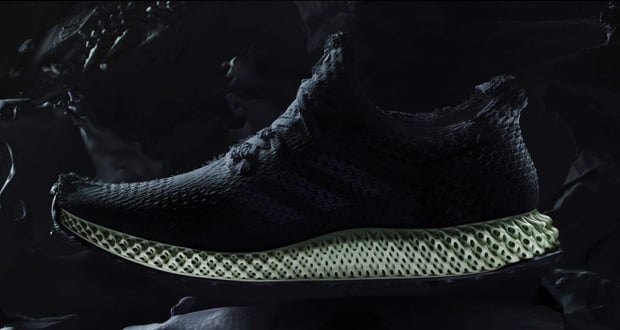 NewsAdidas and Carbon announce their partnership to create new 3D printed shoesSports brand giant Adidas has announced their partnership with California based startup “Carbon” to create a brand new 3D printed shoe: the Futurecraft 4D. Using Digital Light Synthesis (a process created by Carbon) to create the soles of the shoes,…
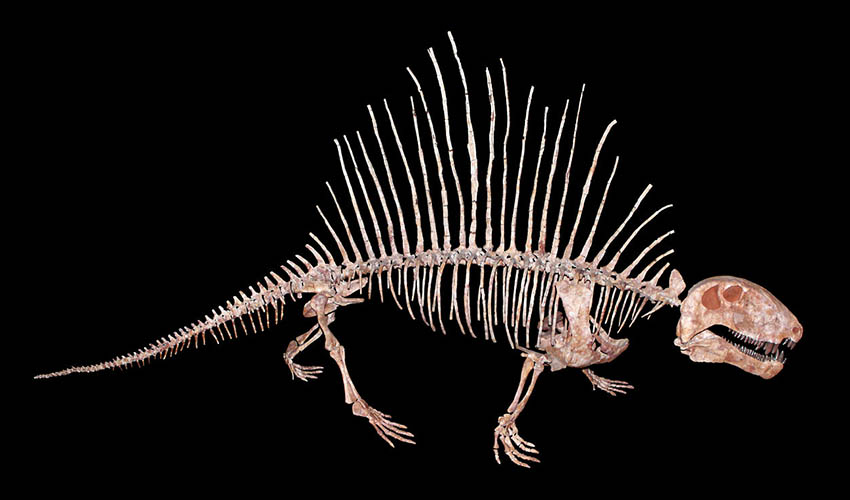 PrintersReplicating rare prehistoric fossils through 3D scanningAt the Texas Through Time museum, the fossilized skeleton of a Dimetrodon limbatus was 3D scanned by NVision, specialized in 3D scanning solutions. This will enable to 3D print an exact replica of the fossil skeleton. Usually, in order to…
 NewsThe NOVUM Project is using Cellulose to Create a Novel Sustainable 3D Printing MaterialNOVUM is a project seeking to develop a 3D printing system from cellulose led by consortium of 10 European partners. Cellulose is a biopolymer making up the wall of plant cells, notably wood, and has a number of advantages, the…