News
Fraunhofer IAPT Optimizes 3D Printing for Car Door Hinges
Additive manufacturing is now an integral part of the production process in many industries. From fast and cost-effective prototyping to the production of final components, 3D printing offers companies a flexible manufacturing process with numerous advantages. These include, for
- 3 min read
- News
- Six more stories
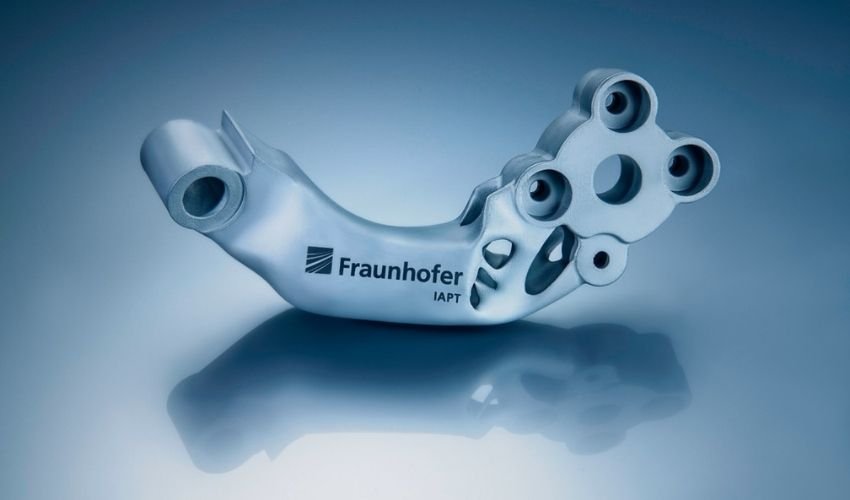
Additive manufacturing is now an integral part of the production process in many industries. From fast and cost-effective prototyping to the production of final components, 3D printing offers companies a flexible manufacturing process with numerous advantages. These include, for example, the great geometric freedom of shape and the elimination of long transportation routes. However, in order for manufacturers to exploit the full potential of the technology, it is necessary to identify ideal process parameters. Fraunhofer IAPT claims to have found a way to reduce the cost and weight of making a car door hinge using additive manufacturing, thus opening the door to series production.
The Fraunhofer Research Institution for Additive Manufacturing Technologies (Fraunhofer IAPT) recently clarified the importance of optimization measures. Thanks to end-to-end optimization of the additive value chain, it could be possible to influence both the technical properties and the costs of the finished component. Using a case study, the institute determined the influencing variables for the component costs of a door suspension for a sports car step by step.
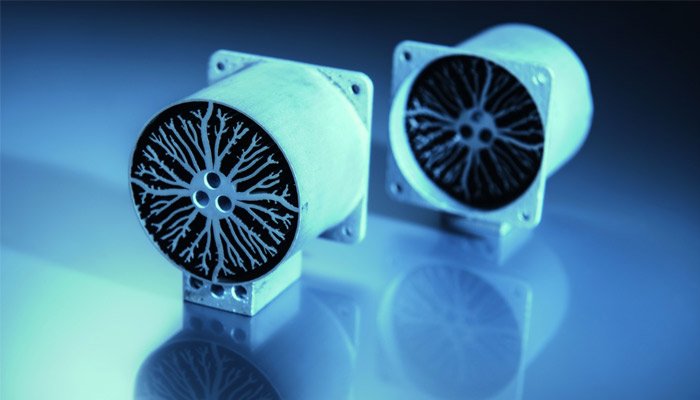
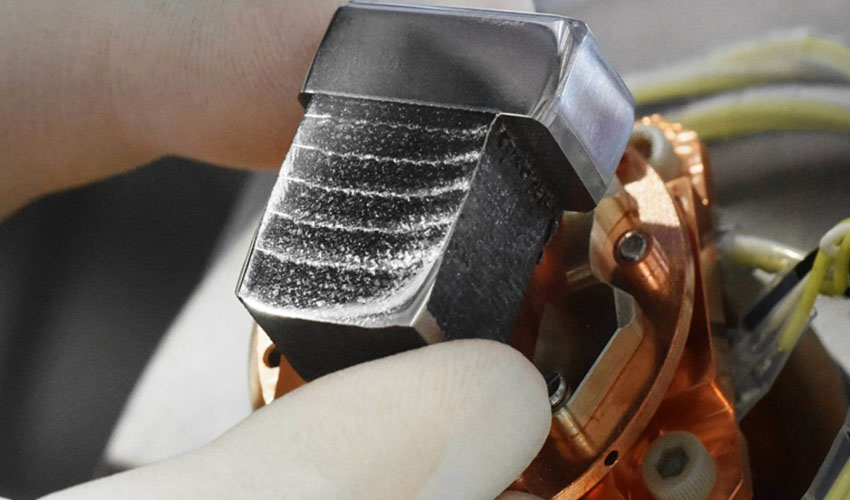
The Fraunhofer IAPT has been mastering various 3D printing processes for several years now, especially those based on metal (photo credits: Fraunhofer IAPT)
Optimized process opens the door for series production
In a first step, the experts analyzed the component using the software tool from 3D Spark, a Fraunhofer spin-off, and determined the cost-optimal component orientation for 3D printing when defining the design. The result was compared with the additively manufactured component without optimization. The result: a cost saving of 15 percent, which resulted from the optimal use of the installation space and a reduction in post-processing. However, the research team was not satisfied with this result. So the door hinge’s component geometry was optimized with the help of force flow simulation, and a basic shape was selected that reduced weight by 35 percent, which cut material requirements and printing time by another 20 percent. Together with the identification of the suitable material and the support structure-optimized design, a further 20 percent was achieved in comparison to 3D-printed door hinges without optimization.
More from the desk
Six other notes from the rest of the bench.
 NewsTufts Researchers Develop Leather Alternative Thanks to 3D PrintingThe use of 3D printing offers different advantages for different industries. The ability to produce complex geometries with a variety of materials using 3D printing is highly relevant for artists and designers, among others. It often seems as if creativity…
 Guides3D Printing Applications in the World of MusicNext Monday, June 21st is the Fête de la Musique (also known as World Music Day), an international celebration that gives artists the opportunity to take to the streets to showcase their musical talent. In recent years in the music…
 MaterialsRickie Fowler Tees Up Cobra Golf’s Latest 3D Printed WedgeIn a move that fuses the precision of 3D printing with the precision-driven sport of Golf, PGA TOUR superstar Rickie Fowler is helping to showcase golf equipment innovation by debuting his new, 3D printed RF Cobra lob wedge at The…
 ApplicationsNAVSEA Partners with Johns Hopkins APL to Advance AM for Critical MissionsFor critical military applications, metal additive manufacturing has been questioned for concerns over porosity, mechanical reliability and reproducability. However, those issues have proved to be addressable, and defense organizations from around the world have gone on to adopt
  MaterialsEOS Announces its Strongest Aluminum Alloy, EOS Aluminium Al2139 AMAround Formnext, we always expect a flurry of announcements from companies in the additive manufacturing sector. Leading German supplier for industrial 3D printing EOS is no exception. Recently, the company announced the addition of a new material, EOS Aluminium Al2139…
 MaterialsMetal composite with varying layer hardness is produced with 3D printingDamascus steel is a type of steel originally used for sword blades. In Germany, a team from Max-Planck-Institut für Eisenforschung (MPIE) and the Fraunhofer Institute for Laser Technology have developed a process that allows this type of steel to be…