Materials
What Are the Material Trends in Additive Manufacturing?
Research firm IDTechX recently published a new report examining micro-trends in additive manufacturing materials for 2022. Materials are a key component of the AM market, which has been heavily impacted by the pandemic, though, the market continues on a growth…
- 3 min read
- Materials
- Six more stories
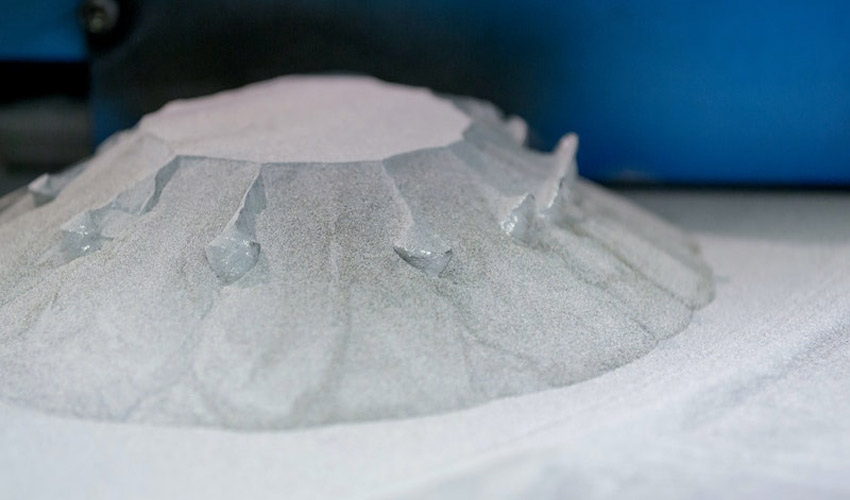
Research firm IDTechX recently published a new report examining micro-trends in additive manufacturing materials for 2022. Materials are a key component of the AM market, which has been heavily impacted by the pandemic, though, the market continues on a growth trajectory. The study examines four families of materials, namely polymers, metals, ceramics, and composites. For each of these families, IDTechX makes several predictions such as the increased importance of sustainability in the polymer segment as well as the place for extrusion processes in metal 3D printing. One thing is certain, innovations in terms of materials will lead the additive manufacturing sector to its rise and will continue to surprise us!
Even if the additive manufacturing market has been weakened by the COVID-19 crisis — like nearly all markets in the global economy — AM has managed to continue doing well and demonstrate its strengths. It has also enabled certain players to work on longer substantive developments and to rethink their way of working. We think, for example, the halting of production off-shore has pushed several companies towards the use of local resources, towards shorter supply chains, and towards solutions that are more respectful of the environment. In the polymer market, this sustainability element is getting even stronger.
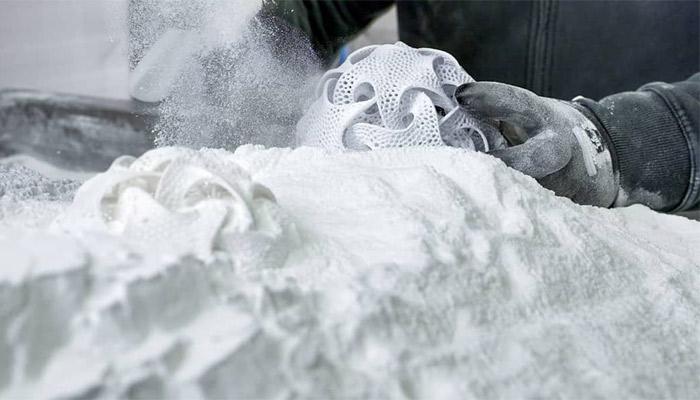
Bluesint PA12 powder is 100% recyclable. (Photo Credit: Materialise)
Polymers and Metals: Towards Sustainability & Accessibility
Material manufacturers today seek to produce filaments, resins, and powders using natural materials, renewable resources, unlike petroleum; the mounting demand to manufacture parts that can be recycled or at least reused and also have a smaller carbon footprint. This is a subject that we put forward following Formnext 2021: 3D printing companies are mobilizing more on the topic of sustainability and plan to act quickly as of today. IDTechX underlines the fact that this trend is particularly reinforced in the polymers segment. The new plastics on the market are, according to the report, increasingly ecological, based on natural resources or even recycled materials. For example, the partnership between UBQ Materials and Plastics App which gave birth to a filament made from technical waste produced by companies, or to the 100% biodegradable NonOilen material from Fillamentum.
More from the desk
Six other notes from the rest of the bench.
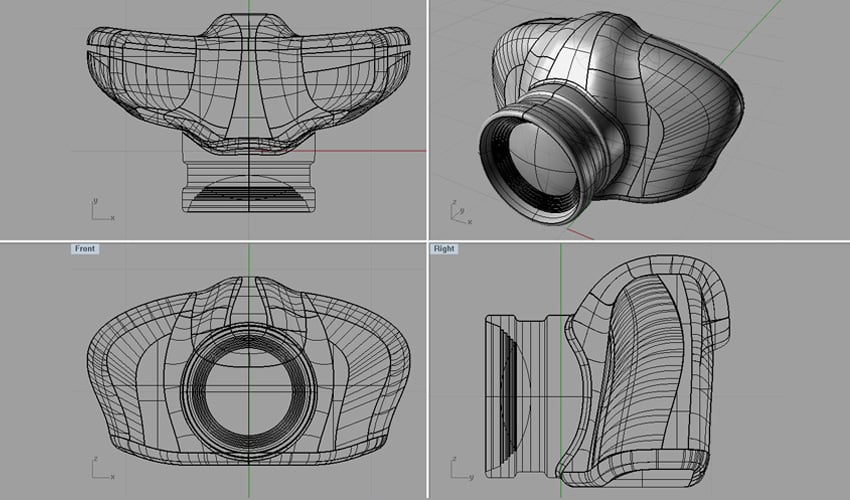 SoftwareRhino: What Do You Need to Know About the 3D Modeling Software?One of the most popular 3D modeling software is Rhinoceros 3D, also known as Rhino. Based on NURBS (Non-Uniform Rational Basis Splines) geometry, this surface modeling software is commonly used for architecture, prototyping, engineering, jewelry and industrial, graphic, naval and
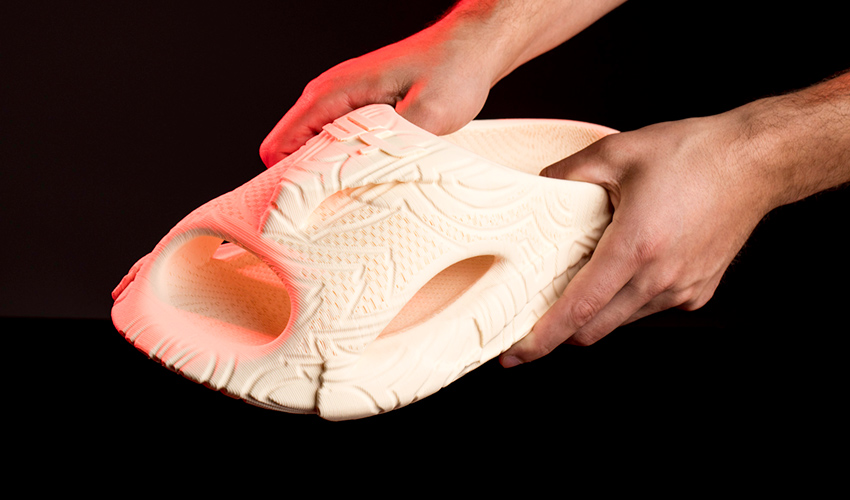 GuidesSyntilay Combines 3D Printing and Artificial Intelligence to Create the Footwear of the FutureIn the footwear industry, 3D printing is making it possible to manufacture customized, sustainable and on-demand products. In this context, the combination of artificial intelligence and additive manufacturing is democratizing access to footwear design, allowing independent creat
 ApplicationsBugatti Unveils Tourbillon: The Next-Gen Hypercar with 3D Printed ChassisBugatti has just unveiled the latest generation of its hypercars: the Tourbillon. This new model blends cutting-edge technology, immense power, luxury, and advanced aerodynamics. As the successor to the Chiron, the Tourbillon boasts an impressive 1,800 hp engine and features&hell
 GuidesAtome3D on desktop 3D printing’s key role to accelerate productionThe company Atome3D is one of the main players in additive manufacturing in France. Today, it distributes a wide range of desktop 3D printing solutions, from printers, materials, to 3D scanners, and supports professionals and industrialists in the integration of…
 GuidesStartup of the month, Aspect Biosystems: bioprinting human tissuesOur startup of the month is Aspect Biosystems, a Canadian specialist in bioprinting. Aspect Biosystems has developed a unique technology that allows the creation of customized human tissues for different applications such as drug development, regenerative medicine, disease unders
 NewsTop 5 Videos: University of Michigan Reduces Warping in Metal 3D PrintingWhile, you spend time with families over the holiday weekend, we at 3Dnatives are sharing with you, as with every week, some of the top 3D printing videos that we found. Start off, we have a video from the University…