Applications
Fleet Space Has Launched its Centauri 5 Satellite
You may remember Fleet Space, the Australian company that plans to send fully 3D printed satellites, named Alpha, to the Centauri constellation. Though those satellites are not yet ready for launch, the company recently made a significant step forward. On…
- 3 min read
- Applications
- Six more stories
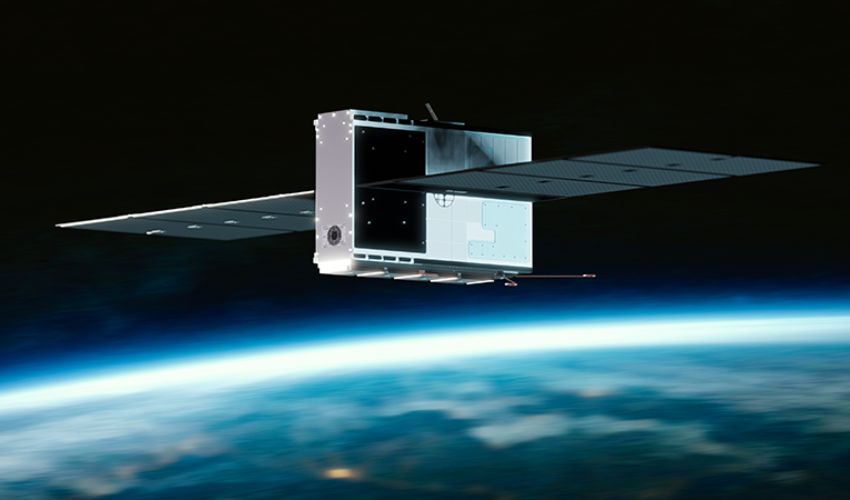
You may remember Fleet Space, the Australian company that plans to send fully 3D printed satellites, named Alpha, to the Centauri constellation. Though those satellites are not yet ready for launch, the company recently made a significant step forward. On May 26th at nearly 4AM in Australia, Fleet Space Technologies launched its Centauri 5 satellite on the Space X Falcon 9 Transporter-5 mission, the company’s third launch with SpaceX. Like the Alpha satellites, Centauri 5 has integrated 3D printing into its design, notably in the all-metal patch antennas.
Additive manufacturing has been taking a noticeable role in the development of Australia’s defense and space technology in the past few years. Companies such as Fleet Space and SPEE3D are pushing 3D printing in the sector as a way to make parts faster, more cost-effectively and with interesting geometries. Considering that Australia’s space technology industry is predicted to be worth $12 billion AUD (approximately $8,616,598,010 USD), it could provide a fertile breeding ground not just for the adoption of 3D printing, but for further innovation in AM in general.

The satellite has the world’s first entirely 3D-printed, all-metal patch antennas (photo credits: Fleet Space)
What We Know About the Centauri 5 Satellite
Now that it is launched, the Centauri 5 satellite will be in Low Earth Orbit (LEO) at an altitude of 530km (330 miles). The goal of the satellite is to provide coverage for current and future generations of IoT devices, adding on to Fleet Space’s already sizeable satellite fleet. The Centauri constellation alone has six which are operated in collaboration with Tyvak International.
More from the desk
Six other notes from the rest of the bench.
 MaterialsTIGER Coatings Manufactures Spare Parts With Flame-Retardant Materials for Austrian National Railway TrainsAfter the Kaprun cable car fire in November 2000 and the fire in the sleeping car of the DB night train from Paris to Munich in 2002 (two of the worst train fire disasters in Europe), calls for flame-retardant parts…
 PrintersLab 3Dnatives: MicroDelta Rework 3D Printer TestAs part of our series of 3D printer test articles, the 3Dnatives Lab is committed to testing cheap 3D printers in addition to more expensive, prosumer printers. This time, we are testing the MicroDelta Rework 3D printer kit which retails…
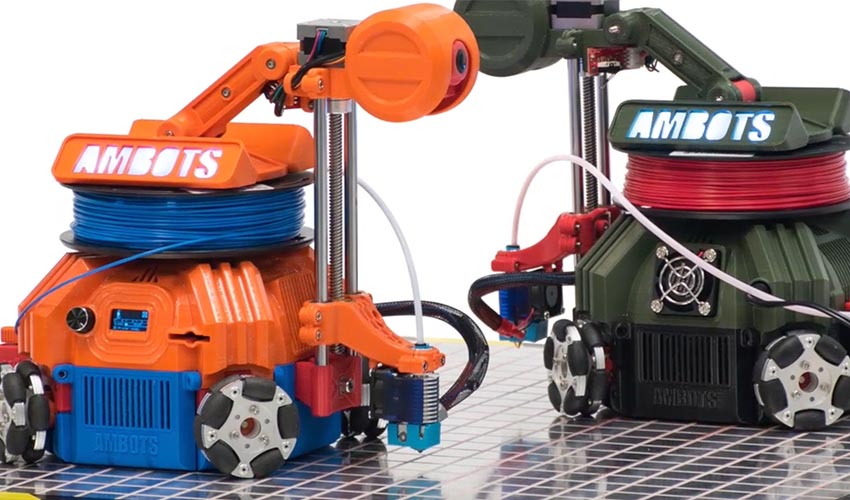 Guides#3DStartup: AMBOTS, revolutionising swarm 3D printingThe startup AMBOTS was born out of the AM3 Lab in the Department of Mechanical Engineering at the University of Arkansas. The technology which they use today in their commercial activities was developed there: it is a swarm 3D printing…
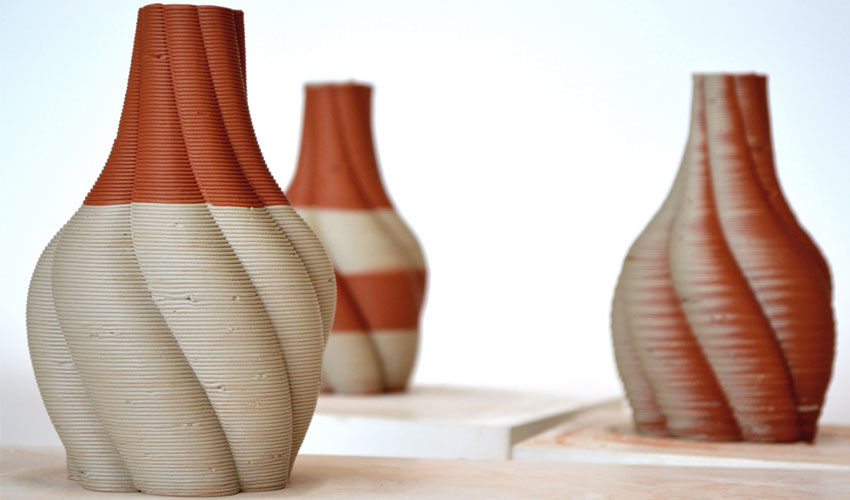 PrintersVormVrij unveils their ceramic 3D printer, the LUTUM v43D ceramic printing is becoming more accessible in the additive manufacturing market with the arrival of players who are developing affordable and innovative machines. The Dutch manufacturer VormVrij is now making their introduction into it following the launch of their…
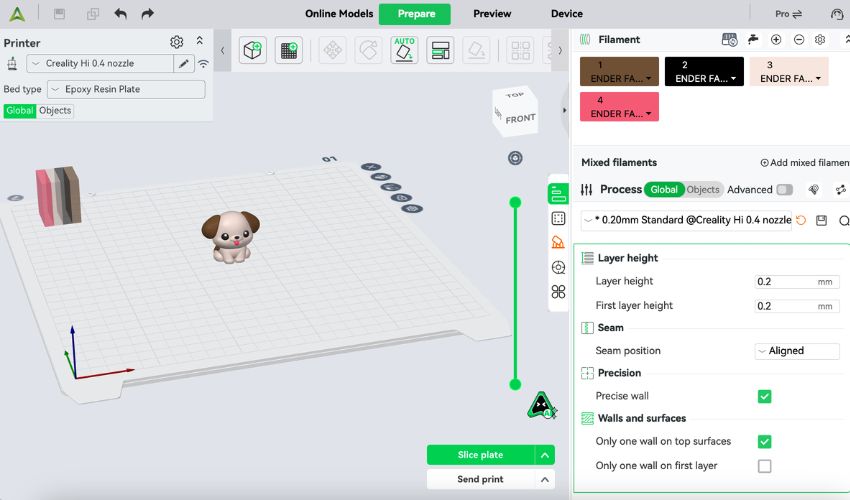 SoftwareEverything You Need to Know About the Slicer Creality PrintCreality Print is Creality’s free slicer for FDM 3D printers, used to convert a 3D model into the G-code a printer can read. It replaced Creality Slicer, the brand’s older Cura-based software, and since version 5.0 has been built on…
 Guides#TALK3D: Interview with Ric Fulop, CEO of Desktop MetalSince its beginnings, the company Desktop Metal has been making a lot of noise in the world of 3D printing and beyond. Founded in October 2015, the company designs, manufactures and markets metal additive manufacturing systems that are revolutionising metal…