Materials
Filaret is Recycling Cigarette Butts Into 3D Printing Filaments
fiFilaret, an Estonian startup that makes sustainable 3D printing materials, is working with the Estonian government to turn cigarettes discarded on the country’s beaches into filament. According to local authorities in Tallinn, the capital of Estonia, cigarette butts are o
- 3 min read
- Materials
- Six more stories
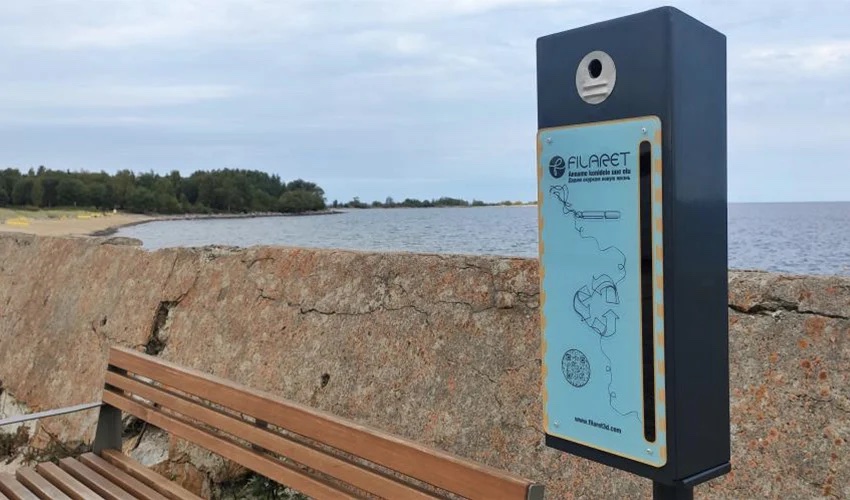
fiFilaret, an Estonian startup that makes sustainable 3D printing materials, is working with the Estonian government to turn cigarettes discarded on the country’s beaches into filament. According to local authorities in Tallinn, the capital of Estonia, cigarette butts are one of the most common types of waste in the Baltic Sea. Since one cigarette butt can pollute up to 1,000 liters of water, the sea is filled with toxic and non-biodegradable products. Additionally, cigarette filters can release toxins which persist for 10 years, posing an event greater threat to the marine environment.
To combat this threat to marine biodiversity, specially designed garbage cans for cigarette butts will be installed along some of Tallinn’s beaches. This month, about twenty bins will be placed in three specific locations, the beaches of Stroomi and Pikakari as well as the quay of Katariina. The authorities encourage the public to throw away their cigarettes and avoid polluting their beach. This project will last for 2 months. At the end of the project, Filaret will empty these garbage cans, and then convert all the collected waste into a new compostable and environmentally friendly 3D printing material.
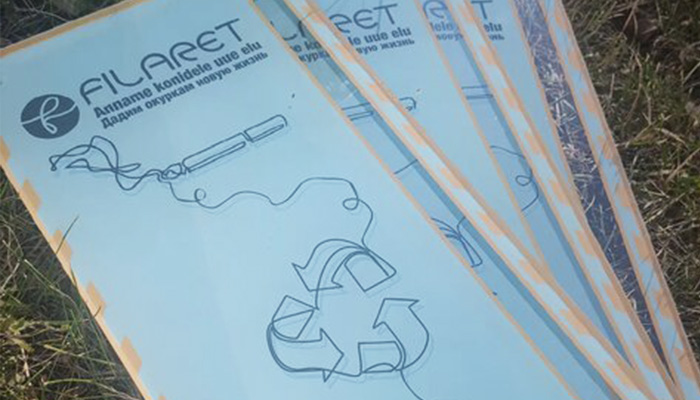
These bins will be placed in several beaches of Tallinn (photo credits: FIlaret)
Filaret Seeks to Disrupt the 3D Printing Material Industry
For the moment, no information has been given on the manufacturing process of these filament butts. Also, it is not known whether the final material will be suitable for prototyping or production purposes. However, Filaret says it has set the bar high, claiming that it will represent a new standard of innovative material, capable of “disrupting the 3D printing industry.” The company is supported by a number of organizations, including Tallinn University of Technology and the startup incubator Tehnopol. In fact, the latter has shown its support with financial assistance of up to €10,000, as well as mentoring to help turn ideas that can improve “the health of the planet” into reality. More information HERE.
More from the desk
Six other notes from the rest of the bench.
 NewsBarilla’s 3D Printed Pasta Is Now Available for SaleOver the years, 3D printing has already affected multiple sectors and is now even finding its way onto our plates. These days, the food industry is relying on all the advantages 3D technologies have to offer. This time, we took…
 ApplicationsNASA and Rocket Lab Enter a New Era With the Neutron RocketWith the goal of further expanding its reach in space missions, NASA has signed an agreement with Rocket Lab USA, Inc. to integrate the Neutron rocket into the VADR program. This is a program to procure launch services at competitive…
 Guides#TALK3D: Interview with Ric Fulop, CEO of Desktop MetalSince its beginnings, the company Desktop Metal has been making a lot of noise in the world of 3D printing and beyond. Founded in October 2015, the company designs, manufactures and markets metal additive manufacturing systems that are revolutionising metal…
 NewsFormnext Connect: what did the community think?Formnext Connect closed last week. After much anticipation from the community on what the physical event turned digital would look like, the event did not disappoint! The organisers stated in their press release “Formnext Connect succeeds as the digital heart…
 NewsVoices AMplified RAPID TCT 2023: Hearing From the AttendeesRAPID + TCT 2023 has wrapped up! After 3 exciting days in Chicago, the largest conference on additive manufacturing in North American has closed its door after a successful edition with over 400 exhibiting companies and over 9500 attendees from…
 NewsKIMYA Closes Due to Economic DifficultiesKIMYA, a French company and subsidiary of ARMOR GROUP, has just announced the closure of its production site based in Les Sorinières, Loire-Atlantique, France, and thus the sale of its business. This decision, which will result in the loss of…