Materials
Everything You Need to Know about Transparent 3D Printing
Sometimes, you may want a part to be transparent for aesthetic reasons, and other times, transparency is a functional necessity. In either case, 3D printing’s flexibility in terms of design, materials and processes makes it possible to create parts with…
- 3 min read
- Materials
- Six more stories
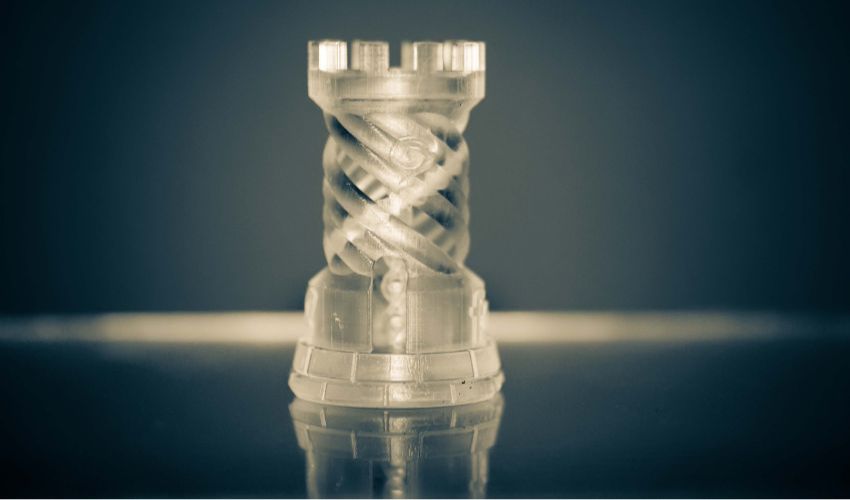
Sometimes, you may want a part to be transparent for aesthetic reasons, and other times, transparency is a functional necessity. In either case, 3D printing’s flexibility in terms of design, materials and processes makes it possible to create parts with a transparent effect. This can be a difficult task since the very principle of the 3D printing, i.e. the superimposition of layers, creates spaces that light cannot pass through. However, transparency is still possible to achieve. Glass, for instance, is great for creating transparent parts and it is emerging as a viable material for 3D printing. But because 3D printing glass is less common, in this article, we focus on plastics.
Before delving into the subject, it is important to distinguish between transparency and translucency. Transparent pieces allow the passage of a greater amount of light without visible distortions, so you can see perfectly through the piece. Translucent pieces, on the other hand, allow diffused light to pass through, meaning that the image we see through the pieces is not completely clear. Here, we will analyze two technologies compatible with transparent plastic materials, the factors to consider with each technology and the applications of transparent 3D parts.
Technologies to Achieve Transparent 3D Parts
Resin-Based Processes
When you think of transparent 3D printing, the first thing that comes to mind is the use of resin-based processes. Vat photopolymerization (SLA, DLP) is one of the ideal technologies for achieving high-quality, highly transparent parts, as the resulting surfaces are smooth and let more light through. There are several transparent resins on the market with properties to suit different clear optics applications. For example, Formlabs Clear Resin for SLA printers is a resin that produces parts close to the transparency of glass, with fine detail and without the need for time-consuming post-processing.
More from the desk
Six other notes from the rest of the bench.
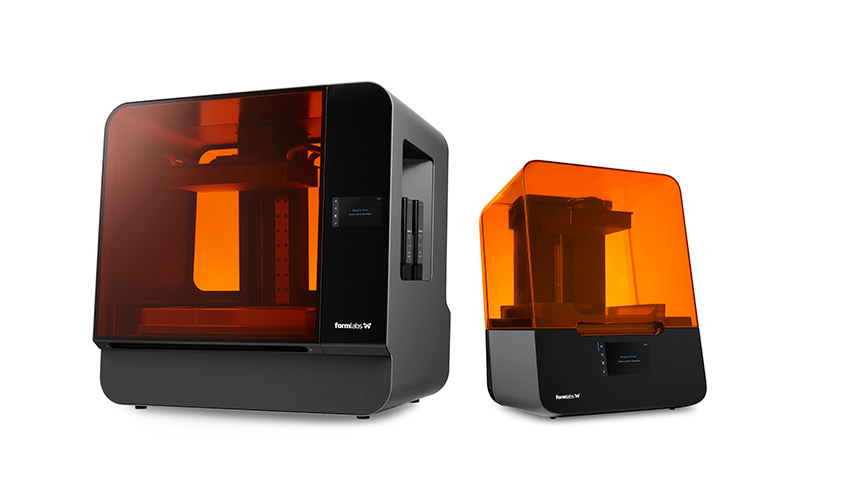 PrintersForm 3 and Form 3L, the new SLA 3D printers from FormlabsWith more than 50,000 units sold of its Form 2 3D printer, the American manufacturer Formlabs is the market leader in SLA desktop 3D printing. At the Hannover Messe event, the manufacturer took the opportunity to unveil its latest generation of…
 NewsPurdue University receives a grant to 3D print a nuclear reactorEarlier this year we wrote about Oak Ridge National Laboratory (ORNL) working on the design of the first additively manufactured nuclear reactor. Recently, the U.S. Department of Energy has awarded a grant worth $800,000 to Purdue University’s College of Engineering…
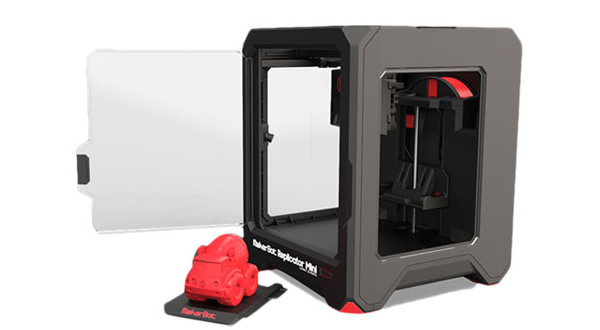 Printers3Dnatives Lab: Our Test of the MakerBot Replicator MiniAfter an announcement made at CES in 2013 by the CEO of MakerBot for their new generation of personal 3D printers, we at 3Dnatives labs have decided to tackle the Replicator Mini. This 3D printer is an entry-level model from this American manufacturer. Before…
 ApplicationsTop 5: Using Cold Spray Additive Manufacturing at ‘America’s Shipyard’Now that Sunday is finally here, we are taking a look back at the best 3D printing videos from the past week. Starting with the Norfolk Naval Shipyard, affectionately referred to as ‘America’s Shipyard,’ where we go behind the scenes…
 News3D Printed Meals From Plastic Waste Ready for SpaceFor some years now, the aerospace industry has been turning to additive manufacturing in the hope and expectation of conquering space. The technology is being used to build rockets, engines or even houses to live on the moon. NASA has…
 MaterialsStratasys Expands Availability of RadioMatrix™ Radiopaque Material to the United StatesStratasys has announced full U.S. availability of RadioMatrix™, its radiopaque 3D printing material designed for advanced medical imaging education, device testing, and research. The material was previously limited to select programs in Europe. It is now available for healthcare