News
3D Printed Meals From Plastic Waste Ready for Space
For some years now, the aerospace industry has been turning to additive manufacturing in the hope and expectation of conquering space. The technology is being used to build rockets, engines or even houses to live on the moon. NASA has…
- 3 min read
- News
- Six more stories
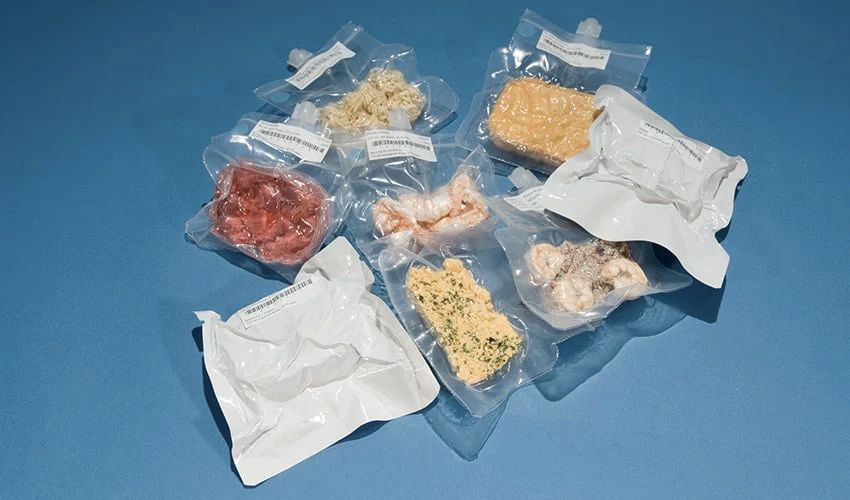
For some years now, the aerospace industry has been turning to additive manufacturing in the hope and expectation of conquering space. The technology is being used to build rockets, engines or even houses to live on the moon. NASA has granted 57.2 million dollars to ICON to develop 3D printed constructions on our natural satellite. In turn, Relativity Space has built a rocket using additive manufacturing almost entirely, and if we are talking about rocket engines, Launcher used VELO3D to improve the company’s E-2 Liquid rocket engine. Most recently, 3D printed food is being developed in the hope of feeding astronauts in space.
3D printing therefore offers a wide range of possibilities in the production of parts for space. As we already know, this manufacturing method can also be used to build food. Additive technology for the food sector is becoming increasingly important. To find ways to grow and produce food in space, American, Japanese and European space organizations are collaborating with the food industry. Together they have come up with a very interesting solution: collecting plastic waste and turning it into edible food.
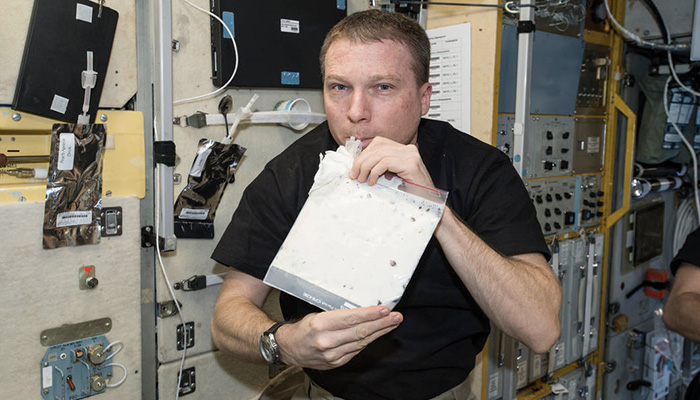
Astronaut Terry Virts drinking a 3D printed milkshake on the International Space Station (Photo credits: NASA / Mark Garcia).
A Steak From Plastic Waste
A steak made from plastic waste seems unreal, a kind of sustainable dream, a new level in recycling, something that could turn the whole world as we know it upside down. Yes, this project is real and possible thanks to Beehex, a company that develops food solutions using different 3D printing technologies. It was founded by Anjan Contractor, an engineer affiliated with NASA. The idea is simple: give astronauts 3D printed meals. “Plastic waste is collected and then shredded. In the end it will go into the bioreactor, which contains very specific modified bacteria,” explains Anjan. These modified bacteria eat the plastic and turn it into biomass, and thanks to that it can be used to produce 3D printed meals.
More from the desk
Six other notes from the rest of the bench.
 MaterialsKamui Cosplay 3D Prints A Fallout Pip-Boy DeviceAs a huge fan and avid player of the action role-playing game Fallout, Svetlana Quindt decided to recruit her design partner Benni Schwarz, and his brother Jacob, to help create a 3D printed replica of the video game’s most recognizable…
 PrintersNew extruder transforms METHOD 3D printer into an open materials platformThe METHOD is a professional desktop 3D printer that enables the creation of parts for industrial applications. Launched by MakerBot and based on Fused Deposition Modeling technology, the METHOD enables users to work with technical materials. Back in November 2019,…
 NewsTOP 5 videos of the week: Airbus, Fidget Spinners and more!A new selection of the best 3D printing videos of the week, just for you! Find our TOP 5 videos of the week below and tell us what your favorite video is in a comment or on our Facebook and Twitter page.…
 GuidesViscoTec Makes Liquids and Pastes Compatible With 3D Printing Thanks to Innovative PrintheadsViscoTec offers high-precision dosing pumps and systems that are used all over the world. Customer satisfaction is always at the forefront of the company’s activities, which is why it has enjoyed considerable success since its founding back in 1997. Starting…
 ApplicationsAML3D Expands its Presence in 3D Printing in Aeronautics Through Boeing PartnershipAustralian metal 3D printing specialist AML3D has announced a renewed partnership with aircraft manufacturer Boeing. Earlier this year, Boeing commissioned AML3D to 3D print prototype aluminum aircraft parts. The parts must match AS9100D quality assurance requirements for “
 NewsDISPERSEED is Using 3D Printing to Help Reforestation EffortsThis summer, the impact of global warming has clear worldwide. One particularly worrying sign has been the rise in fires, a direct result of numerous heat waves as well as low rainfall. In the United States alone, the National Interagency…