News
Purdue University receives a grant to 3D print a nuclear reactor
Earlier this year we wrote about Oak Ridge National Laboratory (ORNL) working on the design of the first additively manufactured nuclear reactor. Recently, the U.S. Department of Energy has awarded a grant worth $800,000 to Purdue University’s College of Engineering…
- 3 min read
- News
- Six more stories

Earlier this year we wrote about Oak Ridge National Laboratory (ORNL) working on the design of the first additively manufactured nuclear reactor. Recently, the U.S. Department of Energy has awarded a grant worth $800,000 to Purdue University’s College of Engineering to accelerate the development of the microreactor. In fact, this 3D printed reactor will be the first advanced reactor to operate in the United States in over 40 years. After receiving the funding from the DoE, the mission of Purdue will be to develop an artificial intelligence technology that ensures the quality of the components for the 3D printed nuclear reactor.
The Purdue University scientists and engineers aim to drive the integration of technologies such as additive manufacturing, computation materials modeling and AI, in creating the components for the microreactor. Why? Because their goal is to significantly reduce production costs and time, and 3D printing is the perfect solution for that. In addition, the use of AM and AI will help to realistically estimate safety risks, as well as offer reliability and convenient access to nuclear power.
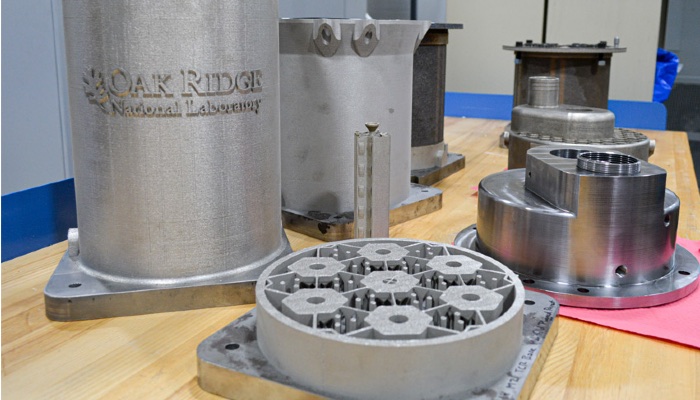
The 3D printed components of the nuclear reactor. (Image credits: ORNL)
The use of the combination of additive manufacturing and AI is crucial in providing the most data-rich and cost-effective nuclear component qualification process. The technical lead for the project and associate professor of nuclear engineering, Hany Abdel-Khalik, explained: “Purdue will fill a technological gap in the nuclear industry, reflecting a broader trend of applying AI strategies to support additive manufacturing (AM). AM enables designs to be adjusted during manufacturing, greatly decreasing production cost and time. Our work is aimed at driving widespread adoption of additively manufactured reactor components by using an AI-powered software system to ensure safety and reliability.”
More from the desk
Six other notes from the rest of the bench.
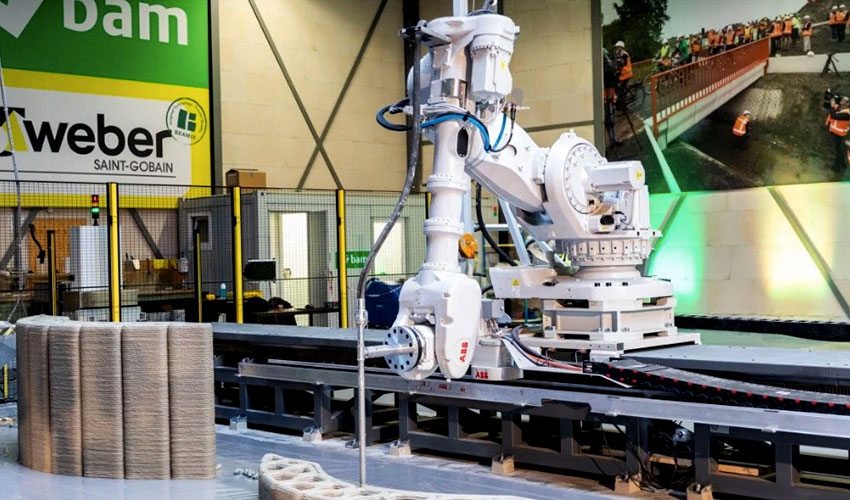 NewsEurope’s First 3D Concrete Printing FacilityThe first industrial 3D concrete printing facility in Europe was inaugurated on the 14th of January in Eindhoven, Holland. When applied to the construction sector, 3D printing offers many advantages whether in terms of costs, time or durability of materials.…
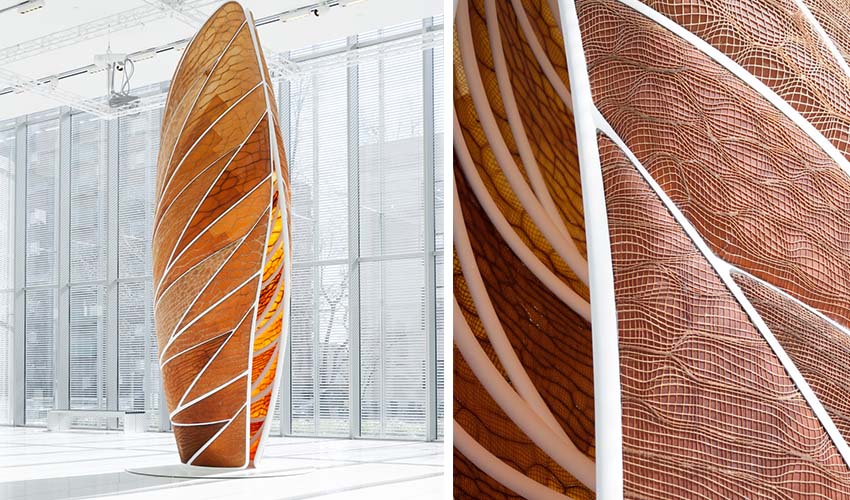 NewsCreating beautiful 3D printed structures inspired by natureTogether with acclaimed designer Neri Oxman and The Mediated Matter Group, Stratasys is showcasing how its 3D printing technology can achieve great art and design opportunities by producing beautiful 3D printed structures inspired by nature. The project is a collection…
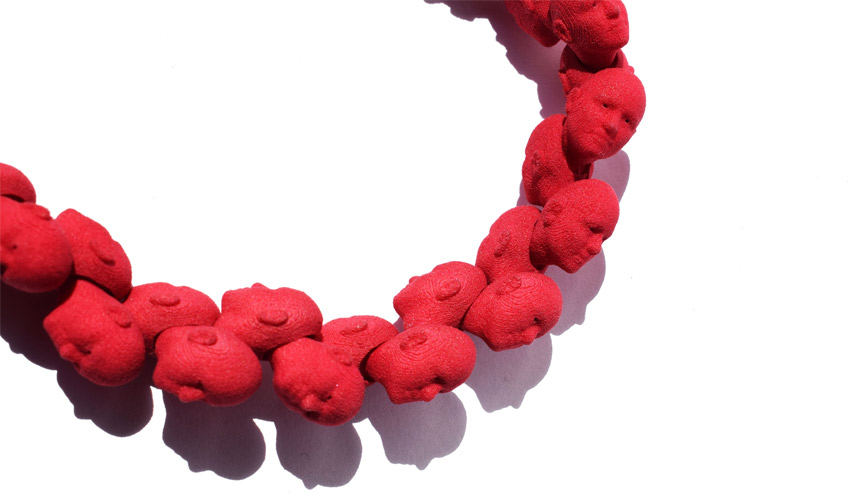 NewsExploring jewelry making using 3D printing with Caroline AuraixIn the jewellery sector, additive manufacturing has many benefits, especially in terms of creativity. It enables designers to design complex shapes that are impossible to obtain using traditional manufacturing methods. It also offers greater scope for personalization, satisfying
  NewsFungi Filament for Sustainable SoundproofingResearchers have developed sustainable soundproofing using the fungus-based material, mycelium, and 3D printing technologies. The majority of modern soundproofing panels are made of synthetic foams or mineral fibers. These are neither sustainable nor recyclable. Mycelium, however
 NewsDubai to Rely on 3D Printing for Road MaintenanceWhile additive manufacturing is being used by the rail industry to improve the condition of rails, it is still rare to see the technology employed for roads. But that could soon change. In the United Arab Emirates, in Dubai to…
 GuidesPorsche on the use of additive manufacturingA few weeks ago, the car manufacturer Porsche presented 3D printed pistons for the engine of its famous model 911 GT2 RS. Additive manufacturing allowed Porsche to reduce the overall weight of the part as well as the production lead…