Software
Everything You Need to Know About Polygonal Modeling for 3D Printing
Polygons play an essential role in 3D modeling, allowing the design of complex objects with great precision. By assembling simple geometric shapes, it becomes possible to create a variety of three-dimensional models, particularly suitable for 3D printing. But how do…
- 3 min read
- Software
- Six more stories
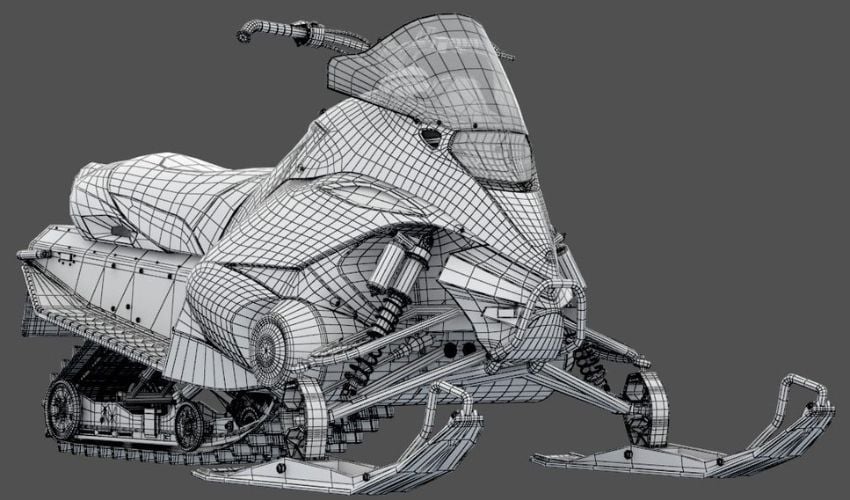
Polygons play an essential role in 3D modeling, allowing the design of complex objects with great precision. By assembling simple geometric shapes, it becomes possible to create a variety of three-dimensional models, particularly suitable for 3D printing. But how do polygons actually work? How are they used in 3D modeling? And what impact do they have on the 3D printing process? This guide provides clear answers to these questions.
Polygons are two-dimensional planar surfaces used to construct 3D meshes, i.e., lattice structures. They are defined by points, called vertices, positioned in three-dimensional space and connected by edges to create the desired shape. When three vertices are connected, they form a triangle, the simplest and most commonly used polygon. Other shapes, such as quadrilaterals, can also be used, provided they have at least three vertices. By assembling several of these surfaces, we obtain a three-dimensional object whose appearance resembles a mesh, due to the interlacing of vertices and edges. Thus, each polygon forms a closed surface composed of at least three vertices. Polygons with more than four sides, called n-gons, are generally avoided in 3D modeling because they pose compatibility and rendering problems.
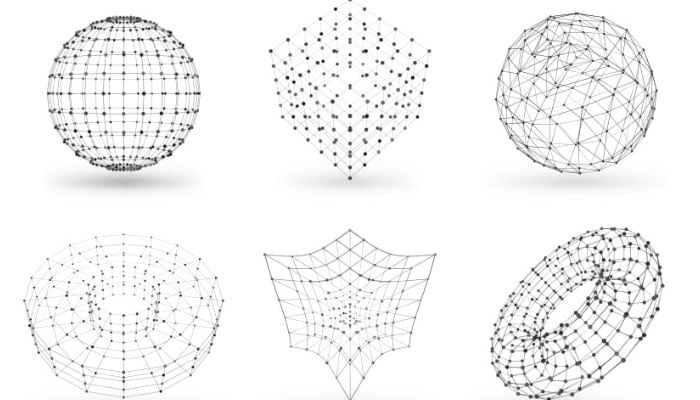
Photo Credits: CGI Furniture.
The Parts of a Polygon
Each part of a polygon has a specific role in its structure. Vertices, for example, are the points where two edges meet. When you move a vertex, the edges connected to it also move, changing the shape of the polygon. Edges, on the other hand, are the lines connecting two vertices in 3D modeling software. They serve as a link between vertices and help define the overall geometry of the polygon. Any change to an edge therefore influences the entire structure.
More from the desk
Six other notes from the rest of the bench.
 SoftwareZBrush: The CAD Software for Creating 3D-Printed SculpturesAs you may know, before starting a printing process, it is first necessary to obtain a 3D digital model of a part. Perhaps the best-known modeling method is computer-aided design (CAD). It can be used to create individual models with…
 Guides#3DStartup: PERFI’s Volumetric 3D Printing Platform for Personalized Medical DevicesPersonalization is one of 3D printing’s biggest promises, yet in medical applications it’s still slowed down by long lead times and heavy post-processing. PERFI Technologies is flipping that script. Instead of building parts layer by layer, the startup uses volumetric…
 NewsCultArm3D, an Automated Robotic Arm That Can Scan Cultural Objects in 3DFraunhofer Institute for Computer Graphics (Fraunhofer IGD for short), the leading world’s leading organization for application-oriented research, has developed a mobile 3D scanner called CultArm3D that can produce precise 3D models of exhibits of various sizes at the touch
 NewsNikon Confirms Acquisition of Metal 3D Printing Giant SLM SolutionsLast September, the Japanese group Nikon confirmed its intention to acquire the industrial 3D printer manufacturer SLM Solutions. Four months later, this acquisition has officially been finalized: Nikon announced recently that more than 21,000,000 shares and more than 42,000 conv
 ApplicationsFleet Space Has Launched its Centauri 5 SatelliteYou may remember Fleet Space, the Australian company that plans to send fully 3D printed satellites, named Alpha, to the Centauri constellation. Though those satellites are not yet ready for launch, the company recently made a significant step forward. On…
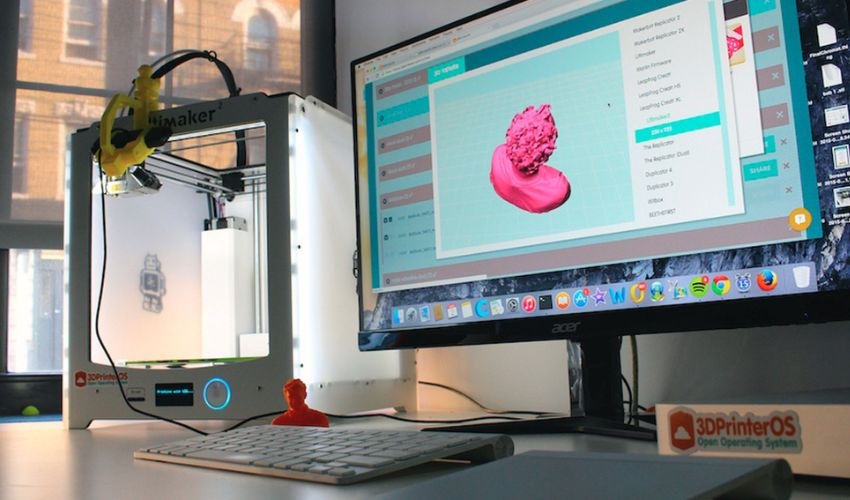 Software3DPrinterOS: A Set of Software Solutions for 3D PrintingToday, let’s take a close look into 3DPrinterOS—a user-friendly software solutions platform tailored for 3D printing enthusiasts. Serving as an open-source operating system for 3D printers, 3DPrinterOS streamlines tasks by eliminating the need to juggle multiple programs an