News
Everything You Need to Know About Food-Safe 3D Printing
In recent years, 3D printing has been taking the food industry by storm. From the release of Cocoa Press’s highly-anticipated chocolate 3D printer to the continued industrialization of food 3D printing with companies like Revo Foods and Steakholder Foods, using…
- 3 min read
- News
- Six more stories
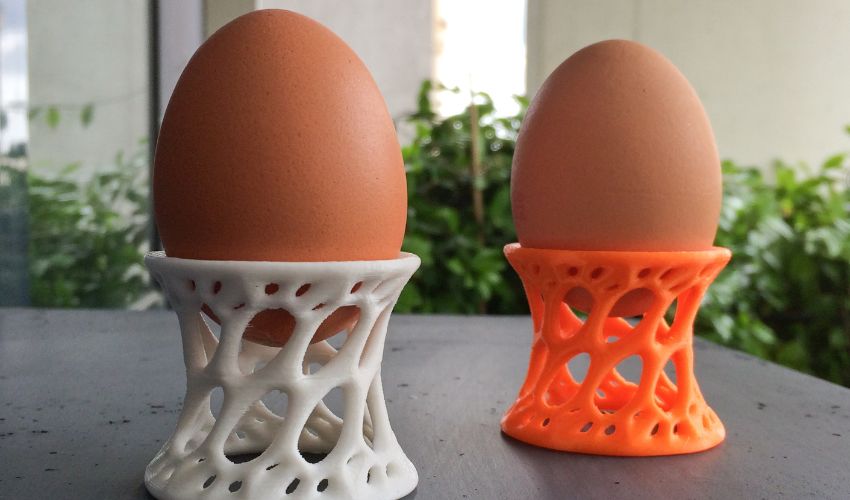
In recent years, 3D printing has been taking the food industry by storm. From the release of Cocoa Press’s highly-anticipated chocolate 3D printer to the continued industrialization of food 3D printing with companies like Revo Foods and Steakholder Foods, using 3D printing for the creation of meat, fish and desserts has never seemed so easy. But using 3D printers to create food is not the only way that additive manufacturing can be used in the food sector. It is also possible to use 3D printing for the creation of parts that come in contact with food, such as plates, cutlery or even packaging. But of course, if a part, even one made with 3D printing, will be used with food, it must be “food safe.”
But what exactly does food safe mean? What are the most important considerations when it comes to 3D printing? In the following guide, we answer these questions as well as take a closer look at how exactly a user can ensure that a 3D printed part is food safe. More specifically, we will be focusing on polymer additive manufacturing since, although ceramics and metals also can be considered food-safe, plastics are often more accessible, especially when it comes to non-industrial additive manufacturing.
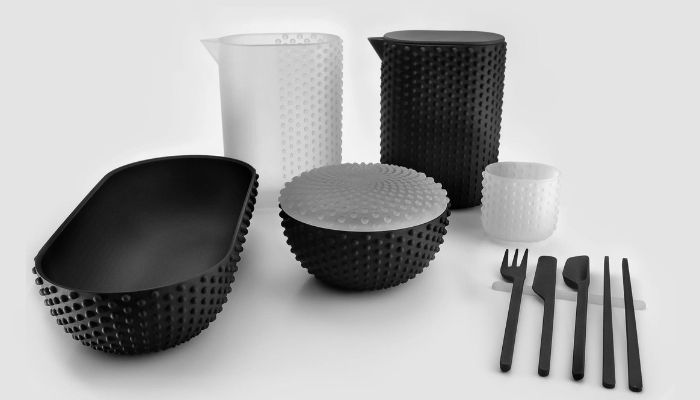
3D printed tableware from Joe Doucet (photo credits: Joe Doucet)
What Does Food Safe Mean?
Before we get into food-safe 3D printing, it is important to first define what exactly food safe is. Well in general the term food safe for materials is a status that designates that the material is permitted to come into direct contact with food. Any material that is called food safe will meet certain requirements as determined by the intended use and will not constitute a food-safety hazard. Though these also change based on the country.
More from the desk
Six other notes from the rest of the bench.
 NewsHyperX Is Adopting 3D Printing for Personalized Gaming Equipment With HX3DIt seems that there is no shortage of new applications for 3D printing. Especially when it comes to customized consumer goods. This is also the case for the video gaming industry where HyperX, a leader in gaming and esports equipment…
 ApplicationsA New 3D Bioprinting Technique to Create Vascularized Human TissueA research team from the Jacobs School at the University of California, San Diego, are developing a new method of 3D bioprinting based on digital light processing (DLP). The project aims to create vascularized 3D-engineered tissues that, although produced in…
 Printers3Dnatives Lab: Testing the Ultimaker S5 3D PrinterPresented for the first time at the Hannover Fair 2018, the Ultimaker S5, the latest generation of 3D printers from the Dutch manufacturer. Characterised by a large print volume (the largest in the Ultimaker range), a full-colour touchscreen and a closed speaker, the…
 ApplicationsBIOLIFE4D bioprints small human heart for the first time in the U.S.BIOLIFE4D, one of the pioneers in the bioprinting field, has been able to bioprint a miniature human heart – making it the first U.S. company to successfully achieve this. The company’s mission is to create a fully functioning human heart…
 NewsWEBINAR: How to Overcome the Supply Chain and Labor Crisis With 3D Printing?We do not know how long the current mix of supply chain and labor issues will last, especially considering the number challenges countries have been facing worldwide. And for many the question is how can companies continue to outperform during…
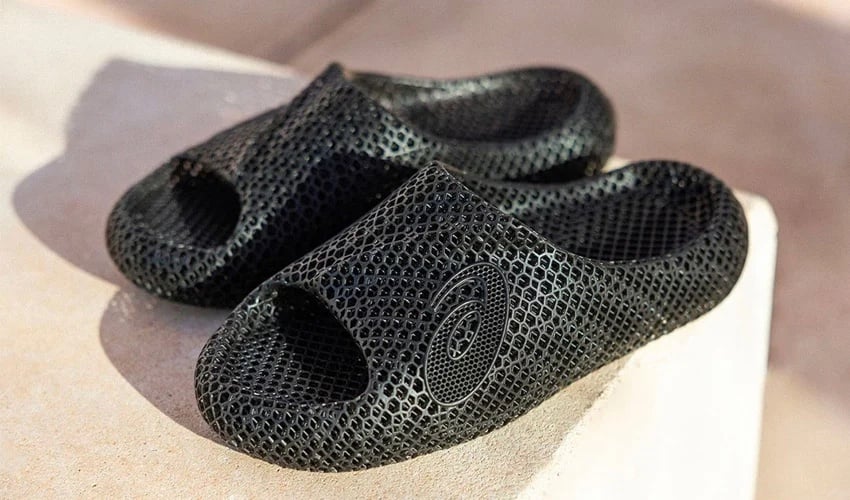 NewsAsics Presents its New 3D Printed Flip-Flops Designed for AthletesFamous sports brand ASICS recently made its debut on the 3D printed footwear market by introducing its first flip-flops that were designed via additive manufacturing. Although these sandals look like they’d be ideal to be worn around the pool or…