News
EPFL develops a new high-precision laser 3D printing method
At EPFL, researchers have developed a new, high-precision method for 3D printing small and soft objects. The team of researchers in Lausanne, Switzerland explained that this new technology could have applications in a wide range of fields, including bioprinting. One…
- 3 min read
- News
- Six more stories
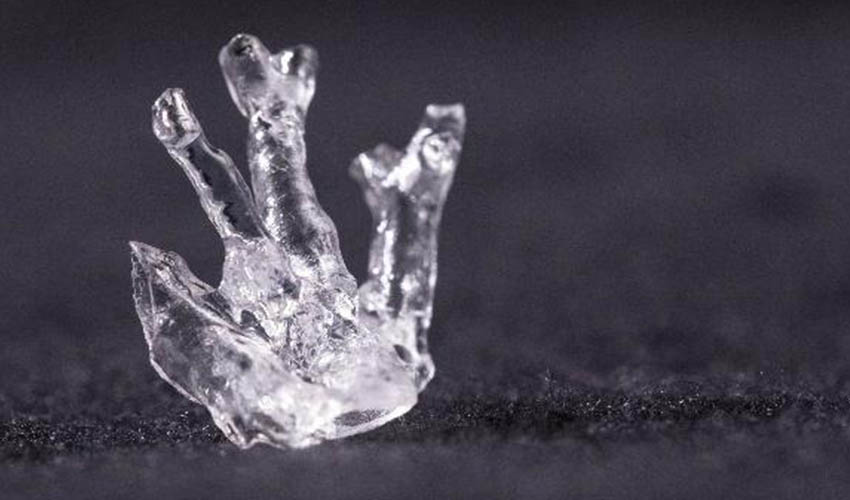
At EPFL, researchers have developed a new, high-precision method for 3D printing small and soft objects. The team of researchers in Lausanne, Switzerland explained that this new technology could have applications in a wide range of fields, including bioprinting. One of its advantages over existing methods is its ability to print different textures within the same object, which could be used to make tissues, organs, hearing aids and mouthguards for example. In order to bring the system to market, a spin-off company, Readily3D will be further developing the technology.
The process used by the researchers at EPFL is considered additive manufacturing but does not use the typical layer-by-layer approach. Instead, solid spots are formed step by step to create the object from a translucent liquid polymer. Essentially, the liquid polymer is added to a rotating platform, which is then hit by a laser. Paul Delrot, Readily3D’s CTO explains: “The laser hardens the liquid through a process of polymerization. Depending on what we’re building, we use algorithms to calculate exactly where we need to aim the beams, from what angles, and at what dose.”
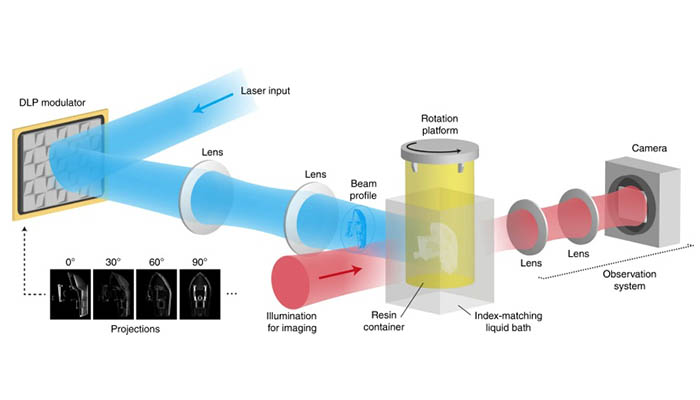
Diagram of EPFL’s technology | Credits: EPFL / LAPD / Nature Communications
High-precision laser 3D printing for medical applications
In addition to being able to fabricate soft objects with varying textures, this technology can also create very small and precise parts in a very short amount of time. Currently the system is capable of making 20 mm structures with a precision of 80µm, about the same as the diameter of a strand of hair. The team explained that as they work on developing new devices, they should be able to build much bigger objects with the same precision, potentially up to 150 mm.
More from the desk
Six other notes from the rest of the bench.
 PrintersLaser Scanner vs Structured Light Scanner: which should you choose?In the 3D printing workflow, 3D scanners are very often an essential step to facilitate the modeling of an object. They make it possible to collect data on the shape and sometimes depending on the 3D scanner, the appearance (such…
 NewsS-MAX Pro is the new large-scale sand 3D printer from ExOneExOne, the manufacturer of industrial sand and metal binder jetting 3D printers, just announced it has launched a new industrial sand 3D printer. This latest model, the S-MAX Pro, will be a solution for both prototyping and industrial series production.…
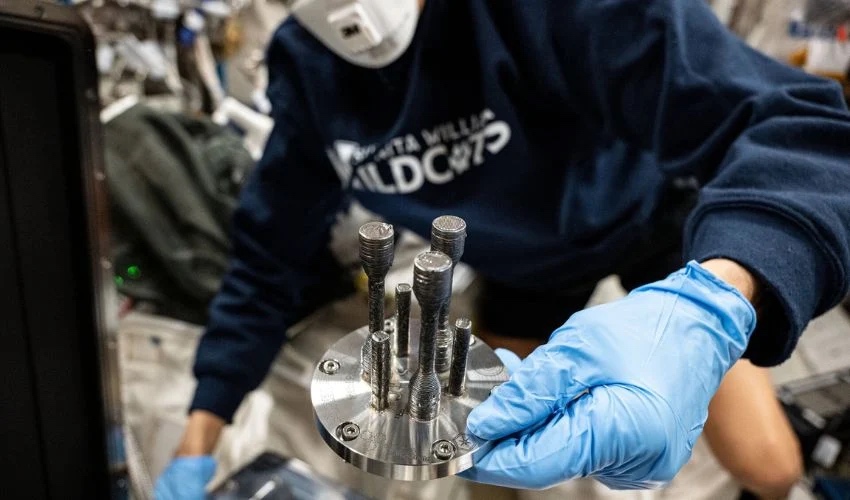 ApplicationsFirst Metal Part Successfully 3D Printed on Board ISSIt’s official, a metal part has been 3D printed for the first time in orbit, and more specifically on board the ISS in a team effort between the European Space Agency (ESA), Airbus and its partners! And if the news…
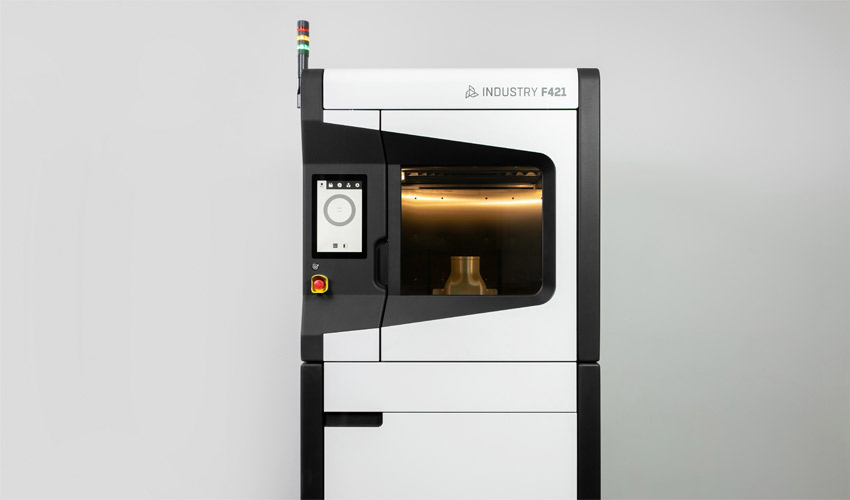 Printers3DGence Focuses on Reliable and Repeatable High-Performance 3D PrintingEuropean manufacturer 3DGence has announced the launch of a new industrial FFF machine which is compatible with high performance materials. Called INDUSTRY F421, it joins the already proven range of printers from the company and seeks to meet the needs…
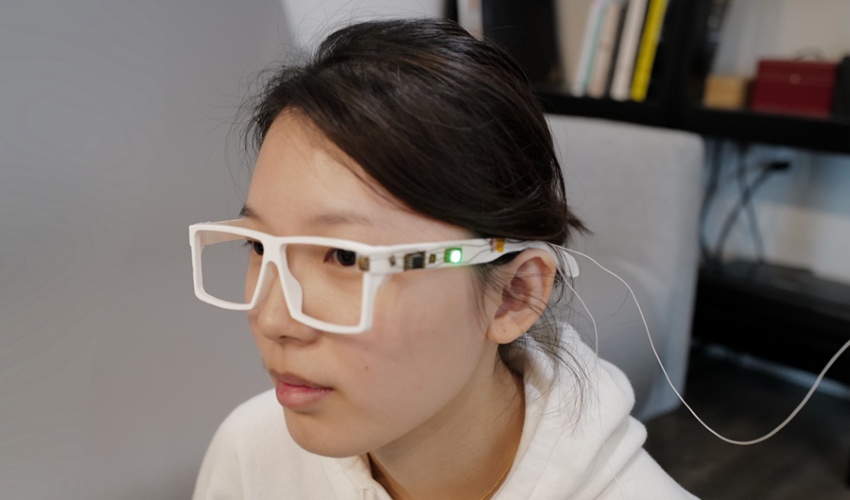 NewsMorphSensor, 3D design environment developed by MITToday, it is possible to 3D print a wide variety of objects from the comfort of your home: owning a desktop 3D printer allows virtually anyone to manufacture a robot dog or an anti-Covid necklace, for example. However, oftentimes, the…
 News3D printed surgical models for pets will change veterinary careWe’ve mentioned many times on 3Dnatives how 3D printing can enable the creation of tailor-made solutions for patients. By modeling the piece in 3D software, it is possible to achieve a unique and custom-made solution for all morphologies or needs.…