Materials
Essentium and LEHVOSS Group develop engineering-grade materials for AM
For a long time additive manufacturing was considered a technology for rapid prototyping. However, AM technologies have been increasingly employed for series production of parts that need to be customized or require designs impossible to manufacture using traditional methods. In&
- 3 min read
- Materials
- Six more stories
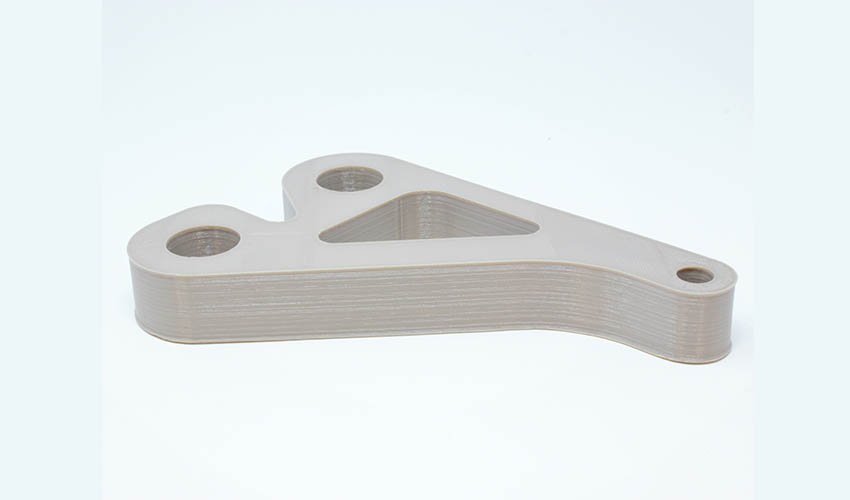
For a long time additive manufacturing was considered a technology for rapid prototyping. However, AM technologies have been increasingly employed for series production of parts that need to be customized or require designs impossible to manufacture using traditional methods. In a study conducted by Essentium last year, the company revealed that 3D printing adoption had been limited by scale, but an increasing number of companies have been using the technology for industrial scale manufacturing in recent years. More precisely, the number of manufacturers using 3D printing for full scale production rose from 21% in 2018 to 40% in 2019. Additionally, the wider adoption of 3D printing goes hand in hand with the rise in the availability of 3D printing materials. Not any materials, but engineering-grade materials that meet the standards for industry applications in aerospace, automotive, biomedical and electronics industries.
For this reason, Essentium, manufacturer of the HSE (High Speed Extrusion) 3D printing platform, has partnered with LEHVOSS Group to develop high-performance materials that will enable industrial-scale additive manufacturing applications. LEHVOSS Group produces and markets chemical and mineral specialities, and has developed customized polymers for 3D printing technologies such as PBF and FFF. Essentium explains that this new partnership will bring engineering-grade materials for extrusion-based 3D printing processes.
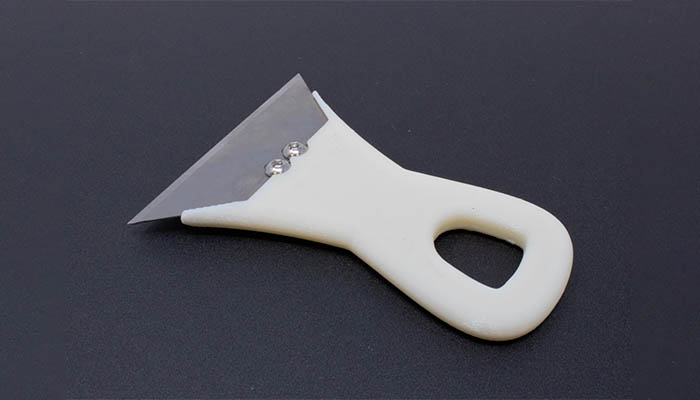
A scrapper made with Essentium’s High-Temperature Nylon
PEEK and High-Temperature Nylon
High-performance materials are very interesting for the AM sector. In general, PEEK is a high performance engineering thermoplastic that is renowned for offering an exceptionally high temperature resistance. It can withstand temperatures up to 260°C. Additionally, its chemical resistance is also excellent. The material has been used in conventional manufacturing processes such as injection molding, compression molding, etc., but is also increasingly popular in the 3D printing industry for industrial applications. Nylon on the other hand is a synthetic polymer that offers exceptionally strong and elastic properties, capable of resisting to impact and abrasion very well.
More from the desk
Six other notes from the rest of the bench.
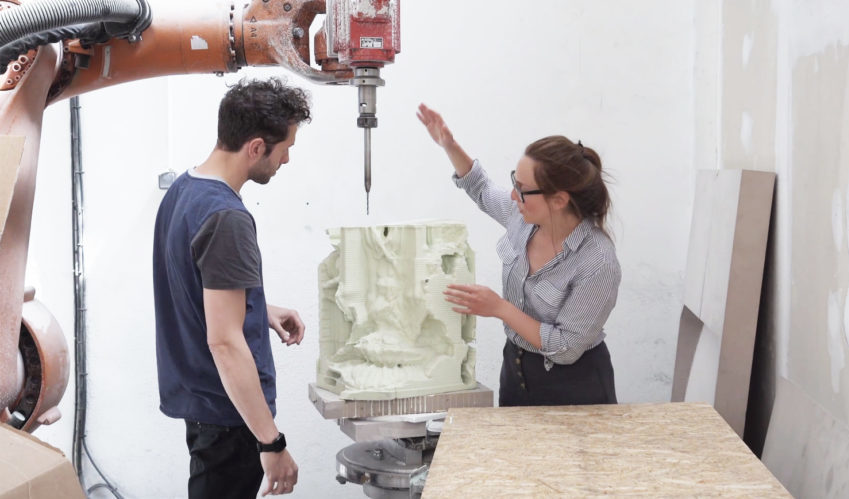 NewsFactum Arte: Creating and Conserving Art with 3D PrintingFactum Arte specialises in the conservation of cultural artefacts using new technologies, including several methods of additive manufacturing. The company was founded in 2001 by the artists Adam Lowe, Manuel Franquelo, and Fernando Garcia-Guereta, and now has locations in Madrid,
 NewsAll You Need to Know About Cold Spray Additive ManufacturingThe various additive manufacturing technologies available today can seem endless, though they often fall into one of about seven categories, but not all of them. Take, for example, cold spray additive manufacturing. Cold spray is a technique which involves the…
 Applications3D Printed Titanium Prosthesis is Attached to Dog’s Bone, Allowing Him to Walk AgainAdditive manufacturing has a number of applications in medicine, one of them being prostheses. The World Health Organization estimates that 30 million people worldwide need these devices, so manufacturing methods matter a great deal to a significant chunk of the…
 News3D drone used to save lives on beachesThis summer you can enjoy safe beaches thanks to the arrival of the 3D drone. It was created by the Valencian company General Drones, and its new development is called Auxdron Lifeguard, which have been responsible for the surveillance of the…
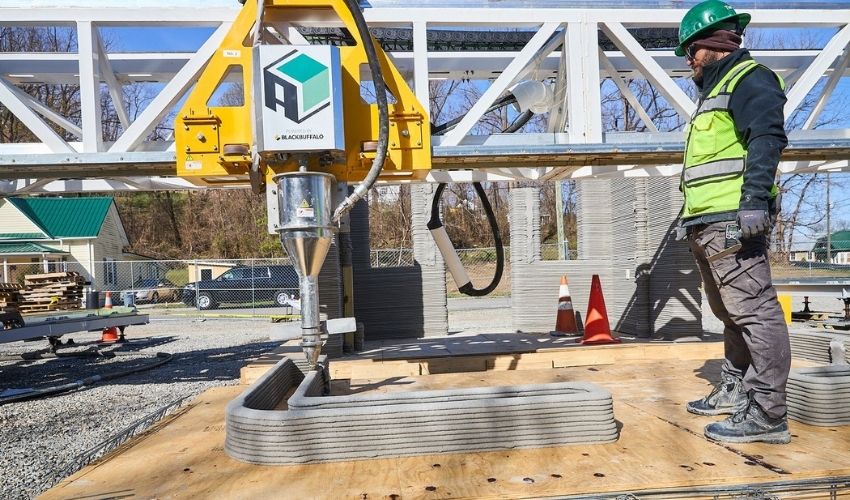 NewsAlquist 3D Has Announced Plans for the ‘Largest 3D Printed Home Building Project in the World’ in VirginiaAlquist 3D recently announced that it would be building 200 new 3D printed homes in Virginia. The Virginia-based company aims to lower the cost of housing and infrastructure in economically troubled communities with the so-called Project Virginia, which it claims…
 NewsDMG Mori on Advancing Metal Additive Manufacturing at RAPID + TCT 2024Walking around the show floor at RAPID + TCT 2024, one fact quickly became clear: metal is increasingly important in the 3D printing world. Although polymers continue to dominate the market, metal additive manufacturing solutions and applications could be found…