News
Factum Arte: Creating and Conserving Art with 3D Printing
Factum Arte specialises in the conservation of cultural artefacts using new technologies, including several methods of additive manufacturing. The company was founded in 2001 by the artists Adam Lowe, Manuel Franquelo, and Fernando Garcia-Guereta, and now has locations in Madrid,
- 3 min read
- News
- Six more stories
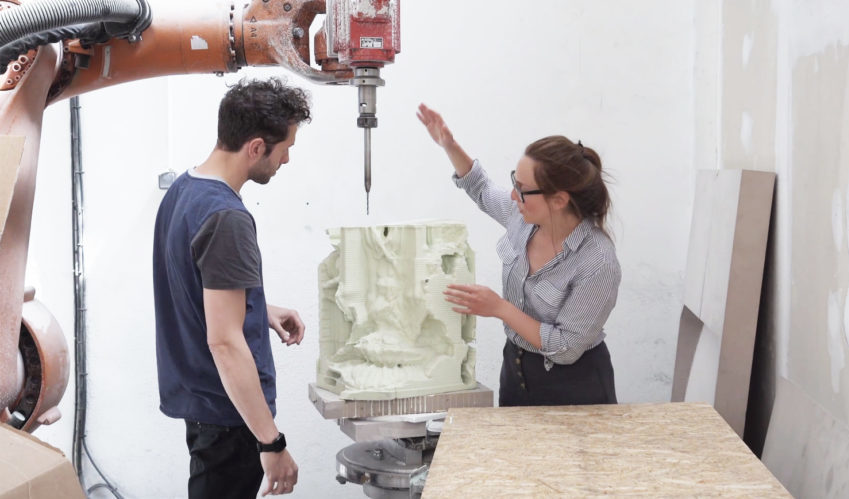
Factum Arte specialises in the conservation of cultural artefacts using new technologies, including several methods of additive manufacturing. The company was founded in 2001 by the artists Adam Lowe, Manuel Franquelo, and Fernando Garcia-Guereta, and now has locations in Madrid, Milan and London. Using non-contact high-definition 3D scanners, Factum Arte has been able to record several endangered sites and objects of cultural importance. These scans are then used to model and later print replicas using a variety of 3D technologies. Reproductions can promote accessibility to vulnerable cultural heritage sites around the world whilst still monitoring and maintaining their present condition. 3D printing technologies have enabled Factum Arte to reproduce works so faithful to the originals that they have been accused of forgery by critics.
While Factum Arte have received the most attention for their 3D printed reproductions, they have worked on a number of notable original projects, many of which are also predicated on 3D technologies, with renowned artists such as Anish Kapoor and Grayson Perry. Different pieces require different technologies as such Factum Arte use several different 3D printing technologies in their work, including stereolithography (SLA), Fused Filament Fabrication (FFF), Selective Laser Sintering (SLS), cement printing, and Canon Production Printing’s Elevated Printing Technology.
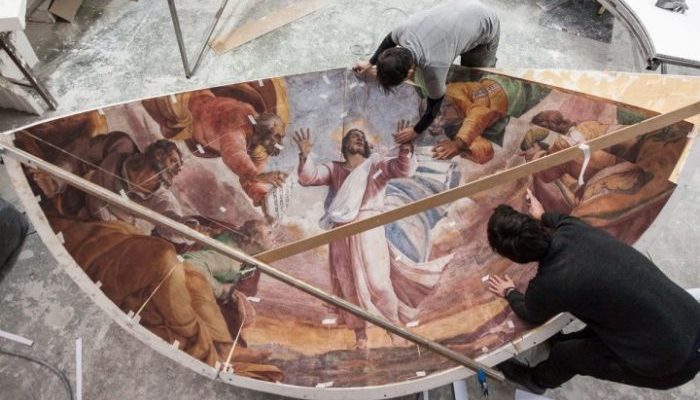
Factum Arte assembling 3D printed parts for the reproduction of Michelangelo and Sebastiano’s Borgherini Chapel in London (Credit: Factum Arte)
Fused Filament Fabrication (FFF)
Factum Arte uses Fused Filament Fabrication (FFF), better known as Fused Deposition Modelling (FDM), to produce lower resolution preliminary models, mould forms and mechanical parts such as component housings. The workshops are equipped with in-house FFF machines with build volumes of up to 500 mm3 that are able to fabricate 3D models in a single piece or to produce multiple pieces that are later joined to create a final, larger form.
More from the desk
Six other notes from the rest of the bench.
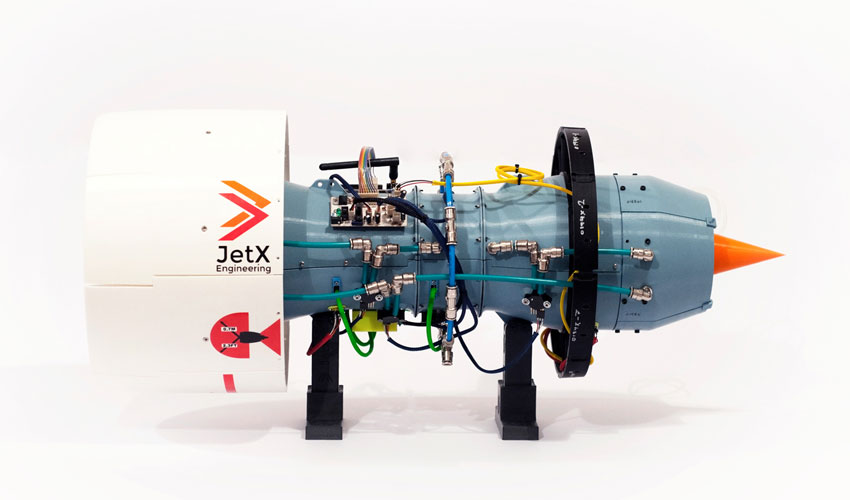 ApplicationsX-Plorer: The 3D Printed Jet Engine Made of 965 partsDeveloped by a group of engineering students named JetX, this functional 3D printed jet engine is one of the finalists of the Student Grant 3D Hubs competition. The competition is held to discover who can make the best project displaying…
 NewsMitsubishi Electric develops a metal additive manufacturing processMitsubishi Electric Corporation is a Japanese electrical equipment manufacturer and one of the world’s largest producers of photovoltaic panels. It is also a player in the additive manufacturing market that has already developed a hybrid machine combining metal sintering an
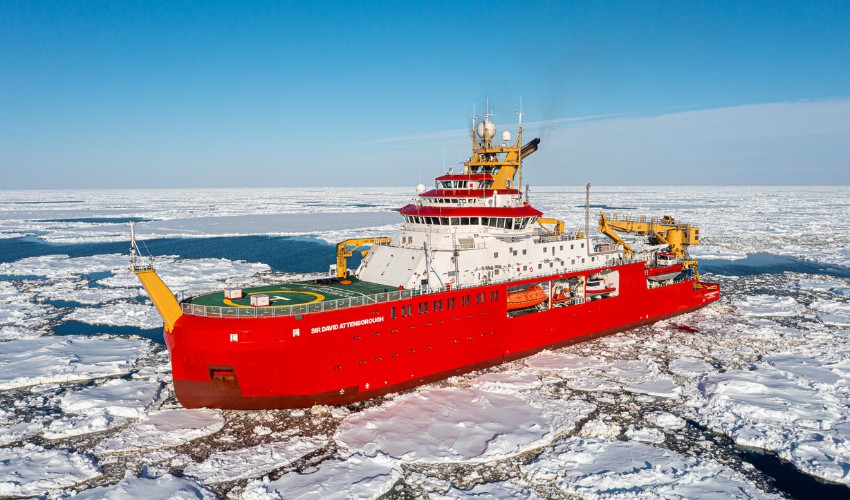 Applications3D Printing Boosts Efficiency Aboard RRS Sir David Attenborough Amid Its First Antarctic VoyageHaving embarked on its first mission to Antarctica last October, the RRS Sir David Attenborough, heralded as Britain’s most sophisticated polar research vessel, is experiencing a groundbreaking utilization of 3D printing technology. In an effort to enhance onboard operations, the
 NewsIconic Ghost Train Revitalized with Bambu Lab 3D PrintersLuna Park Melbourne, a treasured amusement park in Australia, opened its doors in 1934. It welcomed visitors with the usual roller coasters and games, carousels and carnival treats, but the park had a “dark” side: The Ghost Train. Today, the…
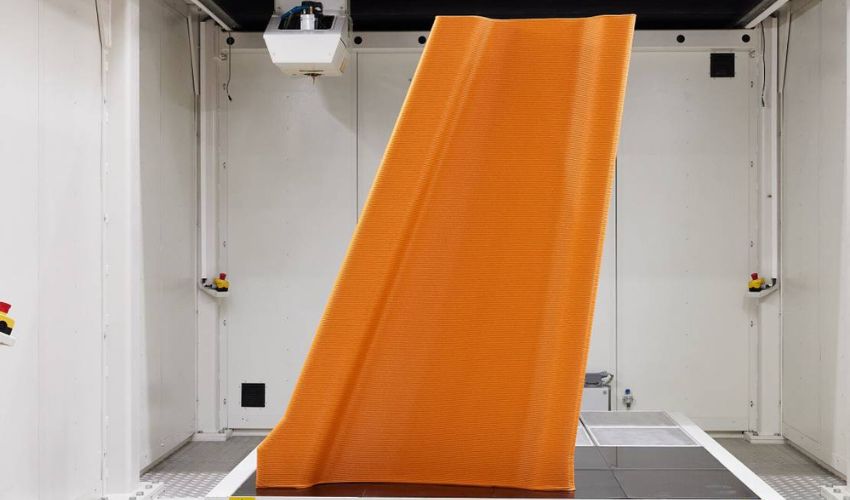 GuidesKraussMaffei Talks Large-Scale Additive Manufacturing at RAPID + TCT 2025With RAPID + TCT 2025 quickly coming up, we have once again sat down with one of the exciting exhibitors to tell attendees what exactly they can expect at the show. This time, we touched based with KraussMaffei. Although known…
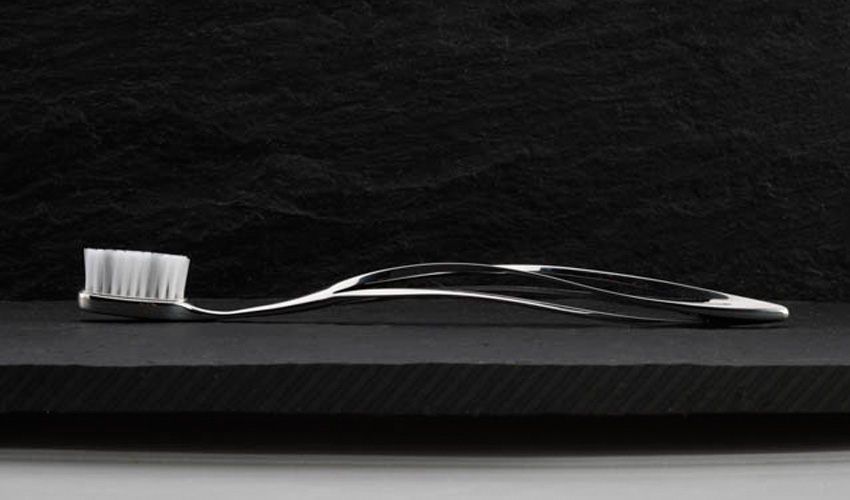 NewsThe 3D Printed Toothbrush For the Super Rich: MioThough a huge amount of development has occurred in 2017 in 3D printing metal, this is perhaps not what we were expecting: a metal 3D printed toothbrush. Made by Italian startup Zare, the toothbrush is made from titanium and looks…