Applications
Can all drugs be 3D printed?
Researchers at University College London (UCL), home of the startup FabRx, have discovered some limitations to 3D printed drugs. Using a stereolithography process to produce a polypill, they realized that certain substances – in this case amlodipine, used to prevent…
- 3 min read
- Applications
- Six more stories

Researchers at University College London (UCL), home of the startup FabRx, have discovered some limitations to 3D printed drugs. Using a stereolithography process to produce a polypill, they realized that certain substances – in this case amlodipine, used to prevent angina attacks – could not be released during printing. Here’s a first real limitation to drug 3D printing, further tests will allow researchers to understand what types of drugs can be 3D printed or not.
The English company FabRx is a UCL spin-off that has set itself the goal of designing tailor-made drugs through additive manufacturing. It is able to offer a personalised dosage and shape, adapted to the patient, more quickly. Since its creation, it has tested several technologies such as FDM to design drugs for children with MSUD, and stereolithography, a process that has proven to be more efficient than extrusion. It would allow the creation of a pill containing several different drug substances. So far, the researchers have been very pleased with their research, showing the pharmaceutical industry the potential of additive manufacturing.

The FabRx team is using FDM and SLA technologies
Recently, Professor Simon Gaisford and his team explained that they had encountered difficulties in 3D printing some substances even though the pill was forming properly. Looking at the treatment of high blood pressure, the team designed a polypill containing four substances – amlodipine, atenolol, irbesartan and hydrochlorothiazide. Once the 3D printing was completed, they realized that one drug was undetectable – amlodipine. According to the researchers, amlodipine remained trapped in the polymer matrix and could not be released. This is thought to be due to a reaction between the drug substance and the photoreactive monomers. The researchers say a Michael reaction occurred – a reaction that creates carbon-carbon bonds. It seems like not all drugs are compatible with resin 3D printing.
More from the desk
Six other notes from the rest of the bench.
 NewsSongBird: The 3D Printable Vinyl Turntable KitAs surprising as it may sound, 3D printing has over time become a major technology in the music world. Whether it’s to create and customize instruments or to improve sound quality , additive manufacturing offers many benefits to the music industry. And following in…
 Guides#3DStartup: POOLP Gives New Value to Plastic Waste Thanks to 3D PrintingWe start the year 2023 with a subject that is more relevant than ever in today’s society, namely our environmental impact and the preservation of our planet. It is no secret that additive manufacturing is one of the ways to…
 NewsA 3D printed coral reef has been successfully installed in the Indian OceanNot too far back, we presented you with a video of a 3D printed coral reef installed in the Maldives in one of our top 5 videos of the week. It is considered as the largest 3D printed reef by its…
 News3D Printing Stars in New Animated Film About Leonardo Da VinciThe legendary genius of Leonardo da Vinci never ceases to inspire in the sciences, architecture, engineering, and the arts, from the rereading of human nature to anatomy. Leonardo was a true, all-around ‘Renaissance man’ the likes of which the world…
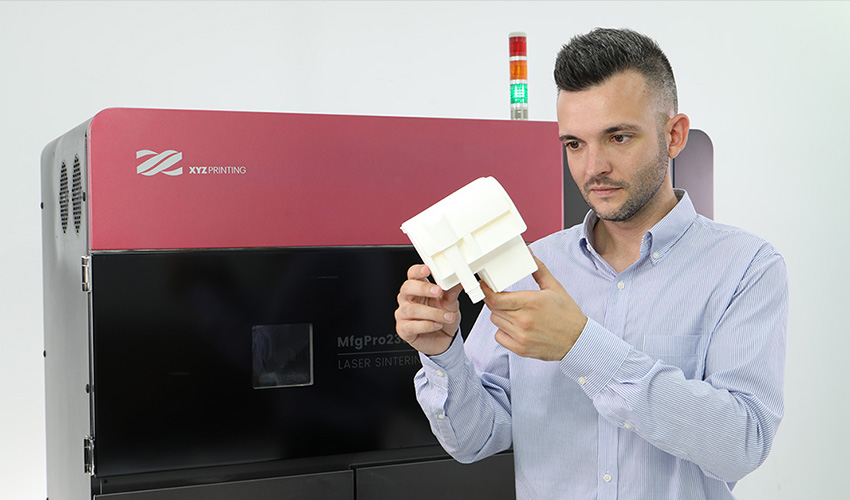 MaterialsXYZprinting SLS Machines Are Compatible with High Performance PP and TPU3D printing solutions manufacturer XYZprinting has announced a partnership with AM Polymers to offer two new materials for its selective laser sintering (SLS) machines. The range now includes an FDA-approved, food-grade PP01 polypropylene powder and a PB01 TPU powder for…
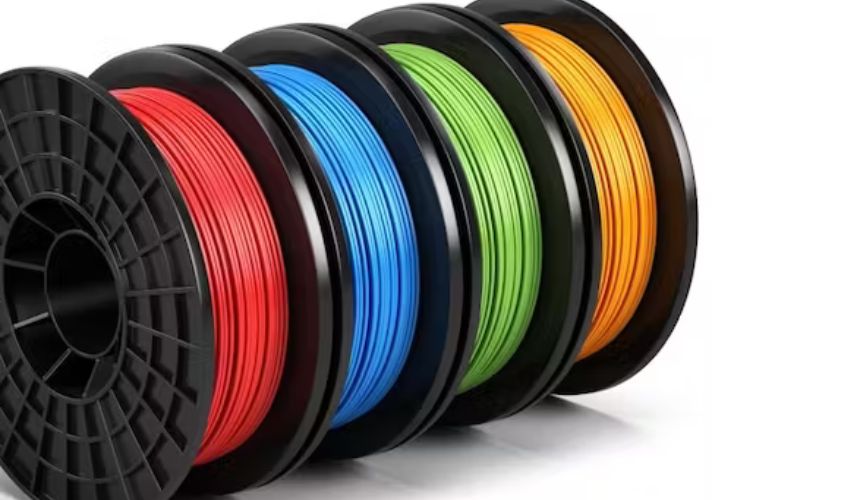 MaterialsHow to Properly Store Filaments for 3D PrintingFDM/FFF 3D printing is becoming increasingly popular, especially for private use. Whether at home or in the office, 3D printing with filaments can not only be a handy way to create everyday objects, it also gives free rein to creativity…