Printers
Digital Metal triples the printing speed of its metal 3D printer
Swedish manufacturer Digital Metal, specialising in metal additive manufacturing, has announced an upgrade to its printing software that will enable users to achieve three times faster printing speed on the DM P2500 machine. Initially, the printing speed was 100 cm3/hour.…
- 3 min read
- Printers
- Six more stories
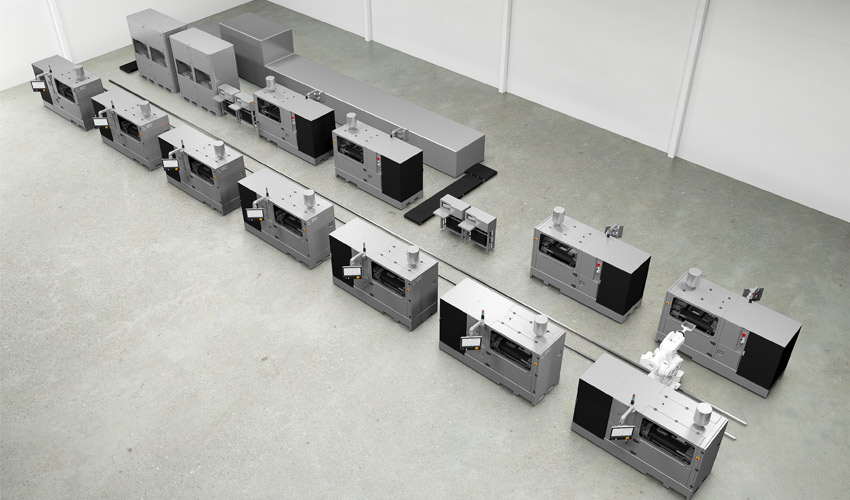
Swedish manufacturer Digital Metal, specialising in metal additive manufacturing, has announced an upgrade to its printing software that will enable users to achieve three times faster printing speed on the DM P2500 machine. Initially, the printing speed was 100 cm3/hour. This should enable manufacturers to accelerate their production rate without sacrificing quality. The company says that all new machines manufactured will be equipped with this new feature; for units already sold, an upgrade kit will be available to take advantage of this improved productivity.
Speed is often an issue in the additive manufacturing sector – it can take hours for a part to be completed, not to mention the possible errors that prolong the manufacturing process. A few initiatives have already been put in place to improve this factor, typically on extrusion machines, as metal printing processes are faster. It must be said that metal 3D printers are used by professionals for whom productivity and repeatability are key. By offering a software update, Digital Metal is responding to these crucial needs, whether in aerospace, automotive or luxury goods industries.
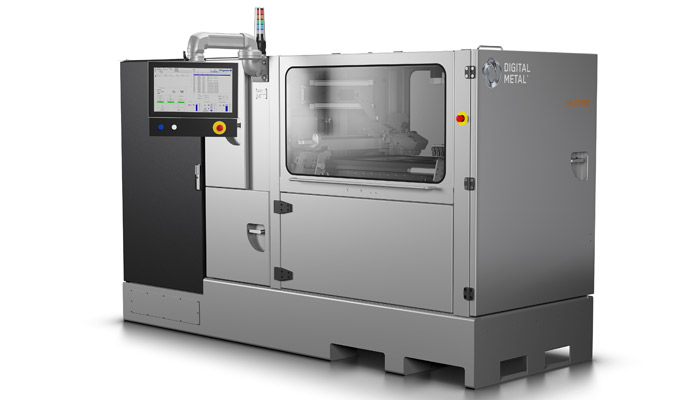
The DM P2500 | Credits: Digital Metal
Digital Metal is betting on greater productivity
The DM P2500 is a machine based on binder jetting that offers a print volume of 203 x 180 x 69 mm and a resolution of up to 35 microns. The technology allows the manufacturer to remove the need for printing supports, which shortens the manufacturing lead time and reduces the number of post-processing steps. The solution therefore already met some of the requirements of professionals. However, the software update has tripled the printing speed, enabling new levels of productivity.
More from the desk
Six other notes from the rest of the bench.
 ApplicationsUrsa Major and US Navy Invest $25 Million in SRM ManufacturingIt’s no secret that Ursa Major has been making significant strides in rocket propulsion technology. A few months ago, they saw success with the first flight of their 3D printed Hadley engine, and last November, they unveiled Lynx, a groundbreaking…
 ApplicationsChina Completes First Flight Test of 3D Printed Turbojet EngineChina’s push toward next-generation propulsion reached a major milestone this month as the country’s aviation engine group announced the successful first flight test of its newly developed 3D printed “minimalist” turbojet engine. The achievement signals a significant step forward
 PrintersWhich Dremel 3D Printers Are Currently On the Market?In 2014, Dremel Manufacturing Company moved into 3D printing market with their offshoot, Dremel DigiLab. In line with their focus to shape the new generation of pioneers, their motivation, according to the website, centers around using their products and machines…
 NewsWisconsin Researchers Transform Dairy Waste for 3D PrintingTwo professors at the University of Wisconsin-Platteville have unveiled a new breakthrough that combines agriculture with additive manufacturing. The researchers have developed a new technique to turn spoiled milk into an eco-friendly 3D printing material. The method was recently
 NewsBarilla’s 3D Printed Pasta Is Now Available for SaleOver the years, 3D printing has already affected multiple sectors and is now even finding its way onto our plates. These days, the food industry is relying on all the advantages 3D technologies have to offer. This time, we took…
 NewsTop 5 Videos: 3D Printed Fashion Designs & More!This week’s Top 5 Videos include videos ranging from 3D printed fashion designs to 3D printing in education, and more. This shows how versatile 3D printing is and how many industries it can benefit. Remember, a new Top 5 Videos…