Applications
Ursa Major and US Navy Invest $25 Million in SRM Manufacturing
It’s no secret that Ursa Major has been making significant strides in rocket propulsion technology. A few months ago, they saw success with the first flight of their 3D printed Hadley engine, and last November, they unveiled Lynx, a groundbreaking…
- 3 min read
- Applications
- Six more stories
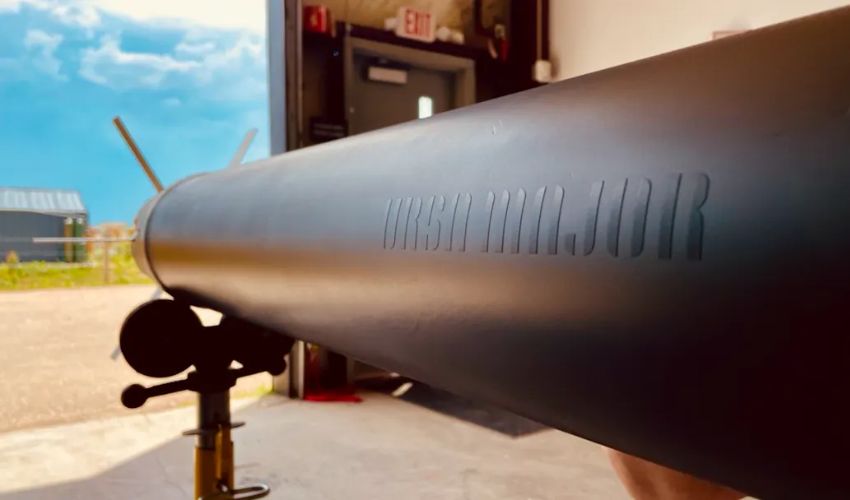
It’s no secret that Ursa Major has been making significant strides in rocket propulsion technology. A few months ago, they saw success with the first flight of their 3D printed Hadley engine, and last November, they unveiled Lynx, a groundbreaking manufacturing pathway for solid rocket motor (SRM) production employing additive manufacturing. Now in the latest update, Ursa Major announced they were making a $25 million joint investment with the US Navy to mature Lynx, a deal that further cements Ursa Major’s relationship with the Department of Defense (DoD). Ursa Major, the Naval Air Weapons Center China Lake, and the Naval Surface Warfare Center Indian Head Division are working together on this project.
Ursa Major, based in Colorado, claims to be the nation’s leading company in privately funded rocket propulsion. The DoD selected Ursa Major as a recipient of a $12.5 million investment from the Office of Strategic Capital (OSC), and Ursa Major is matching that investment, meaning a $25 million expansion of the company’s SRM capabilities. The $25 million investment will be used to advance manufacturing capability in propellant manufacturing, additive manufacturing, and composite case winding in support of SRMs for national security missions.

Solid rocket motor created with Ursa Major’s Lynx
The OSC’s mission is to increase investments in critical technology areas for national security, and Ursa Major aligns with their goal. CEO of Ursa Major Dan Jablonsky exclaimed his enthusiasm for the deal, saying, “We are proud to work with OSC on their mandate for expanding the defense industrial base by bringing new innovations into the DoD ecosystem.”
More from the desk
Six other notes from the rest of the bench.
 NewsTOP 5 videos of the week: Jewelry, cameras and more!A new selection of the best 3D printing videos of the week, just for you! Find our TOP 5 videos of the week below and tell us what your favorite video is in a comment or on our Facebook and Twitter page. Don’t hesitate to…
 News3Dnatives Lab: Testing the Orange 30 from Longer 3DOriginally from Shenzhen, China, Longer 3D launched its 3D printing business back in 2014. The company manufactures three distinct types of machines: desktop FDM 3D printers (known to manufacturers under the Alfawise brand), low-cost resin 3D printers and a range…
 PrintersThe Top Binder Jetting SolutionsBinder jetting is one of the major additive manufacturing processes available on the market. In the process, a thin layer of powder is coated with a liquid binder (jetted via inkjet technology) to create the part layer by layer. Depending…
 News#3DQuiz: Have You Been Following the Latest Additive Manufacturing News?From new 3D printing processes and improved materials to unconventional application possibilities and company mergers – the world of additive manufacturing never sleeps, as we all know. And there was a lot going on in the last quarter as well!…
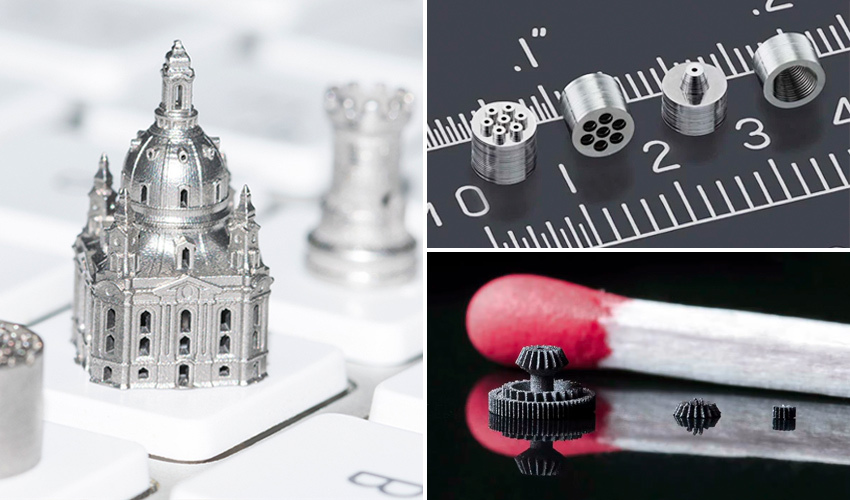 GuidesThe Best Micro 3D Printing Solutions On the Market3D microprinting, also known as micro-scale printing, is a micro-fabrication technique that allows the design of very small sizes, at the micrometer scale and below. Particularly popular in the electronics industry, it is growing steadily, with more solutions available on…
 NewsResearchers Are Making Microstructures Using Ice 3D PrintingAt Carnegie Mellon University, located in Pennsylvania, engineering researchers claim to have succeeded in 3D printing microstructures of ice. They plan to use these structures as sacrificial templates, allowing them to create internal channels or conduits with the highest finess