Applications
The Department of Defense Is Using 3D Printing to Make Hypersonic Weapons
The U.S. Department of Defense has quite a history of using 3D printing, working to implement this technology in many of its new weapons and vehicle designs. An example of this is the agreement between Newport News Shipbuilding and General…
- 3 min read
- Applications
- Six more stories
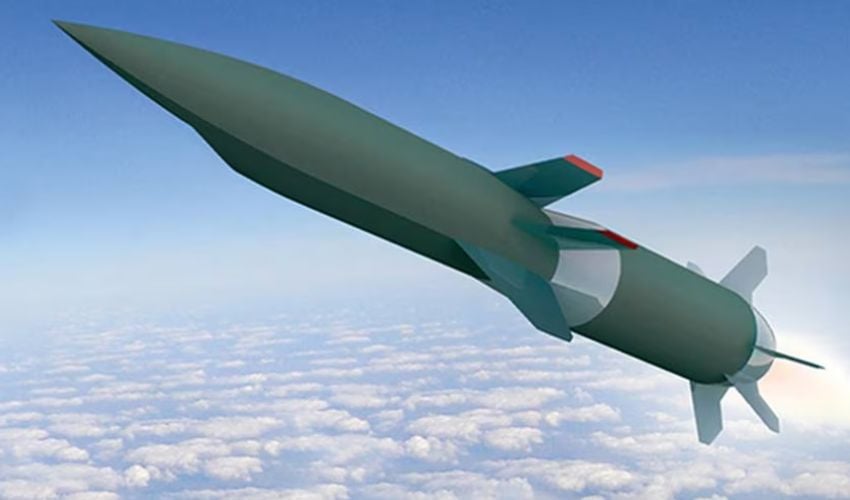
The U.S. Department of Defense has quite a history of using 3D printing, working to implement this technology in many of its new weapons and vehicle designs. An example of this is the agreement between Newport News Shipbuilding and General Dynamics Electric Boat (GDEB), where additive manufacturing is being integrated into the construction process of the Virginia class nuclear submarines to address supply chain shortages. In more exciting news in the field, according to Defense News, the Pentagon has announced that it wants to incorporate 3D printing into their Hypersonic Air-breathing Weapon Concept (HWAC). More specifically, the technologies will be used to make direct-flow air-jet engines which are used in everything from aircraft to missiles, and are unique in that they are capable of exceeding speeds such as mach 24 (or more than 18,400 mph/29,000 kph).
According to Keith DeVries, deputy director of the Office of the Secretary of Defense’s Manufacturing Technology Program, additive manufacturing will be useful in the development of new systems by enabling the rapid creation of complex components. Thanks to advancements in the technologies, now “these manufacturing techniques create objects from high-entropy metals that are particularly strong and stand up to wear and tear, using lasers to melt metals that can withstand high temperatures and allowing more complex shapes to be crafted.”
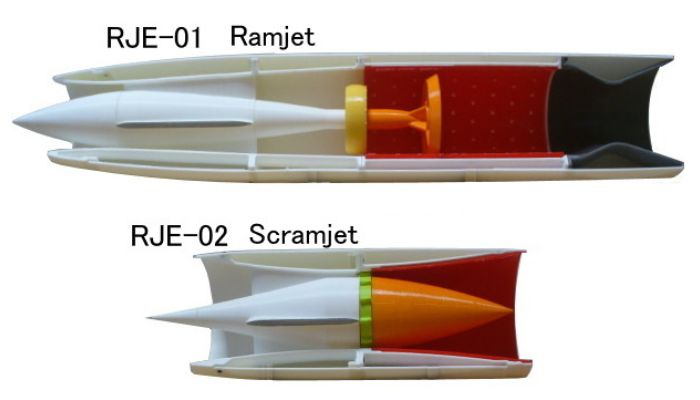
Differences between the U.S. Army’s traditional Ramjet engines and the new Scramjet engines manufactured with 3D printing (photo credits: Cults3D)
Notably, Devries notes that the technologies will be used in creating Scramjet propulsion systems, fundamental systems for hypersonic engines that require complex chambers and are very difficult to manufacture. Indeed, thanks to 3D printing, it seems that the perception of the manufacturing of these engines is changing. As mentioned above, these systems are now being implemented in missiles such as the Hypersonic Air-breathing Weapon Concept (HAWC). According to the deputy director of the Office of the Secretary of Defense’s Manufacturing Technology Program, additive manufacturing technology allows Scramjet components to be fabricated from metals at very high temperatures, without the need for complex welding as required by traditional methods.
More from the desk
Six other notes from the rest of the bench.
 NewsDetecting Defects in Metal 3D Printing Using SoundAt the École Polytechnique Fédérale de Lausanne (EPFL), a team of scientists has been studhing the issue of defects in metal 3D printing, particularly when using a laser process. Their aim is to develop a method based on the analysis…
 NewsBANYAN ECO WALL, fully 3D printed self-watering wallThe BANYAN ECO WALL is a fully 3D printed irrigated green wall, featuring an embedded drainage system, which also showcases bionic design. It is the work of NOWLAB using BigRep’s large-format 3D printers. This prototype is a perfect example of…
 SoftwareCarbon Has Made its First Acquisition, Expanding its Software CapabilitiesThe additive manufacturing market, despite some setbacks, has generally been showing its growth through a number of mergers and acquisitions in the past few years. Now Carbon, one of the leaders when it comes to resin 3D printing solutions, has…
 NewsFirst installation of a 3D printed thimble plugging device in nuclear plantThe American nuclear power company, Westinghouse Electric Company, announced it has successfully 3D printed a thimble plugging device for the nuclear industry. A thimble plugging device is used to hold nuclear fuel as it is lowered into the reactor core,…
 ApplicationsYou can now get up in the air with the 3D printed jet suitThe idea of man flying is a dream that has been pursued for centuries. A dream that seemed like science fiction or belonging to Iron Man, but is now possible with Richard Browning’s development of: the 3D printed jet suit…
 NewsHow Is 3D Printing Changing the Wind Energy Sector?The growing use of 3D printing is spreading across a variety of sectors, with more and more companies recognizing its benefits in manufacturing processes. The energy sector is no exception. According to a report from Additive Manufacturing Research, the 3D…