News
Cuttlefish-Inspired 3D Printed Body Armor to Redefine Safety
Researchers at San Diego State University are revolutionizing body armor design, taking inspiration from the resilience and adaptability of marine life. Spearheaded by Professor Yang Yang and his research team, this transformative approach integrates cutting-edge sensing capabili
- 3 min read
- News
- Six more stories
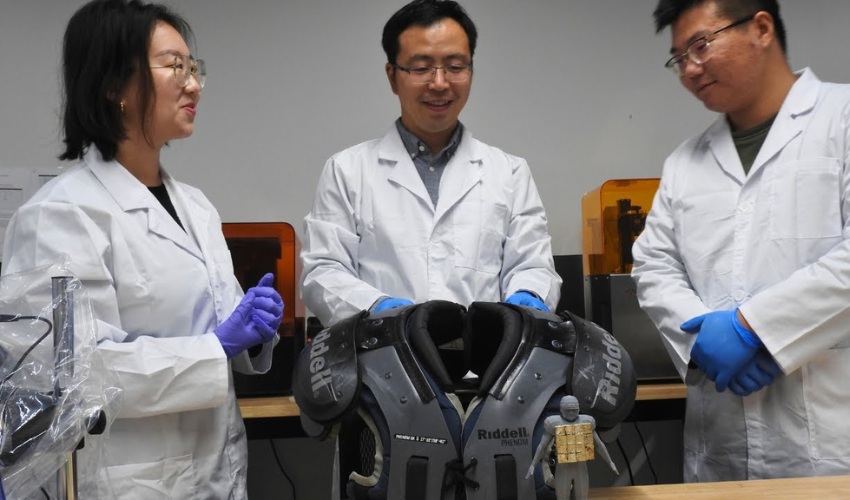
Researchers at San Diego State University are revolutionizing body armor design, taking inspiration from the resilience and adaptability of marine life. Spearheaded by Professor Yang Yang and his research team, this transformative approach integrates cutting-edge sensing capabilities into protective gear developed from stiff, yet highly durable composite. And it has been made possible through the use of 3D printing.
While marine life has previously been explored for inspiration in developing protective equipment, researchers at SDSU have focused their attention specifically on the durability of the cuttlefish. Renowned for its lightweight yet incredibly resilient properties, Professor Yang and his colleagues sought to emulate its structural makeup. As some species of cuttlefish can thrive under the immense pressure found 2,000 feet below the ocean’s surface, they have evolved a rigid, but lightweight microstructure within their shells to help them cope with these extreme conditions. This microstructure, known as wall-septa, enables cuttlefish to effectively absorb and dissipate energy to easily navigate this intense physical pressure.
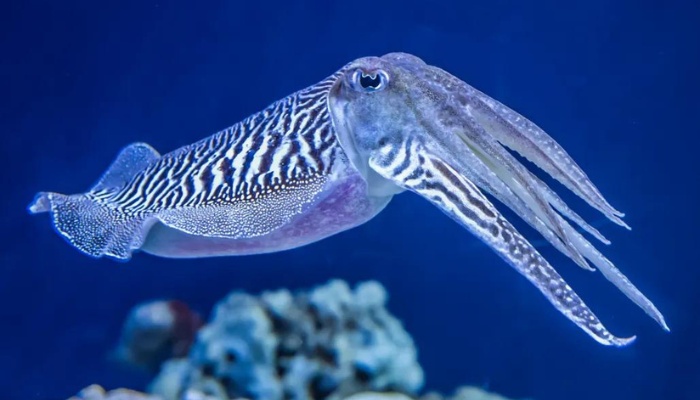
Photo Credits: BBC Wildlife
Recognizing the potential of this capability, SDSU researchers identified a significant application in impact reduction. To mimic the structural efficiency of wall-septa, Yang and his team cultivated piezoelectric Rochelle salt crystals, integrating them with cuttlefish bone. In doing so, they have developed a novel composite material that dramatically absorbs impact force.
More from the desk
Six other notes from the rest of the bench.
 NewsSiemens manufactures the first 3D printed part for a nuclear power plant For the first time ever, the German specialists in high technology, Siemens, has manufactured a 3D printed part for a nuclear power plant. A major challenge and accomplishment when taking into account the stringent safety and security requirements that…
 NewsWEBINAR: How to Start and Scale a 3D Printing ServiceOn the 29th of October, 3Dnatives hosted a webinar on how to start and scale a 3D printing service. Mike Moceri, CEO of MakerOS, led this masterclass in not just how to build a 3D printing service from the ground up,…
 NewsBrazilian Researchers Use Bioprinting to Make a Small Liver in 90 DaysBrazilian researchers, based in São Paulo, claim to have used bioprinting to make liver spheroids – miniature versions of the liver – from human blood cells. These miniature organs are said to perform all the functions expected of them, namely…
 MaterialsA Complete Guide to Aluminum 3D PrintingAluminum is one of the most popular metals in the field of industrial production and, more specifically, in additive manufacturing. It is a strong, lightweight metal alloy that offers an ideal combination of mechanical and thermal properties. Companies involved in…
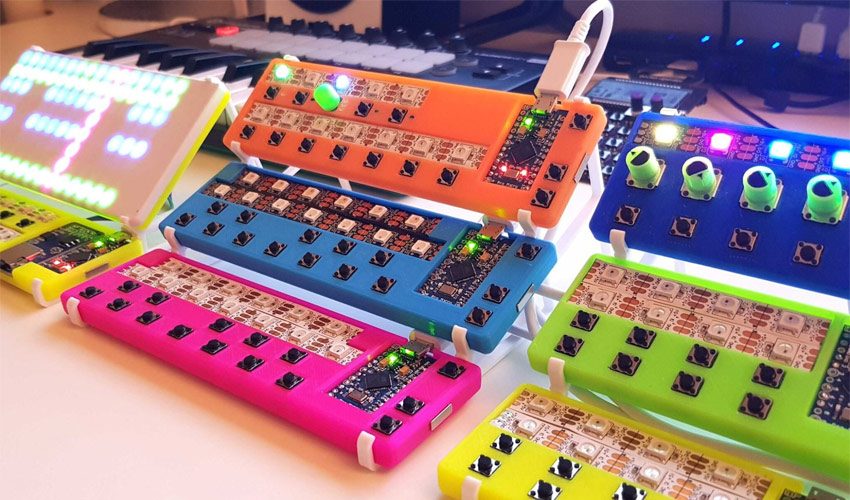 NewsBuild your own 3D printed synthesizer for 6 dollarsJohan Von Konow is a Swedish engineer with knowledge in mechanics, electronics, software and industrial design. In his spare time, he develops many projects around these subjects. One of his latest projects is called LEET Synthetizer: an open-source synthesizer to…
 Printers3Dnatives Lab: Testing the Anycubic Kobra S1 3D PrinterThe consumer 3D printing market is evolving rapidly, with increasingly high-performance, affordable machines. Among the new products recently launched, the Anycubic Kobra S1 Combo stands out with its closed design, CoreXY architecture, compatibility with the ACE Pro multi-materia