Applications
Application of the Month: Customizing Police Vehicles With SLS 3D Printing
Police vehicles are not like other cars. Although they may look much like normal vehicles on the outside, apart from their lettering and sirens, they are very different on the inside. In fact, patrol cars are specially equipped to carry…
- 3 min read
- Applications
- Six more stories
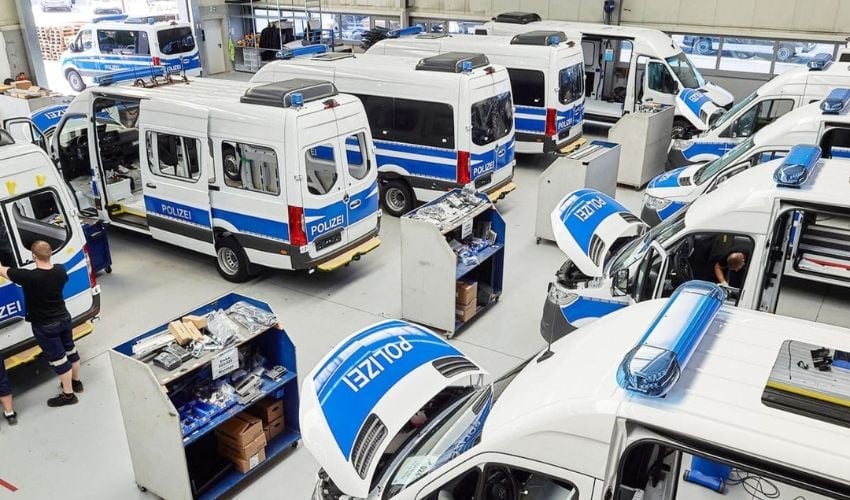
Police vehicles are not like other cars. Although they may look much like normal vehicles on the outside, apart from their lettering and sirens, they are very different on the inside. In fact, patrol cars are specially equipped to carry out security missions and respond to all kinds of situations. In general, the interior is adapted to include communication systems such as radios and computers, dashboard camera mounts and radar – even the trunk of each car is transformed. However, these modifications have to be tailored to the specific requirements of each police force, requiring a high degree of customization. This is where the work of companies such as MOSOLF Special Vehicles GmbH comes in. Better yet, the manufacturer has incorporated 3D printing into its developments to meet the requirements of police forces in Germany.
MOSOLF Special Vehicles GmbH is a Kippenheim-based company specializing in the conversion of special vehicles. These vehicles are used by German police forces, defense agencies and emergency services. Every year, the company modifies around 1,000 units, and supports its customers throughout the entire process, from vehicle design and production to the resale of the vehicles when they reach the end of their life. Today, we wanted to highlight the use of selective laser sintering (SLS) to transform the interiors of mass-produced police cars.
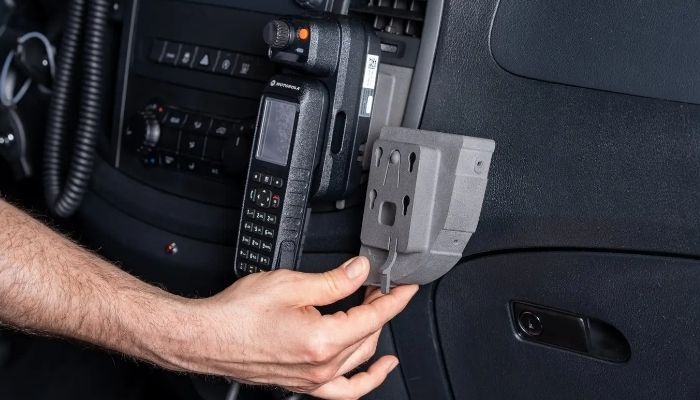
Customized radio stand (photo credits: Formlabs)
MOSOLF Works on Customization to Suit Each Police Vehicle
MOSOLF works with production vehicles, including cars, trucks and vans, tailoring them to the specific needs of each customer. Additive manufacturing has enabled it to meet the challenges associated with customization, particularly on new models that feature more detail and components, leaving less space to include the required communication or signage systems. It was the design flexibility of 3D printing that provided the solution to this challenge, enabling the creation of components that fit into every nook and cranny of the vehicle.
More from the desk
Six other notes from the rest of the bench.
 NewsKFC 3D printed chicken nuggets, the fast-food of the future is almost here?Kentucky Fried Chicken, more commonly known as KFC, is one of the leading fast-food chains in the world with more than 24,000 restaurants in 145 countries across the globe. The brand is mostly known for its “special recipe” fried chicken,…
 ApplicationsNomad Prototypes Unveils Resin-Based 3D Printed DroneIn aviation, the use of 3D printed drones has already revolutionized our perception of aerial possibilities. These devices, the result of a fusion between 3D printing and modern aviation, offer unprecedented flexibility and adaptability. We’ve already seen a number of&helli
 PrintersTractus3D releases its high-temperature modular 3D printerDemand for advanced thermoplastic polymers such as PEEK, PEKK or PEI, compatible with 3D printing has never been as significant as today. Tractus3D leads the way as it was one of the first manufacturers that developed a high temperature PEEK…
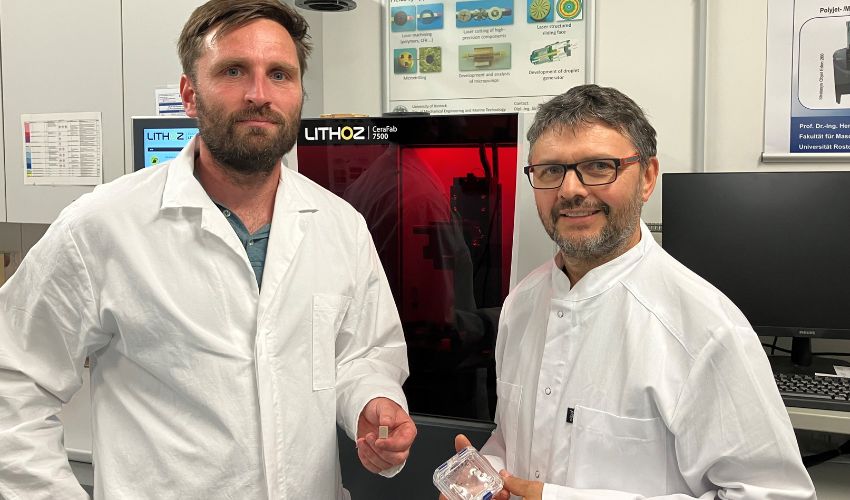 ApplicationsThe ELAINE Project Is Researching Bioactive Bone Implants Made With 3D PrintingBones have a high degree of self-healing capacity. It is for that reason that with bone fractures, which may come about after a skiing accident, bicycle fall or mishap, the bones are usually able to grow back together themselves. Although…
 ApplicationsAptera Motors Launch 3D Printed Self-Charging Electric VehicleLast week, Californian company, Aptera Motors opened preorders for their new never-charge solar electric vehicle (sEV), Aptera. Aptera is the most energy efficient vehicle currently available on the market, combining metal additive manufacturing, solar and electric power, and aer
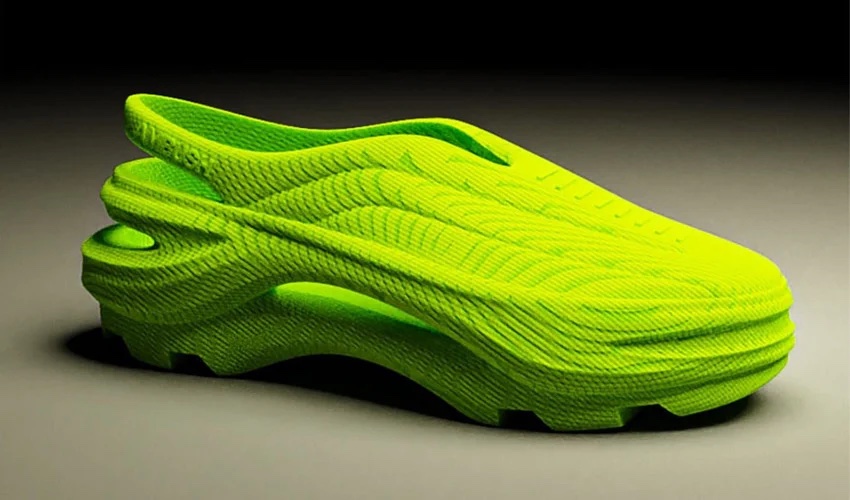 NewsAMBUSH 3D Prints a Shoe That is Wearable in the MetaverseShoe brand AMBUSH is launching a new project that is quite unique in the fashion world: Aapair of 3D printed shoes that can be worn both in the metaverse and in everyday life. The shoes which are called 100S were…