Applications
The ELAINE Project Is Researching Bioactive Bone Implants Made With 3D Printing
Bones have a high degree of self-healing capacity. It is for that reason that with bone fractures, which may come about after a skiing accident, bicycle fall or mishap, the bones are usually able to grow back together themselves. Although…
- 3 min read
- Applications
- Six more stories
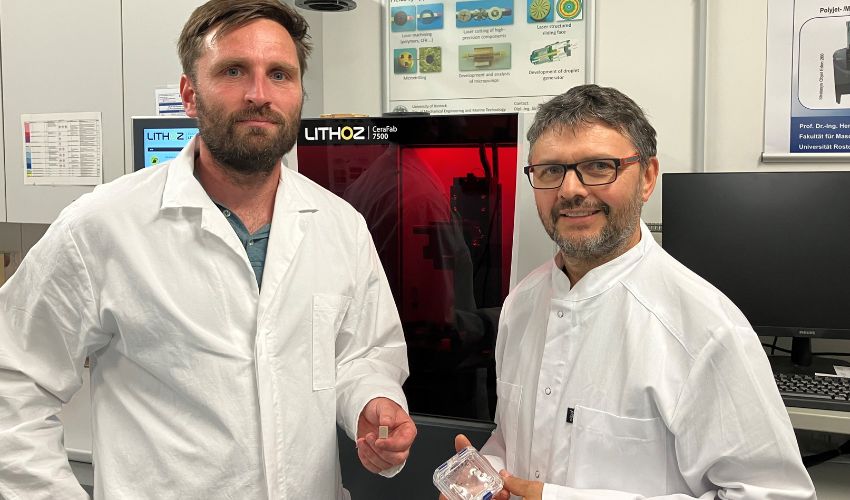
Bones have a high degree of self-healing capacity. It is for that reason that with bone fractures, which may come about after a skiing accident, bicycle fall or mishap, the bones are usually able to grow back together themselves. Although how long that may take varies depending on age and severity of the fracture, among other factors. However, if larger bone defects occur as a result of tumors, the bone can no longer regenerate itself. In this case, implants are used, usually made of titanium or the patient’s own bone material from other parts of the body. Now, 3D printing is the latest technology to be used. At University of Rostock, one research project is looking into the production of bioactive bone replacement structures. Specifically, this is the ELAINE – Electrically Active ImplaNtatE – project from the Collaborative Research Center 1270 headed by Prof. Dr. Hermann Seitz. As part of this project, scientists are experimenting with the production of bioactive bone implants by 3D printing.
Until now, titanium has often been used as a substitute material for bone. However, this can be difficult to adapt to individual anatomical conditions. In addition, titanium implants can loosen easily and thus cause long-term problems. An alternative therapeutic approach, is to remove bone material from the pelvis and transplant it to the damaged area. “But that is then additionally associated with another defect,” Seitz cautions. To be able to guarantee better implants with fewer side effects and better adaptation in the future, the ELAINE research group is making use of additive manufacturing and is on the way to treating bone defects with 3D printing technology.
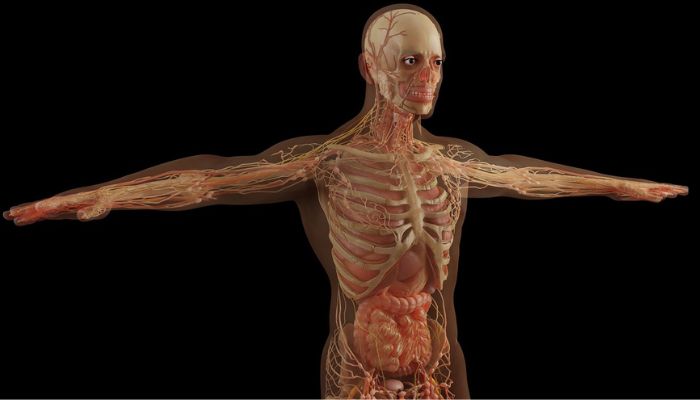
Bones have a high degree of regenerative power. For larger defects, however, the use of an implant is necessary. ELAINE is researching the production of bone implants using 3D printing (photo credits: Pixabay)
The ELAINE research group is working on the production of electrically active implants that behave similarly to bone structures themselves. The scientists are guided by the physiology of bones and use the known knowledge about the piezoelectricity of bones. Piezoelectricity occurs when solids are subjected to mechanical deformation and stresses occur there. When a bone is mechanically loaded, electrical signals are delivered to the tissues, stimulating growth. “Piezoelectricity is a key factor in continuous bone remodeling in the organism,” says Christian Polley, a doctoral student in Collaborative Research Center 1270 at the Department of Mircofluidics. “This so-called piezoelectric effect ensures that cells are stimulated to grow.”
More from the desk
Six other notes from the rest of the bench.
 NewsSpeaking to RAYSHAPE at RAPID + TCT 2023RAPID + TCT 2023 is now officially over. But if you were not able to attend the largest additive manufacturing trade show, do not free! We at 3Dnatives have prepared a number of videos to give a general idea of…
 NewsTop 5: How Cold Spray Technology Offers Faster Additive ManufacturingHello everyone, and welcome to our top 5 videos of the week! As always, we have an exciting and educational select of 3D printing video content for you. This week’s range from cold spray technology for additive manufacturing, an interview…
 NewsTop 5 Videos of the Week: 3D printed chocolate creations and more!This week we found the top 5 videos about 3D printing and the way additive manufacturing is shaping our society. The technology has infiltrated many sectors, from medical to automotive! Check out our selection of the week to keep up with the innovations! This week we…
 NewsAre 3D Printer Shipments Back to Pre-COVID Levels?When the pandemic shut down the world last year, a number of industries were severely impacted. However, 3D printing proved to be more robust than many others. That being said, a few studies have shown that though it did not…
 GuidesNuVasive prints 3D implants for the spineImplant manufacturing has never been so fast: thanks to 3D printing, the creation of medical devices is simpler and more patient-friendly. NuVasive has also turned to 3D technologies and specialised in the creation of spinal implants. Today she is looking…
 NewsTOP 5 videos of the week: Cars, robots and more!A new selection of the best 3D printing videos of the week, just for you! Find our TOP 5 videos of the week below and tell us what your favorite video is in a comment or on our Facebook and Twitter page. Don’t hesitate to…