News
From Trails to Tackle Boxes: How 3D Printing Is Reshaping Outdoor Gear
When it comes to spending time outdoors, preparation matters. Whether hiking, camping, fishing, or hunting, having the right equipment on hand can make a real difference. Because this gear must be carried (and often, over long distances), it needs to be lightweight,…
- 3 min read
- News
- Six more stories
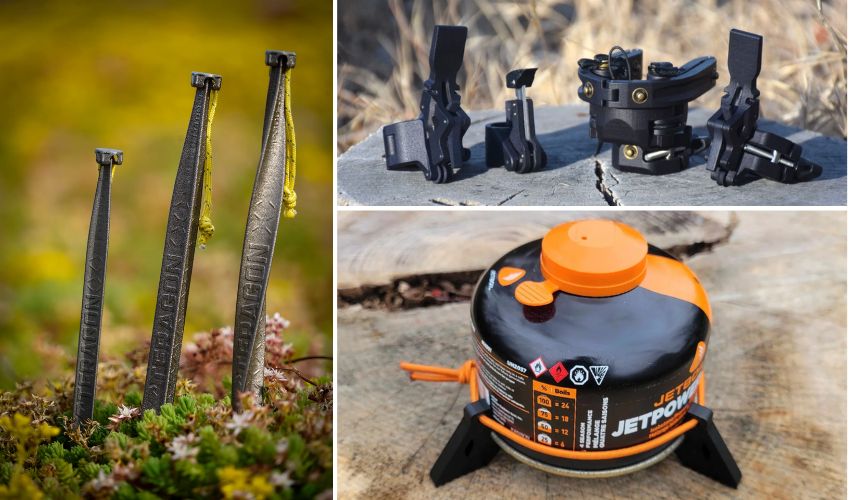
When it comes to spending time outdoors, preparation matters. Whether hiking, camping, fishing, or hunting, having the right equipment on hand can make a real difference. Because this gear must be carried (and often, over long distances), it needs to be lightweight, functional, and well-designed. As a result, many companies are turning to 3D printing to develop and refine outdoor accessories. Additive manufacturing allows for greater design freedom, opening the doors for customized, lightweight, and high-performance components. Backpacks, protective cases, hiking pole add-ons, and tent stakes are just a few examples of how the technology is being applied in outdoor contexts. Sustainability also plays a role, with manufacturers exploring new materials and production approaches to limit waste and environmental impact. Check out how companies are using AM to level up their outdoor game below!
Teragon Gear: Offering Better Tent Stakes
The Norwegian company Teragon Gear has a mission to recreate tent stakes. The company’s Pioneer series tent stakes promise an unmatched strength-to-weight ratio, with a minimum 40% weight savings compared to an average Y-beam tent stake. The secret is that the stakes are 3D printed out of titanium, offering improved durability compared to aluminum stakes. There are three models in the Pioneer series: the Pioneer 1, Pioneer 2, and Pioneer Torque. Teragon Gear claims that the shortest of their stakes, the Pioneer 1, is the lightest metal y-beam stake on the market, weighing in at 5.3 grams (0.18 oz).
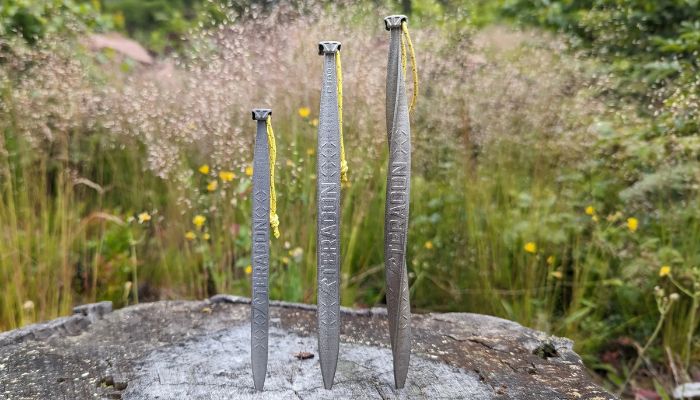
From left to right, the Pioneer 1, Pioneer 2, and Pioneer Torque stakes. (Photo Credit: Teragon Gear)
CleanTrek: Cleaning Up on Your Hikes
What if you could easily pick up the trash you come across on your hike? Unfortunately, it’s a reality that more and more trash is being left on our trails, polluting our environment every day. The CleanTrek project offers a solution to this problem: it has created the first hiking poles equipped with a waste collection system. There are three key elements to this: the “Trigger” located near the handle of the pole. Simply push it to activate the “Grabber” at the bottom, which allows you to pick up waste without bending down. Then there is the “Collector,” which is a kind of trash can in which you place the collected waste. And what interests us, as you might expect, is how these key components are manufactured. They were produced on an HP machine using Multi Jet Fusion technology. The project’s backers, currently on Kickstarter, seem to indicate that additive manufacturing will not be favored for mass production. Injection molding is more attractive in terms of cost and lead times for the desired quantity.
Sierra Seasonal: Custom 3D Printed Cases for Outdoor Gear
One-size-fits-all solutions rarely make sense for outdoor equipment. Sierra Seasonal builds 3D-printed outdoor cases designed to fit gear as it is actually used, with durability, organization, and portability in mind. Through its online Case Builder configurator, users input precise measurements and customize wall thickness and layouts, resulting in lightweight, snap-fit cases printed to match real gear dimensions rather than generic sizing. This print-to-fit approach maximizes available storage space, keeps equipment secure and organized, and supports efficient, grab-and-go packing without unnecessary bulk. By relying on additive manufacturing for on-demand, small-batch production, Sierra Seasonal demonstrates how 3D printing enables practical mass customization that would be difficult to achieve with traditional manufacturing methods.
More from the desk
Six other notes from the rest of the bench.
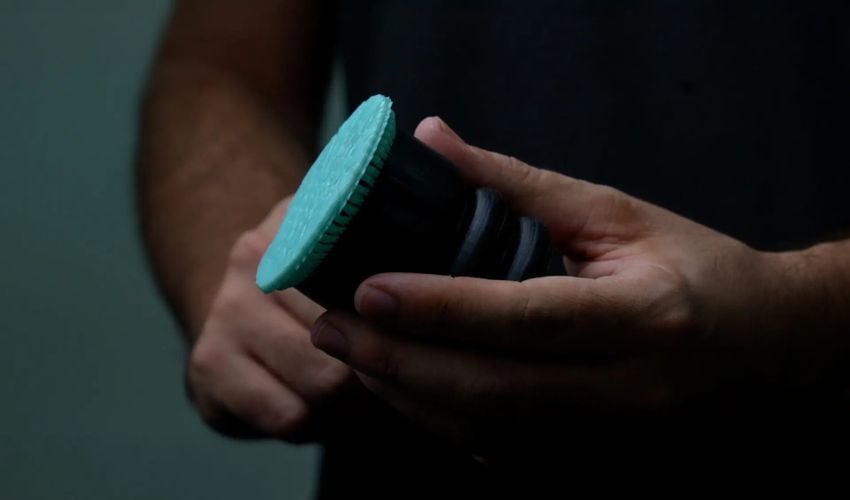 ApplicationsSupernova Unveils New Materials for Transport CertificationAt the end of last year, Supernova launched the Pulse Production Platform, based on Viscogels, a viscous material capable of producing parts with a molded-like finish. Recently, the company announced the release of four new materials, specifically designed for demanding…
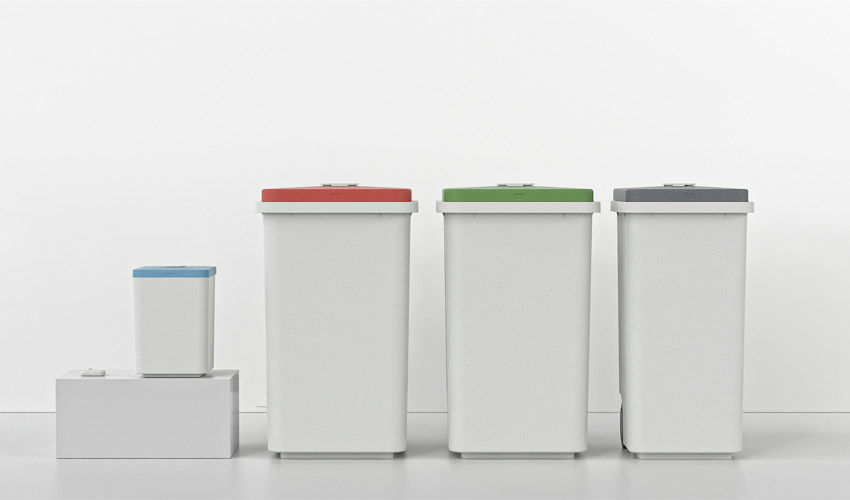 NewsWae, an intelligent 3D printed waste management systemDesigner Daniel Lloyd has imagined a new waste management system designed using additive manufacturing, more particularly stereolithography. Called Wae, it also integrates sensors and ca smart meter to inform users about their waste habits. The objective is to encourage them&hell
 NewsThe Best Generative Design Software for 3D Printing in 2023Designing is the first step in any 3D printing process and plays a critical role in ensuring that the final part will come out correctly. However, this stage can be difficult even for those accustomed to design for additive manufacturing…
 NewsResearchers at the University of Minnesota Manufacture the First 3D Printed Flexible OLED DisplayA team of researchers at the University of Minnesota have created the first 3D printed, flexible organic light-emitting diode (OLED) displays, measuring 3.8 cm by 3.8 cm with 64 pixels. The project is particularly interesting as it is a flexible…
 NewsTop 5 Videos: 3D Printed Telescopes Transform Stargazing ExperiencesWelcome to our compilation of this week’s top 3D printing videos. This week, we commence with an inventive project by Ten Telescopes, aiming to make stargazing in Ontario more accessible through intricately crafted 3D printed telescopes. Moving forward, we explore…
 Applications3D Systems Further Consolidates With Simbionix SaleIn a further attempt to move to focus only on 3D printing, 3D Systems has announced that they have sold their medical simulation business, Simbionix. The $305 million USD sale of the simulation business was to Surgical Science Sweden AB,…