Guides
CompagOs Explores 3D-Printed Bone Models for Early Bone Disease Detection
CompagOs is dedicated to advancing bone health by helping researchers translate scientific discoveries into real-world applications, and ultimately, better treatments for patients. At the heart of its work are biologically reproducible Bon3OID™ in vitro bone models, produced usin
- 3 min read
- Guides
- Six more stories
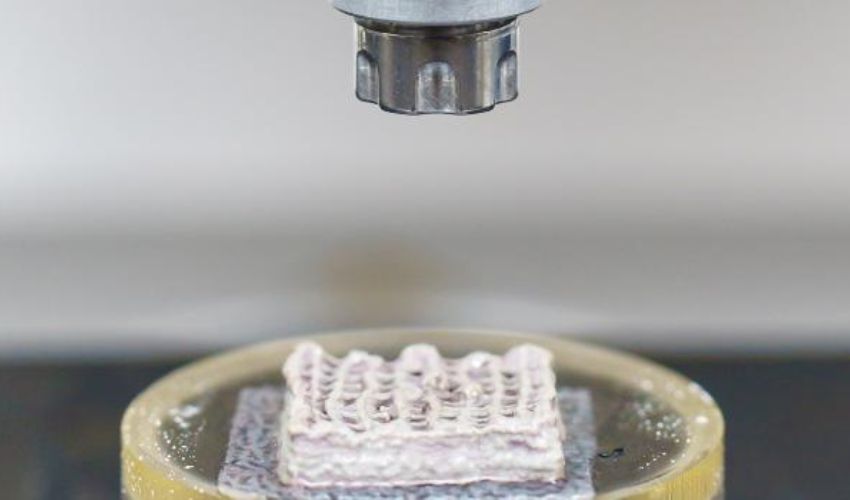
CompagOs is dedicated to advancing bone health by helping researchers translate scientific discoveries into real-world applications, and ultimately, better treatments for patients. At the heart of its work are biologically reproducible Bon3OID™ in vitro bone models, produced using bioprinting. According to the company, early use of Bon3OID™-DX has the potential to reduce, delay, or even prevent serious complications associated with bone diseases, including fractures, surgery, radiation therapy, and chronic pain—significantly improving patients’ quality of life. We spoke with CompagOs to learn more about its 3D-printed bone models and their potential impact.
3DN: Could you briefly introduce yourself and tell us how you got into 3D printing and how CompagOs was founded?
We are CompagOs, a spin-off of ETH Zurich founded in 2023. Our focus is on developing innovative solutions for diagnostics and research in the field of bone biology. At the heart of our technology are Bon3OID™ models – 3D bioprinted bone models made from human stem cells. The basis for this technology was developed at ETH Zurich in the Laboratory for Bone Biomechanics under the direction of Prof. Ralph Müller. The original goal was to create an in vitro model system that provides a biologically relevant environment for researching bones and bone diseases – without relying on conventional 2D models or animal testing. A decisive breakthrough was achieved when the models were able to replicate the clinical picture of osteogenesis imperfecta (brittle bone disease) for the first time. After realizing that Bon3OID™ models offer versatile applications in both research and clinical settings, we decided to commercialize the technology. Numerous inquiries and discussions with researchers and clinicians in the field of bone research confirmed the great potential, prompting us to found CompagOs.
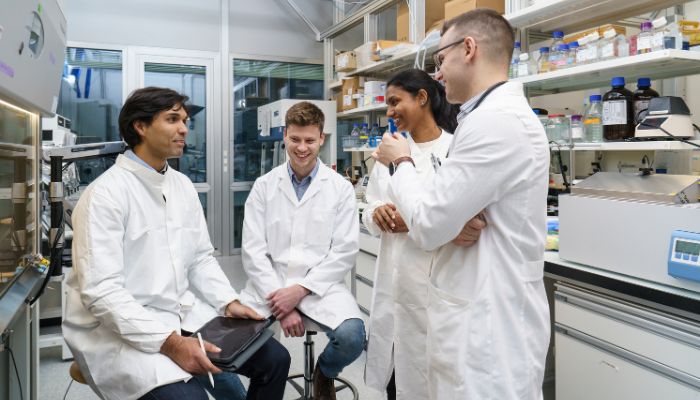
The founding team of CompagOs includes: Barna Gal, Chris Steffi, Robert Baumann, and Gian Nutal Schaedli.
3DN: Could you tell us a little more about the Bon3OID™ models and the technology used?
Our Bon3OID™ models are advanced 3D cell cultures that combine multiple cell types in a controllable system. We use human stem cells that are embedded in a specially developed bio-ink and printed in a grid structure using a 3D bioprinter. Within this system, the stem cells differentiate over time into osteoblasts and osteocytes, embedded in a mineralized bone matrix produced by the osteoblasts.
More from the desk
Six other notes from the rest of the bench.
 ApplicationsUrsa Major Propels U.S. Navy Missile Program With 3D PrintingDenver-based rocket innovator Ursa Major, a leading force in propulsion technology, has recently announced the company has secured a landmark contract with the US Navy’s Naval Energetics Systems and Technologies (NEST) Program. The collaboration aims to propel the Navy̵
 NewsWhat Were the Key 3D Printing Trends in 2025?As the end of the year approaches, we at 3Dnatives are taking a step back to analyze what has truly defined the additive manufacturing industry in 2025. It is already clear that this has been a year of technological maturity,…
 NewsResearchers Build World’s First 100% Biosourced 3D Printed Home3D printed houses is a hot topic at the moment, as researchers look to improve the current housing situation in a sustainable and reproducible way. Researchers at the University of Maine have built the first ever 3D printed house of…
 ApplicationsUniversity of Mississippi Researchers Design 3D Printed Implant to Ensure that Chemotherapy Targets Only the TumorA group of researchers at the University of Mississippi has created tiny capsules loaded with an anticancer drug and incorporated them into a small implant produced using 3D printing. The idea is to place this implant next to the tumor…
 ApplicationsFord Turns to SLA and SLS 3D Printing for the Electric ExplorerFord, one of the largest car manufacturers in the world, has set itself an ambitious goal: The company is aiming to have an all-electric passenger vehicle lineup in the EU by 2030. Leading the way in this initiative is the…
 NewsASTM & AMERICA MAKES release AM data management guideStandards organization ASTM International collaborated with America Makes to compile a strategic guide for additive manufacturing data management, which was recently released under the name “Strategic Guide for Additive Manufacturing Data Management and Schema“ . The guide identi