News
Clemson’s 3D Printed Fuel Cells Redefine Sustainable Energy Generation
Researchers at Clemson University have achieved a groundbreaking feat by harnessing the power of 3D printing to create protonic ceramic fuel cells (PCFCs), a technology poised to reshape the landscape of renewable energy. Unlike conventional energy sources that heavily rely&helli
- 3 min read
- News
- Six more stories

Researchers at Clemson University have achieved a groundbreaking feat by harnessing the power of 3D printing to create protonic ceramic fuel cells (PCFCs), a technology poised to reshape the landscape of renewable energy. Unlike conventional energy sources that heavily rely on fossil fuels, PCFCs employ renewable fuels such as hydrogen, ammonia, alcohols, and sustainable hydrocarbons. This marks a significant step towards a greener and more sustainable approach to electricity generation. The challenge, however, has been scaling up the production of PCFCs to a level that makes them feasible for widespread adoption.
To address this hurdle, a team of researchers at Clemson’s Advanced Materials Research Laboratory turned to the capabilities of 3D printing. This innovative technology allows for the creation of complex and customizable objects with exceptional precision, which in the case of PCFCs, proved to be a game-changer in terms of manufacturing.
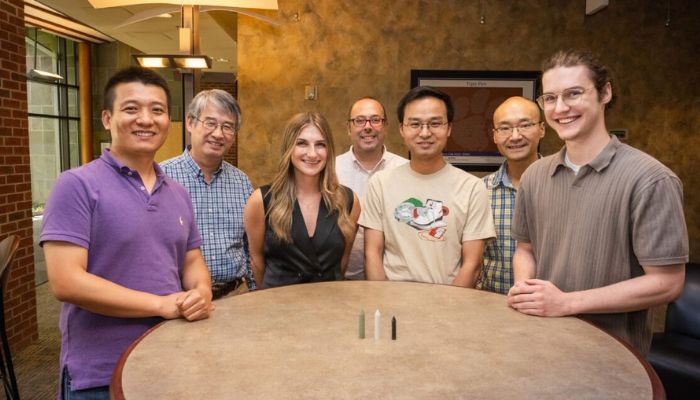
The team of researchers comprised Jiawei Zhang, Jianhua “Joshua” Tong, Bridget Sheridan, Kyle S. Brinkman, Minda Zou, Fei Peng, and Jacob Conrad (from left to right).
The team’s breakthrough came in the form of tubular PCFCs, a design that offers distinct advantages over traditional flat designs. Tubular PCFCs exhibit enhanced durability and sealing, making them more resilient and suitable for real-world applications. In a notable experiment, the researchers used hydrogen as fuel and tested a single fuel cell for 200 hours, consistently producing power throughout the test period. This achievement alone highlights the potential of 3D printed protonic ceramic fuel cells to offer improved precision, consistency, and cost-effectiveness compared to traditional manufacturing techniques.
More from the desk
Six other notes from the rest of the bench.
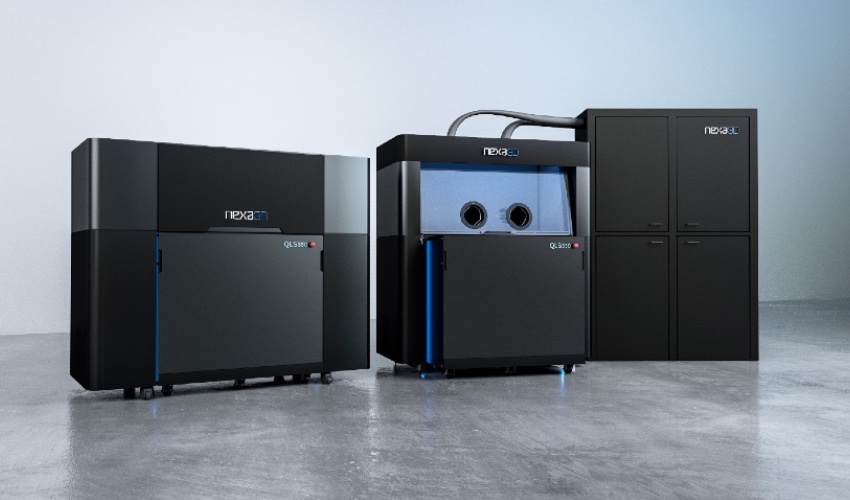 NewsNexa3D announces partnership with Siemens, releases a new polymerNexa3D is a California-based startup that manufactures industrial grade 3D printers and develops materials, mainly resins. Lately, the company has been rather active on the additive manufacturing arena expanding its portfolio of products and forming strategic partnerships. For in
 MaterialsAectual 3D Prints Planters From Recycled PlasticIn order to tackle the mounting issues concerning humanity’s ability to recycle plastic, many industries have turned to the additive manufacturing sector for solutions. For instance, a few weeks ago, we were talking to you about 3D printed beams made…
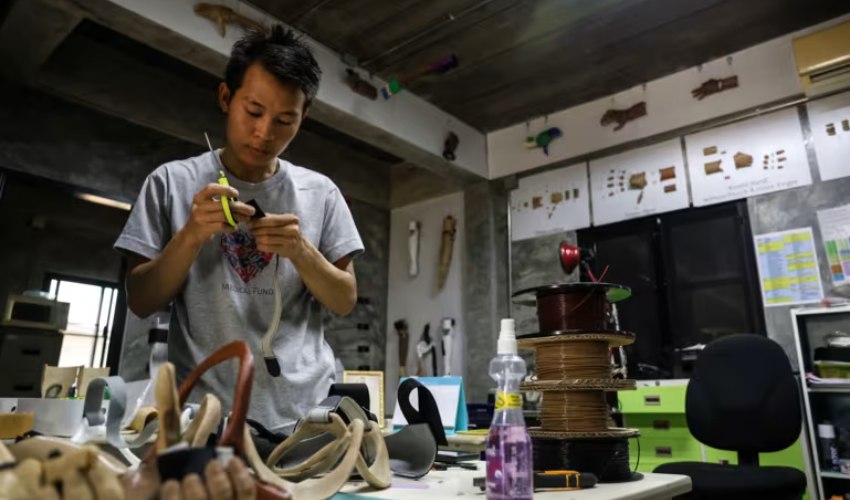 Applications3D Printing Revolutionizes Prosthetic Care for Amputees at Thai-Myanmar BorderIn the unassuming border town of Mae Sot, Thailand, near Myanmar, a transformative effort is quietly underway, revolutionizing prosthetic care for amputees. With meticulous care, Aung Tin Tun, a dedicated 3D printing manager, oversees the creation of plastic prosthetic arm&hellip
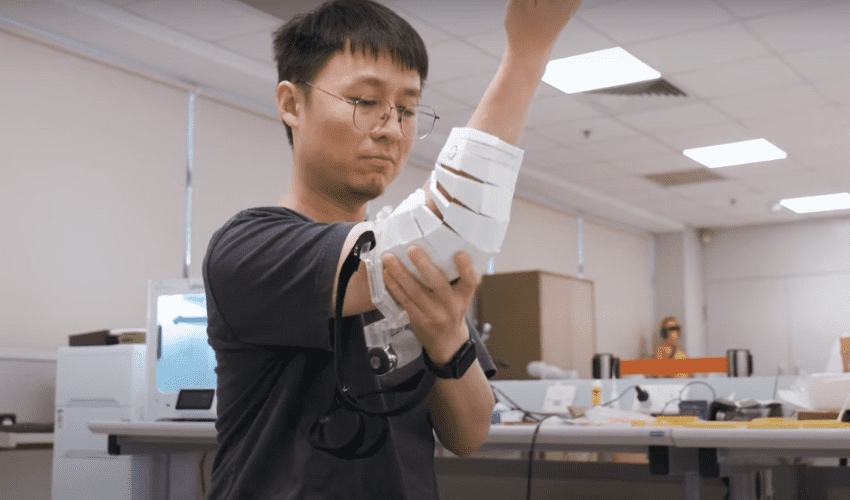 ApplicationsNTU Has Developed a 3D Printed ‘Active’ Fabric for Flexible, Made-to-Measure Limb Supports3D printing is increasingly transforming the medical sector. Whether it’s to develop exoskeletons, cancer-fighting devices or tailor-made medicines, additive manufacturing has proven its worth time and time again. Today, we turn our attention to Singapore, where researchers
 ApplicationsProdrive 3D Prints Car Parts for Dakar Rally 2021Two months ago, the Amaury Sport Organisation once again held its Dakar Rally as it has every year since 1978, this time in the desert in Saudi Arabia. With less than seven cars in ten making it across the finishing…
 MaterialsAdvancing bioprinting technology in spaceRecently, CELLINK announced an exciting partnership with Made In Space to develop advanced bioprinting technology for space. The space company develops state-of-the-art space manufacturing technology to support exploration, national security, and sustainable space settlement. The