Applications
Cardiopatch, a Project That Relies on 3D Printing to Treat Heart Problems
Several organizations in Spain, France, and Portugal are collaborating on the European Cardiopatch project in the healthcare sector. The primary goal of this initiative is to advance cardiac regenerative medicine by utilizing additive manufacturing technologies. These 3D printing
- 3 min read
- Applications
- Six more stories
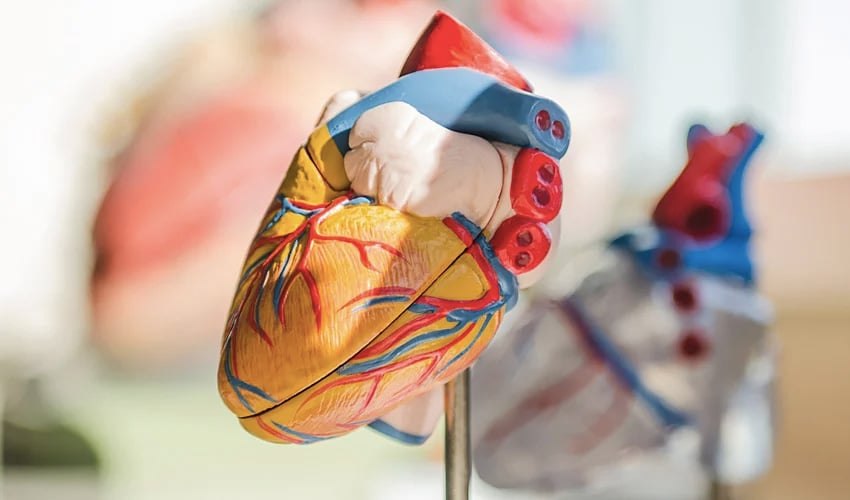
Several organizations in Spain, France, and Portugal are collaborating on the European Cardiopatch project in the healthcare sector. The primary goal of this initiative is to advance cardiac regenerative medicine by utilizing additive manufacturing technologies. These 3D printing solutions would facilitate the study of myocardial infarction, a condition in which a plaque breaks off, travels, and becomes lodged in a coronary artery, disrupting blood flow and depriving the heart of oxygen. Cardiopatch is heavily reliant on 3D printing, as these European partners have recently created a patch capable of repairing damaged heart tissue. They have designed and validated different 3D bioprinting methods to aid in the transportation, cultivation, and implantation of the patch.
Cardiovascular disease causes over 4 million deaths annually in Europe, with myocardial infarction being one of the leading causes of death. The current treatment options for this condition include drug therapy, implantation of devices, or cardiac resynchronization. Unfortunately, human beings lack sufficient regenerative capabilities for this vital organ, and while current treatments exist, only heart transplantation provides a truly curative therapy. Additive manufacturing has opened up exciting new opportunities for medicine to develop better performing devices through customization.
The Cardiopatch team (photo credits: Cardiopatch)
3D Printing Medical Patches
Developing a non-invasive treatment for cardiovascular and circulatory system diseases remains a significant challenge for the scientific community. Common procedures do not guarantee a reduced risk of death or readmission. In response, Cardiopatch has developed an innovative cellular regenerative medicine-based therapy using 3D printing technology. The therapy involves using a stem cell patch to repair heart tissue damaged by myocardial infarction without invasive surgery. The solution was presented in Pamplona on April 18th, following three years of research. Dr. Felipe Prósper, coordinator of the project and director of the cell therapy area of the Clínica Universidad de Navarra, said that “our patch has shown therapeutic potential in the first in vivo trials. In addition, we have designed a 3D device for its culture and transport and a tool that allows its minimally invasive implantation in the patient.”
More from the desk
Six other notes from the rest of the bench.
 NewsMontana Has Given Regulatory Approval for Homes With 3D Printed Walls, the First State To Do SoBuilding code regulators from the Department of Labor & Industry recently confirmed that they have given broad regulatory approval for the use of 3D printing in construction, making Montana the first American state in history to recognize 3D printed walls…
 ApplicationsApplication of the Month: NASA Uses 3D Printing to Manufacture More Accessible AntennasAerospace is one of the sectors where additive manufacturing has truly left its mark. This includes in telecommunications. Here, 3D printing makes it possible to develop antennas with improved designs and advanced materials. These antennas are essential for data transmission&hell
 ApplicationsHoneywell Receives £14+ Million to Accelerate Development of Aerospace Additive ManufacturingThis is good news for additive manufacturing in aerospace! The Honeywell group, leading a consortium comprising 3T Additive Manufacturing, BeyondMath, Qdot Technology, and the Oxford Thermofluids Institute, has just announced that it has received £14.1 million in funding from the
 NewsHubs Report 2023: What Do We Know About the State of AM Over the Past Year?We all know that 3D printing just keeps growing. Now we have seen it once again in the Hubs Report 2023, which took a close look at the additive manufacturing market over the past year. The report includes exciting metrics…
 NewsTop 5 Videos of the Week: 3D printed multifunctional robots…This week we found the top 5 videos about 3D printing and the way additive manufacturing is shaping our society. The technology has infiltrated many sectors, from medical to automotive! Check out our selection of the week to keep up with the innovations! This week we…
 NewsRapidDirect’s On-Demand Rapid Prototyping PlatformRapid Prototyping helps designers introduce new concepts to clients and other stakeholders in order to get real tactile feedback — being able to do this as quickly as possible, at the least expense, is where companies gain a competitive advantage. Therefore,…