News
Biodegradable, 3D-Printed Fungal Battery Paves the Way to a Sustainable Power Supply
Fungi are eukaryotic organisms that have fascinated mankind for a long time with their potential as a medicine, but they also play an important role in our lives as edible mushrooms in gastronomy or as pathogens. Not to mention, mycelium…
- 3 min read
- News
- Six more stories
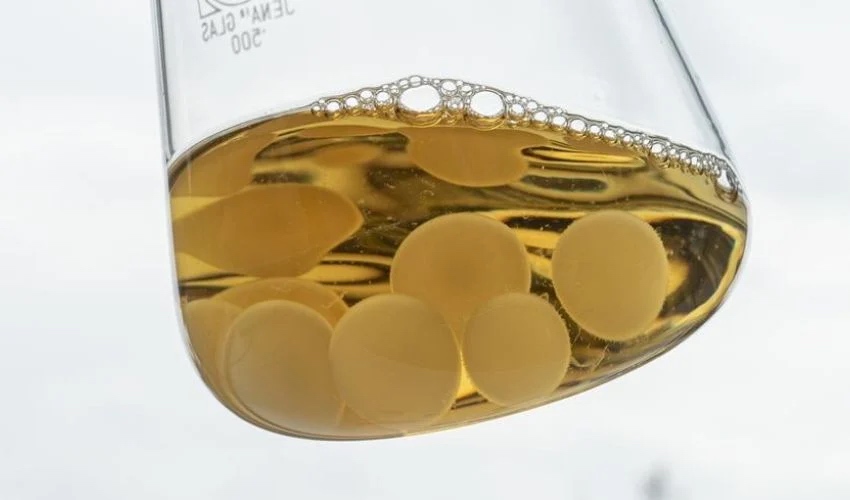
Fungi are eukaryotic organisms that have fascinated mankind for a long time with their potential as a medicine, but they also play an important role in our lives as edible mushrooms in gastronomy or as pathogens. Not to mention, mycelium is already being used as a 3D printing material, for example for printing loudspeakers or tiles. These microorganisms are therefore versatile, and researchers at Empa have now discovered new capabilities of fungi: as electricity generators. These 3D printed fungal batteries could be a significant step towards a sustainable power supply!
In a three-year research project supported by Gebert Rüf Stiftung as part of the Microbials funding program, researchers have produced a biodegradable fungal battery made of cellulose and wood materials that is fed instead of charged. Although the 3D-printed mushroom battery cannot generate much power, it can still generate enough to supply power to a temperature sensor for several days, making it potentially interesting for the agricultural sector or environmental research. In particular, the batteries could supply sensors in remote regions with electricity.
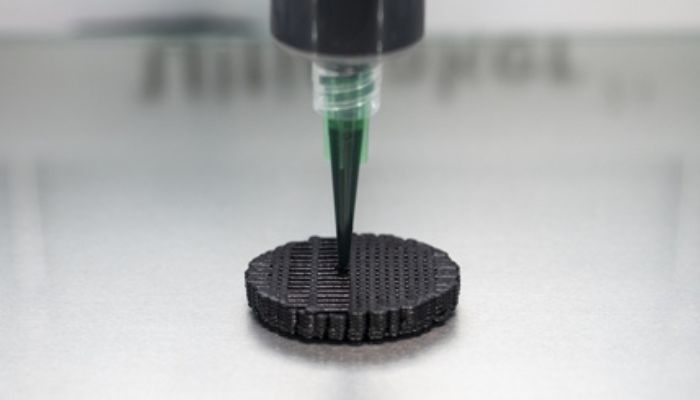
The grid-printed electrode contains the fungi that is used in the anode chamber of the battery (photo credits: Empa)
But what exactly is the 3D-printed fungal battery and what is it made of? Strictly speaking, it is not a battery, but a microbial fuel cell. This means that microorganisms, as with all living things, convert nutrients into energy and the microbial fuel cell makes use of this metabolism and captures part of the energy as electricity.
More from the desk
Six other notes from the rest of the bench.
 NewsTOP 5 videos of the week: 3 story houses, Jaguars and more!A new selection of the best 3D printing videos of the week, just for you! Find our TOP 5 videos of the week below and tell us what your favorite video is in a comment or on our Facebook and Twitter page. Don’t hesitate to…
 ApplicationsCornell Revolutionizes Realistic Ear Grafts With 3D Printed Ear3D printing has rapidly conquered the medical field, opening up a host of new possibilities. The technology enables the creation of complex structures with unrivaled precision, paving the way for new approaches in surgery, prosthetics, and tissue engineering. In this…
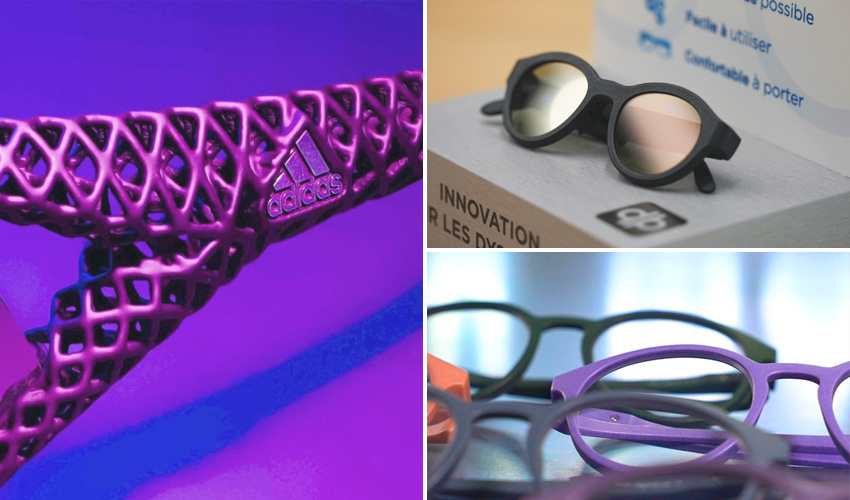 GuidesThe Most Innovative 3D Printed Glasses on the MarketWhen you think of 3D printing especially in the medical sector, one of the most important benefits of the technology is the fact that it can make fully-customizable parts. It probably comes as no surprise then that one of the…
 NewsDesktop Metal’s new strategic partnership with Indo-MIMDesktop Metal announced at RAPID + TCT 2019 that they have made a strategic partnership with Indo-MIM, the global leader and world’s largest supplier of Metal Injection Molding (MIM) precision-engineered products. Desktop Metal, founded in 2015 has made it its…
 NewsWhat Are the Future Trends of Additive Manufacturing in Europe?In recent years, the additive manufacturing market has clearly shown its potential as trends begin to emerge. And since a technology like additive manufacturing never stands still, we can also always look forward to new trends, developments and opportunities. This…
 ApplicationsHistory Made as ESA Achieves First-Ever Metal 3D Printing on ISSLast week, the International Space Station (ISS) witnessed a significant milestone as the European Space Agency etched its name in history by accomplishing the first-ever metal 3D printing in space. This achievement, spearheaded by a consortium led by Airbus, signifies…