Applications
Scientists in Canada are Developing a Bioink that Simulates Lung Tissue
3D bioprinting continues to evolve as a promising tool in the field of personalized medicine. With this in mind, researchers at McMaster University in Ontario have developed a new bioink that mimics the mechanical and structural properties of lung tissue.…
- 3 min read
- Applications
- Six more stories
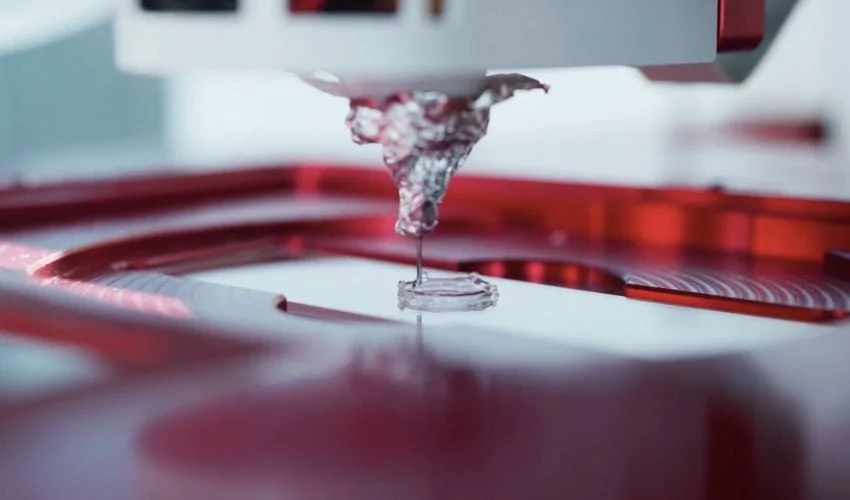
3D bioprinting continues to evolve as a promising tool in the field of personalized medicine. With this in mind, researchers at McMaster University in Ontario have developed a new bioink that mimics the mechanical and structural properties of lung tissue. In other words, this bioink enables the printing of tissues capable of contracting and “breathing,” just like human lungs. At this stage, the main priority is to promote medical research and the development of treatments. However, in the longer term, scientists are considering clinical applications, including lung repair through transplantation or implantation in patients with COPD or fibrosis.
Unlike other bioinks that require low temperatures for printing and can often lose their shape after printing, this new material retains complex structures while remaining stable at body temperature. Financially supported by McMaster University in 2024, this project led to the creation of the startup Tessella Biosciences, which already has its first customers and is receiving positive feedback.
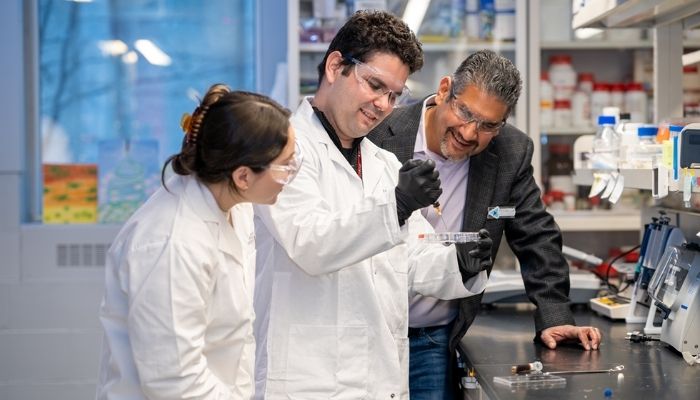
From left to right, David González Martinez and José Morán-Mirabal working with bioink for lung tissue (Photo credit: Georgia Kirkos, McMaster University)
Why Develop a Bioink for Lung Tissue?
This project was born in response to a major constraint in respiratory disease research. Jeremy Hirota, Associate Professor of Medicine at McMaster University and co-founder of the start-up, was struggling to recreate realistic cellular environments, particularly for the study of conditions such as COPD and pulmonary fibrosis. “Lungs breathe. They open and close with every breath we take,” says Hirota, “but 95 to 99 per cent of the research we do in the lab is done on hard plastic dishes, whether it’s a petri dish or a tissue culture plate. It doesn’t take a scientist to understand that this hard plastic is not what your lungs are.”
More from the desk
Six other notes from the rest of the bench.
 MaterialsAdvancing bioprinting technology in spaceRecently, CELLINK announced an exciting partnership with Made In Space to develop advanced bioprinting technology for space. The space company develops state-of-the-art space manufacturing technology to support exploration, national security, and sustainable space settlement. The
 PrintersVoladd: The Netflix of 3D printersIn this day and age, on demand content has become almost a right of passage, with different providers from Hulu and Netflix for TV shows and movies to Apple Music and Spotify for music; we are spoiled with the ability to…
 NewsWhat are the recruiting trends in 3D printing?Behind additive manufacturing technologies lies the know-how and knowledge of qualified people on cutting-edge subjects. It is quite clear that 3D printing attracts many profiles and companies have been recruiting, but in what proportions? What are the recruiting trends in&hellip
 NewsKexcelled Brings Eco-Aesthetic Series and Flexible Filaments to FormnextAt Formnext this year, Kexcelled is drawing attention with one of the most surprising material innovations on the show floor: eco-aesthetic PLA filaments infused with real coffee, tea, and bamboo. Known for its broad portfolio of filaments and resins, the…
 Applications#3DExpress: Dubai’s First Fully 3D Printed BoatThis week, we’re taking you on a boat tour, and not just any boat! It’s a boat entirely 3D printed by a Dubai-based company. Thanks to 3D technologies, the company is able to drastically reduce manufacturing lead times, thereby boosting…
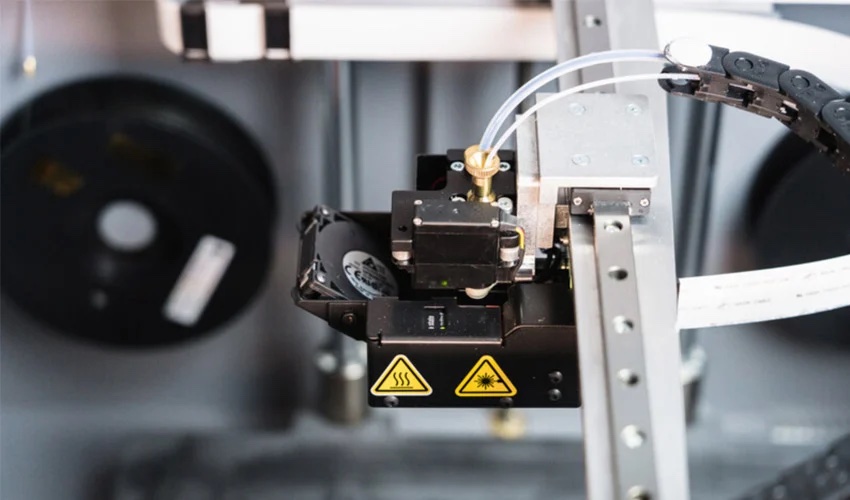 NewsHow Do You Plan the Path of an FDM 3D Printer Head for Continuous Fiber Composites?In a recent study, scientists have developed an algorithm in order to plan the path of the head of an FDM 3D printer that uses continuous fiber composites. The goal is to provide a path that prevents intersection points on…