Applications
Printing the Future of Custom Cars
In the automotive industry, manufacturers face many challenges, including long supply chains that are often affected by significant delays that jeopardize the entire production process. In a sector governed by speed and performance, these delays have serious consequences. This is
- 3 min read
- Applications
- Six more stories
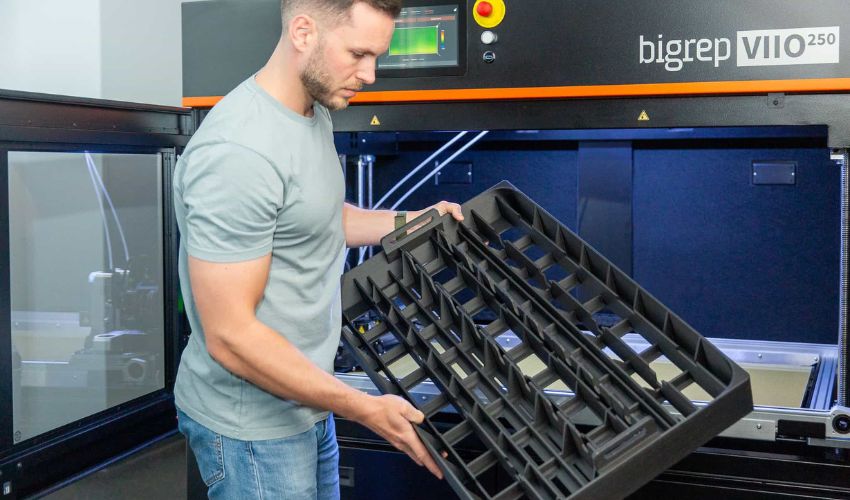
In the automotive industry, manufacturers face many challenges, including long supply chains that are often affected by significant delays that jeopardize the entire production process. In a sector governed by speed and performance, these delays have serious consequences. This is where additive manufacturing comes into play, offering a reliable and repeatable production process. This is something that Automotive Entertainment, a company based in Southern California, has clearly understood, as it has integrated BigRep’s large-format technology, enabling it to design custom automotive parts and meet personalized needs, from center consoles to custom brackets and trim pieces.
3D technologies have become a real tool for the automotive industry, which has gradually moved from prototyping to finished parts. Additive manufacturing is often used because it allows for the design of custom-made components, which is particularly important for consumers looking for a unique vehicle. For example, it will make it possible to customize the interior of a car or design new features. According to a study by Straits Research, the global automotive aftermarket industry is expected to reach $70 billion by 2029, driven by the desire for customization, lighter parts and the use of new materials.
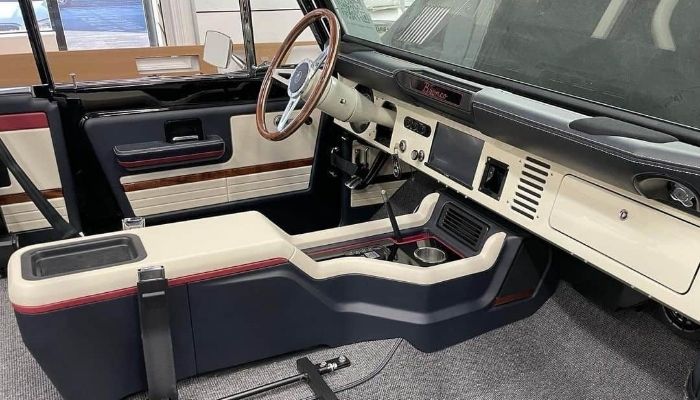
Additive manufacturing is often used to create custom-made components in cars (credits: JK Automotive Designs)
Automotive Entertainment operates in this market. It is a custom shop specializing in high-end automotive manufacturing, audio systems and all aftermarket modifications. The idea is to offer unique vehicles that meet each customer’s criteria. Speed to market and design are two key factors. They therefore needed to find a manufacturing method that would meet both requirements: how to design attractive, custom-made parts, all within short lead times and at competitive costs. Additive manufacturing quickly became the obvious choice.
More from the desk
Six other notes from the rest of the bench.
 SoftwareOctoPrint, the application to control your 3D printerOctoPrint is a controller application for 3D printers: open-source and free, it allows you to manage all your prints remotely and to control your machines with peace of mind. It works directly on your web interface, you just need to…
 NewsIsotropy in 3D Printing: What Is It and How Does It Affect the Final Parts?If you are part of the 3D printing industry or at least somewhat familiar with the technology, you will have heard of the concept of isotropy, which is defined as uniformity in all orientations. Thus, if we apply it to…
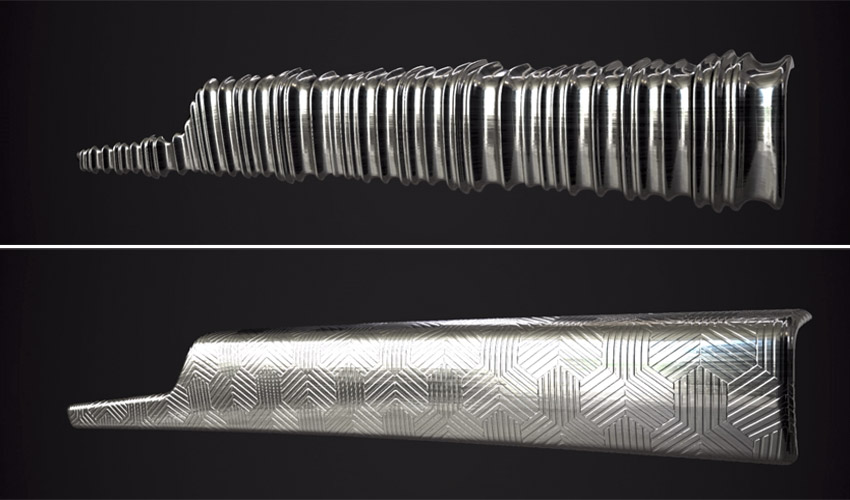 Software4D_Additive, the CAD software suite for additive manufacturingAt the origin of any 3D printing process is the 3D modeling process: obtaining a 3D model is essential to create your part, whatever the sector of activity. This key step uses CAD software that offers a number of features…
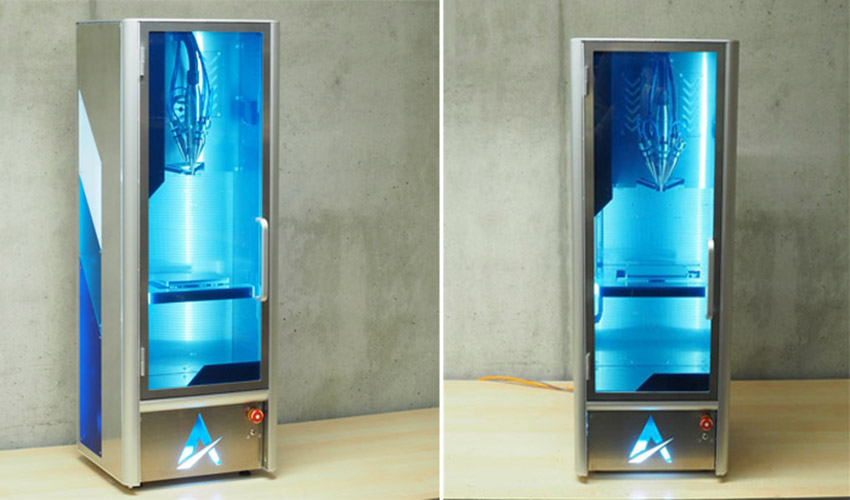 NewsAdditec Revealed Desktop Metal 3D Printer: μPrinterAdditec, founded in 2015 is a company based in Las Vegas (USA) and Bremen (Germany). It initiative aims to innovate how large metal structures are manufactured by changing system reliability and cost. They have revealed their new desktop metal 3D printer,…
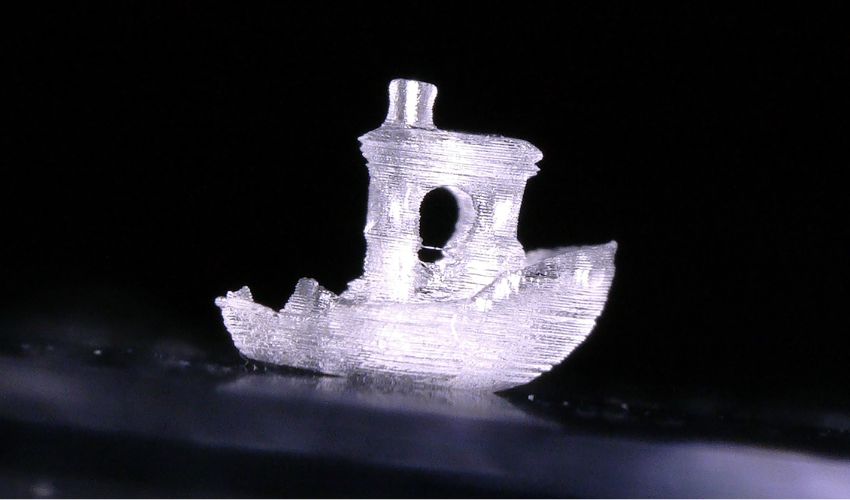 NewsHow Researchers Are Using Holograms to Improve 3D PrintingCan holograms improve the additive manufacturing process? This is the subject of a study by a team of scientists from EPFL and the University of Southern Denmark. They sought to understand how to perfect tomographic volumetric additive manufacturing (TVAM). Instead…
 NewsTop 5 Videos: Recreating Wilson’s $2,500 3D Printed Airless BasketballWelcome to our compilation of this week’s most compelling 3D printing videos. We kick off this week’s edition with a video attempting to perfectly replicate the bounce of Wilson‘s $2,500 3D printed airless basketball. Next up, Big Rep reveals how…