News
Athos, 3D Printed Climbing Shoes That Adapt to an Athlete’s Feet
3D printing has done it again. It has been growing in popularity in the world of sports and footwear and now once again the method is being used. Now in the development of these climbing shoes, called Athos. Also known…
- 3 min read
- News
- Six more stories
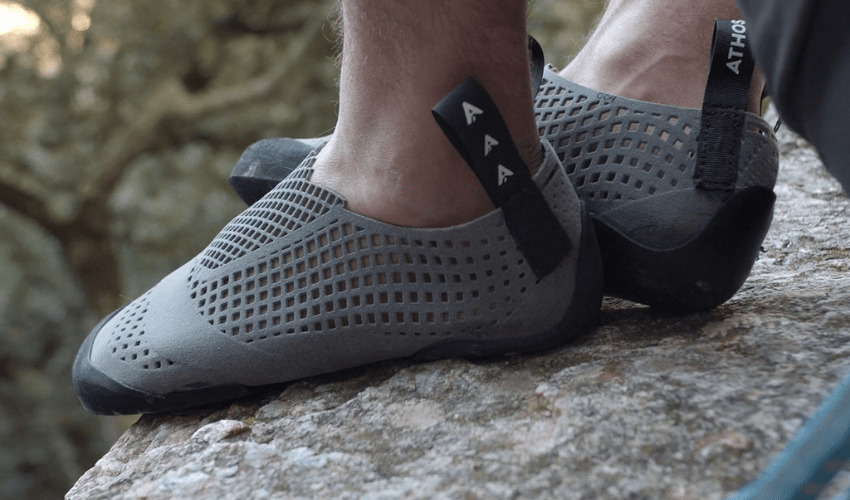
3D printing has done it again. It has been growing in popularity in the world of sports and footwear and now once again the method is being used. Now in the development of these climbing shoes, called Athos. Also known as “cat feet”, this type of footwear is essential for athletes who climb, as it allows better support in the holds, preventing them from slipping. It is undoubtedly an interesting project that combines three very important fields: technology, footwear and sport. But how has additive manufacturing been used, and how does Athos differ from other conventional climbing shoes?
Despite being a necessary piece of equipment, climbing shoes can often be quite uncomfortable, even causing injuries to athletes. In fact, professional climbers often wear 2 or 3 sizes smaller shoes to get a better grip, causing suffering. To solve this problem, a group of Spanish students at the Elisava School of Design have developed Athos. The idea arose from a search for an innovative application using additive manufacturing. That is why, upon learning about the discomfort of this type of footwear, the students got down to work. The project consisted of creating customized climbing shoes adapted to the feet of each climber, in order to achieve better adaptability, performance and comfort when practicing the sport.
Athos and 3D printing of sports shoes
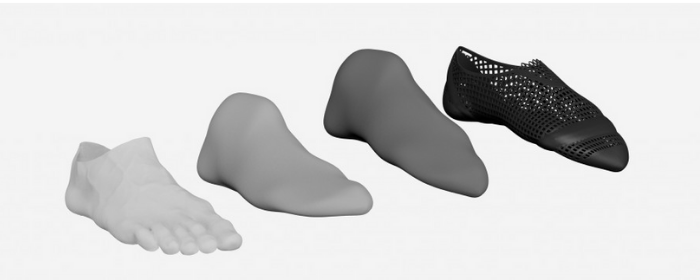
As mentioned, the idea was to implement additive manufacturing in an innovative application, and this technology was key to the development of the Athos shoes. In this project, the main advantage of 3D printing was customization, as it allows to adapt each shoe to the shape of each climber’s foot. This is done according to the needs as well as type of performance of each user. In fact, the workflow they carried out was as follows: scanning of the feet, customization of the prototype, manufacturing of the footwear (3D printing, post-processing, assembly), and finally, delivery to the user. It is worth mentioning that the 3D printed part is the body of the shoe, then it remains to attach the elastics and straps separately. But, if you look at it, this is a really simple production process that could be within everyone’s reach.
More from the desk
Six other notes from the rest of the bench.
 ApplicationsAirBike, the 3D Printed Flying Motorcycle Reinventing Aerial MobilityIs it a bird? Is it a plane? No, but it does seem to be a motorcycle straight out of a science-fiction movie. This week, Polish start-up Volonaut unveiled the AirBike, a flying motorcycle. Yes, you read that right: this…
 GuidesTOP 5 videos of the week: 3D printed surfboard and much more!We found the TOP 5 videos of the week related to 3D printing and additive manufacturing here. Share your videos and comment on the article below or on the 3Dnatives’ Facebook or Twitter account. Hope you’ll enjoy and have a…
 GuidesThe Faces of Additive Manufacturing: Hanan GothaitWe continue our series on the personalities that have shaped and impacted the additive manufacturing world with our second personality, Hanan Gothait, CEO of XJet. He is behind multiple projects and the patented technology launched by the company also known…
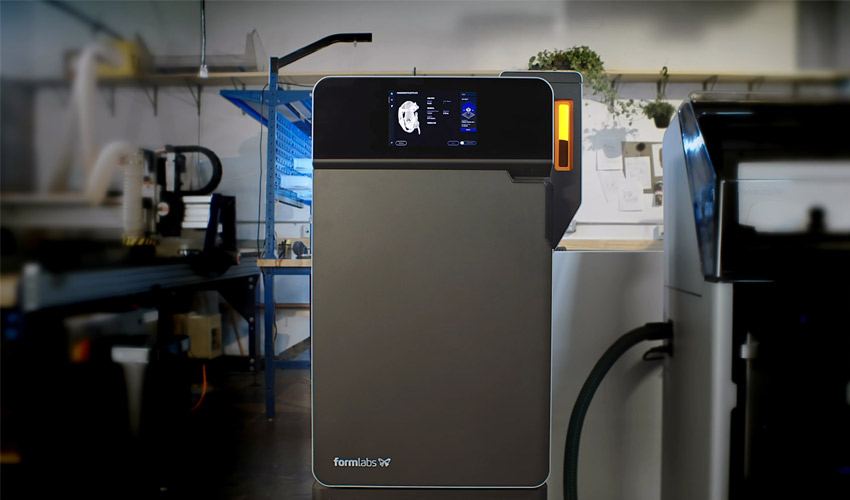 PrintersFormlabs reveals the Fuse 1 at our ADDITIV virtual eventDo you remember Formlabs’ announcement in June 2017? The 3D printing manufacturer, best known for its resin solutions, announced their intention to tackle the selective laser sintering (SLS) market with a desktop machine, the Fuse 1. After developing several prototypes,…
 NewsUniversity of Buffalo Uses $2.3 Million NSF Grant to Advance AI in ManufacturingAt the core of 3D printing and other technologies in Industry 4.0 is the idea that we need to improve on traditional manufacturing. Now, a University of Buffalo research team is hoping to do just that thanks to a $2.3…
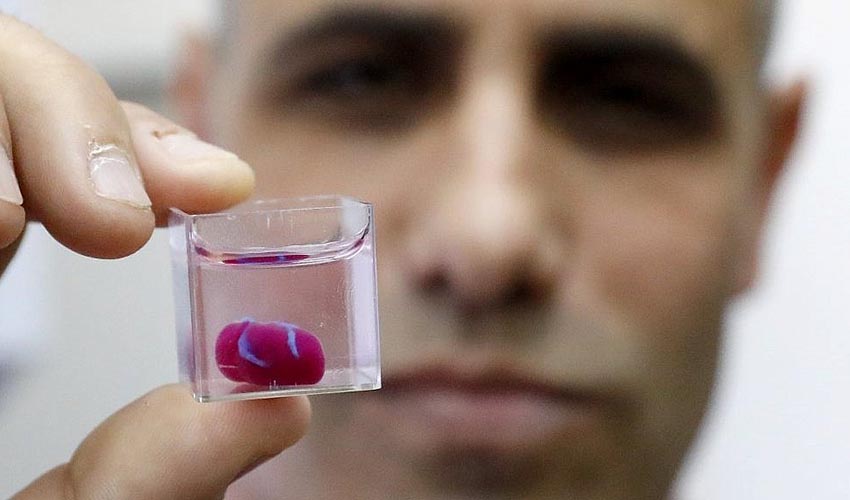 ApplicationsTesting drugs on 3D printed heart tissueThe German multinational pharmaceuticals company, Bayer, has announced that it will test new drugs on 3D printed heart tissue. Tel-Aviv University achieved a big breakthrough last year when it unveiled the world’s first 3D printed heart and vessels, and it…